
高分辨率熔解分析:中国人群常见β地中海贫血突变的快速筛查与分型工具。
High resolution melting analysis: a rapid screening and typing tool for common β-thalassemia mutation in Chinese population.
作者信息
Lin Min, Jiao Ji-Wei, Zhan Xiu-Hui, Zhan Xiao-Fen, Pan Mei-Chen, Wang Jun-Li, Wang Chun-Fang, Zhong Tian-Yu, Zhang Qin, Yu Xia, Wu Jiao-Ren, Yang Hui-Tian, Lin Fen, Tong Xin, Yang Hui, Zha Guang-Cai, Wang Qian, Zheng Lei, Wen Ying-Fang, Yang Li-Ye
机构信息
Central Laboratory, Chaozhou Central Hospital Affiliated to Southern Medical University, Chaozhou, Guangdong Province, People's Republic of China; Medical Laboratory, First Affiliated Hospital of Shantou University Medical College, Shantou, Guangdong Province, People's Republic of China.
Department of Biology, Hanshan Normal University, Chaozhou, Guangdong Province, People's Republic of China.
出版信息
PLoS One. 2014 Aug 4;9(8):e102243. doi: 10.1371/journal.pone.0102243. eCollection 2014.
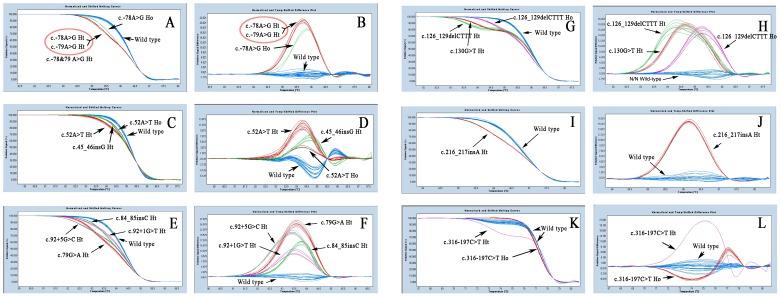
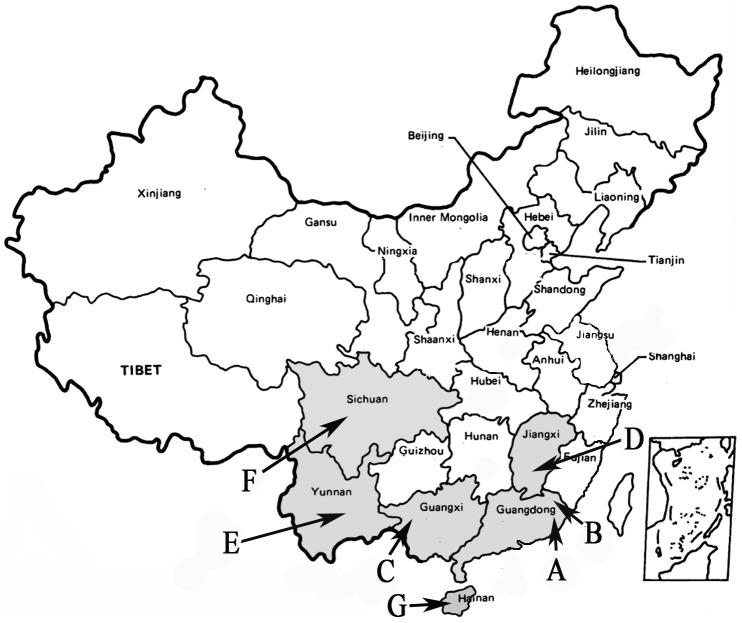
β-thalassemia is a common inherited disorder worldwide including southern China, and at least 45 distinct β-thalassemia mutations have been identified in China. High-resolution melting (HRM) assay was recently introduced as a rapid, inexpensive and effective method for genotyping. However, there was no systemic study on the diagnostic capability of HRM to identify β-thalassemia. Here, we used an improved HRM method to screen and type 12 common β-thalassemia mutations in Chinese, and the rapidity and reliability of this method was investigated. The whole PCR and HRM procedure could be completed in 40 min. The heterozygous mutations and 4 kinds of homozygous mutations could be readily differentiated from the melting curve except c.-78A>G heterozygote and c.-79A>G heterozygote. The diagnostic reliability of this HRM assay was evaluated on 756 pre-typed genomic DNA samples and 50 cases of blood spots on filter paper, which were collected from seven high prevalent provinces in southern China. If c.-78A>G heterozygote and c.-79A>G heterozygote were classified into the same group (c.-78&79 A>G heterozygote), the HRM method was in complete concordance with the reference method (reverse dot blot/DNA-sequencing). In a conclusion, the HRM method appears to be an accurate and sensitive method for the rapid screening and identification of β-thalassemia mutations. In the future, we suggest this technology to be used in neonatal blood spot screening program. It could enlarge the coverage of β-thalassemia screening program in China. At the same time, its value should be confirmed in prospectively clinical and epidemiological studies.
β地中海贫血是一种在全球范围内常见的遗传性疾病,包括中国南方地区,在中国已鉴定出至少45种不同的β地中海贫血突变。高分辨率熔解(HRM)分析最近被引入作为一种快速、廉价且有效的基因分型方法。然而,尚未有关于HRM鉴定β地中海贫血诊断能力的系统性研究。在此,我们使用改进的HRM方法对中国人中12种常见的β地中海贫血突变进行筛查和分型,并研究了该方法的快速性和可靠性。整个PCR和HRM过程可在40分钟内完成。除了c.-78A>G杂合子和c.-79A>G杂合子外,杂合突变和4种纯合突变可通过熔解曲线轻松区分。该HRM分析的诊断可靠性在756份预先分型的基因组DNA样本和50份滤纸上的血斑样本上进行了评估,这些样本来自中国南方七个高流行省份。如果将c.-78A>G杂合子和c.-79A>G杂合子归为同一组(c.-78&79 A>G杂合子),则HRM方法与参考方法(反向点杂交/DNA测序)完全一致。总之,HRM方法似乎是一种准确、灵敏的快速筛查和鉴定β地中海贫血突变的方法。未来,我们建议将该技术用于新生儿血斑筛查项目。它可以扩大中国β地中海贫血筛查项目的覆盖范围。同时,其价值应在前瞻性临床和流行病学研究中得到证实。
 Zotero 插件