
帕金森病中突触结合蛋白1突变为神经病理学机制带来了进一步的见解。
Synaptojanin 1 mutation in Parkinson's disease brings further insight into the neuropathological mechanisms.
作者信息
Drouet Valérie, Lesage Suzanne
机构信息
Sorbonne Universités, UPMC (Paris 6), UMR S 1127, Inserm U 1127, CNRS UMR 7225, and ICM, 75013 Paris, France ; Hôpital Pitié-Salpêtrière, Institut du Cerveau et de la Moelle Epinière ICM, 4ème Étage, 47 Boulevard de l'Hôpital, 75651 Paris, France.
Sorbonne Universités, UPMC (Paris 6), UMR S 1127, Inserm U 1127, CNRS UMR 7225, and ICM, 75013 Paris, France.
出版信息
Biomed Res Int. 2014;2014:289728. doi: 10.1155/2014/289728. Epub 2014 Sep 16.
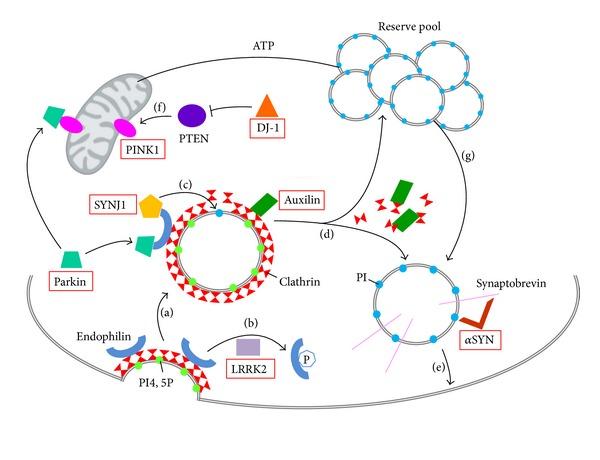
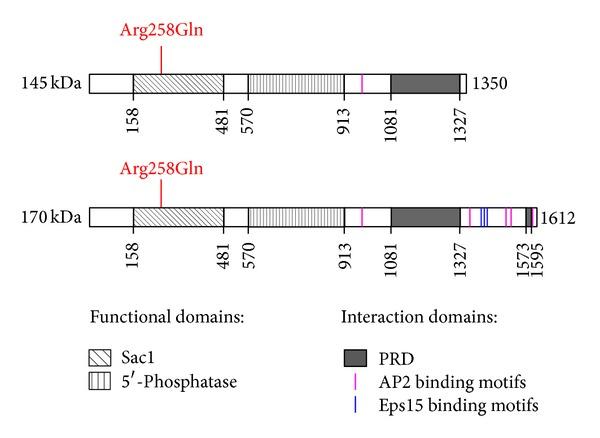
Synaptojanin 1 (SYNJ1) is a phosphoinositide phosphatase highly expressed in nerve terminals. Its two phosphatase domains dephosphorylate phosphoinositides present in membranes, while its proline-rich domain directs protein-protein interactions with synaptic components, leading to efficient recycling of synaptic vesicles in neurons. Triplication of SYNJ1 in Down's syndrome is responsible for higher level of phosphoinositides, enlarged endosomes, and learning deficits. SYNJ1 downregulation in Alzheimer's disease models is protective towards amyloid-beta peptide (Aβ) toxicity. One missense mutation in one of SYNJ1 functional domains was recently incriminated in an autosomal recessive form of early-onset Parkinson's disease (PD). In the third decade of life, these patients develop progressive Parkinsonism with bradykinesia, dystonia, and variable atypical symptoms such as cognitive decline, seizures, and eyelid apraxia. The identification of this new gene, together with the fact that most of the known PD proteins play a role in synaptic vesicle recycling and lipid metabolism, points out that synaptic maintenance is a key player in PD pathological mechanisms. Studying PD genes as a network regulating synaptic activity could bring insight into understanding the neuropathological processes of PD and help identify new genes at fault in this devastating disorder.
突触素1(SYNJ1)是一种在神经末梢高度表达的磷酸肌醇磷酸酶。它的两个磷酸酶结构域使膜中存在的磷酸肌醇去磷酸化,而其富含脯氨酸的结构域指导与突触成分的蛋白质 - 蛋白质相互作用,从而导致神经元中突触小泡的有效循环利用。唐氏综合征中SYNJ1的三倍体导致磷酸肌醇水平升高、内体增大和学习缺陷。在阿尔茨海默病模型中,SYNJ1的下调对β-淀粉样肽(Aβ)毒性具有保护作用。最近,SYNJ1一个功能结构域中的一个错义突变被认为与常染色体隐性形式的早发性帕金森病(PD)有关。在生命的第三个十年,这些患者会出现进行性帕金森综合征,伴有运动迟缓、肌张力障碍以及诸如认知衰退、癫痫发作和眼睑失用等各种非典型症状。这个新基因的鉴定,以及大多数已知的帕金森病相关蛋白在突触小泡循环利用和脂质代谢中起作用这一事实,表明突触维持是帕金森病病理机制中的关键因素。将帕金森病相关基因作为一个调节突触活动的网络来研究,可能有助于深入理解帕金森病的神经病理过程,并有助于识别这种毁灭性疾病中出错的新基因。
 Zotero 插件