Rajaram Kamya, Summerbell Emily R, Patton James G
Department of Biological Sciences, Vanderbilt University, Nashville, TN.
Mol Vis. 2014 Jul 31;20:1075-84. eCollection 2014.
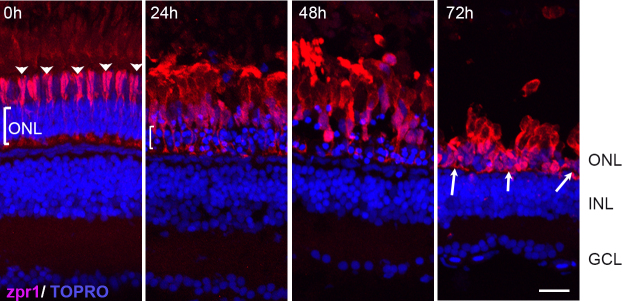
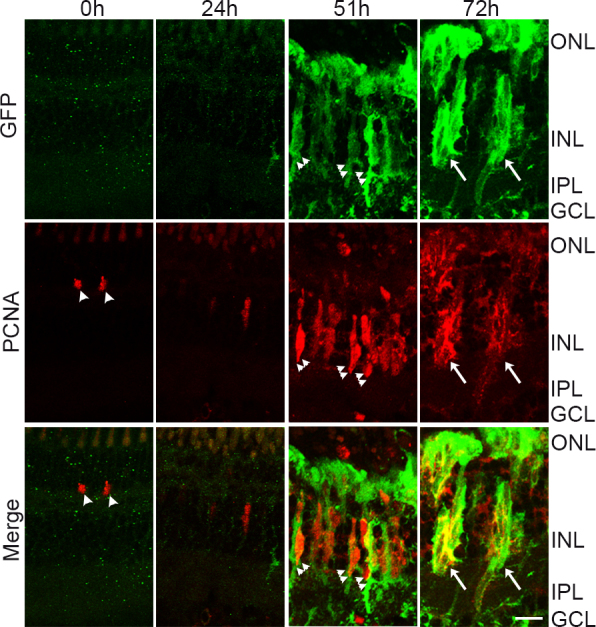
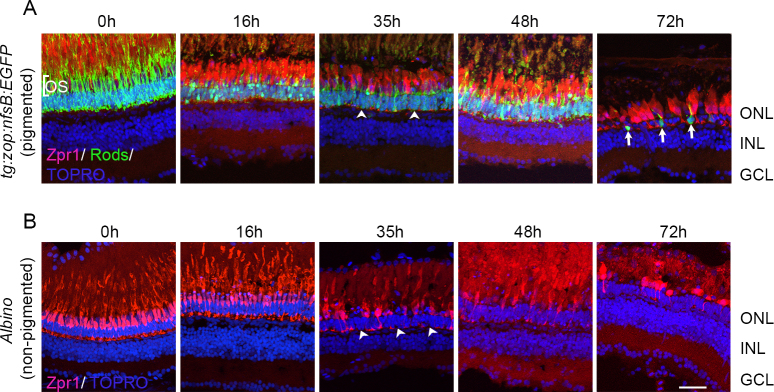
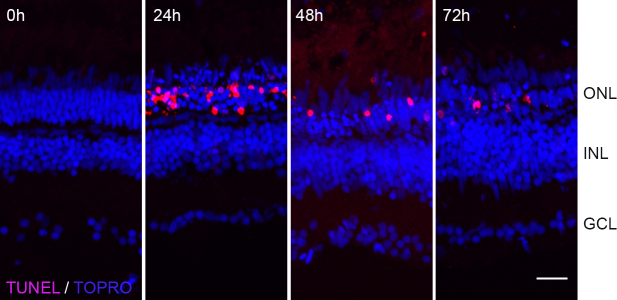
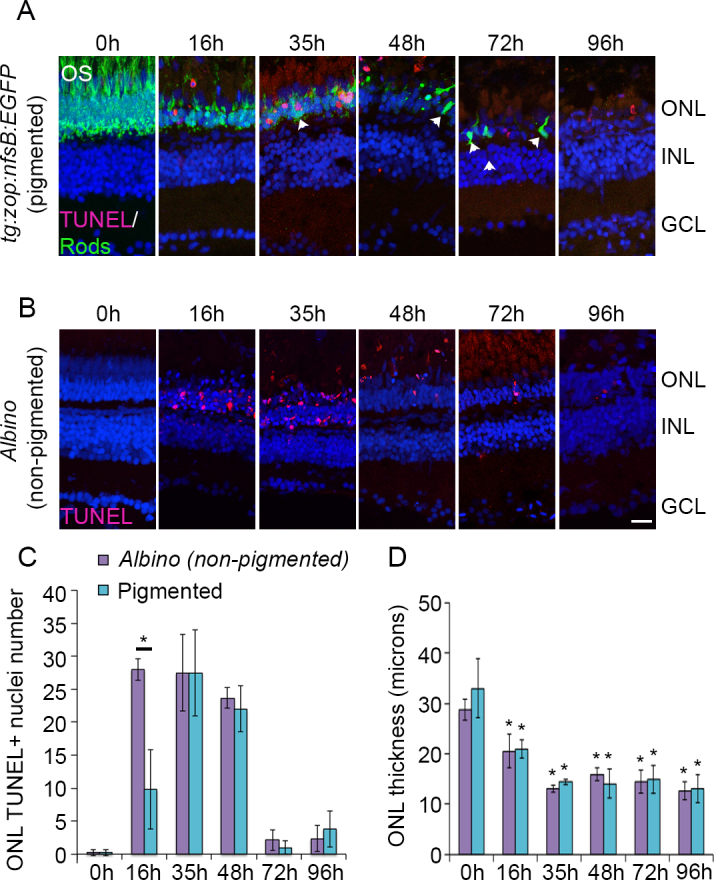
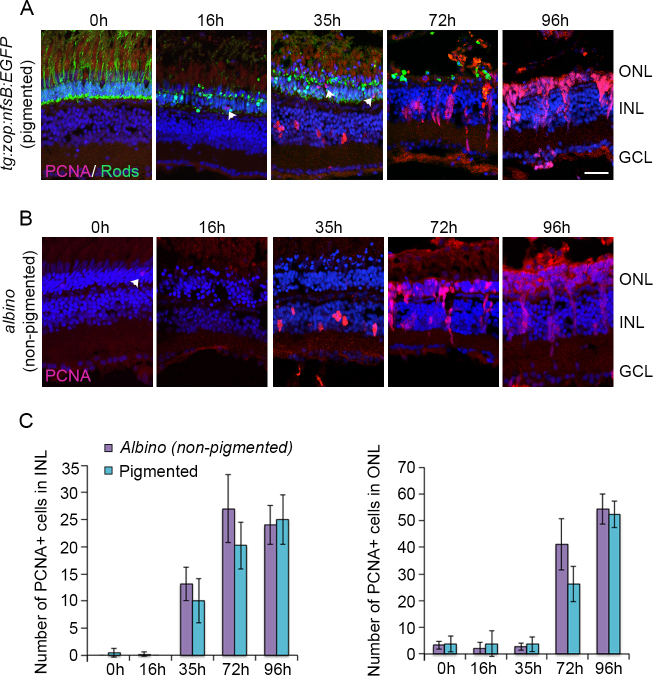
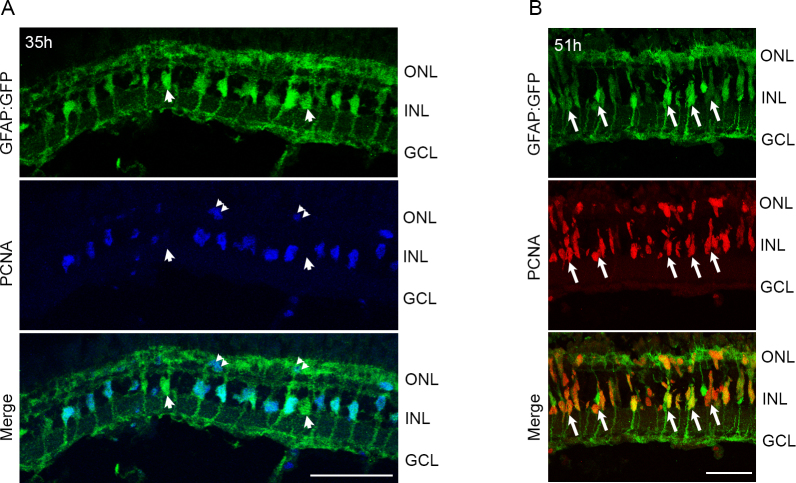
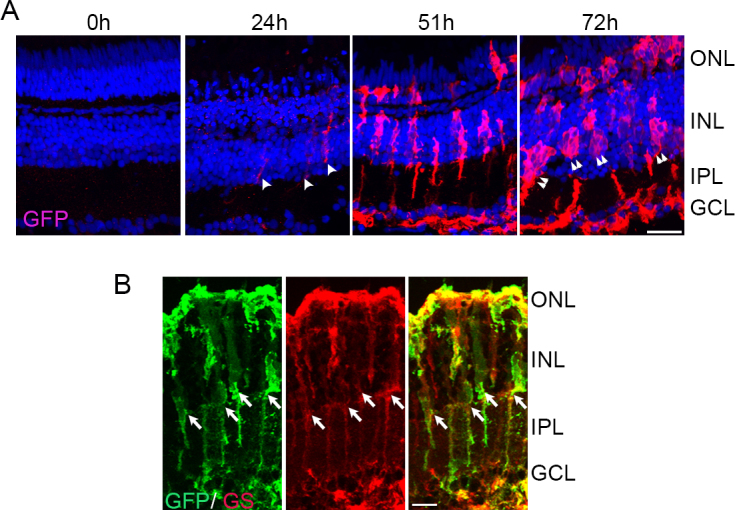
Zebrafish are capable of robust and spontaneous regeneration of injured retina. Constant intense light exposure to adult albino zebrafish specifically causes apoptosis of rod and cone photoreceptor cells and is an excellent model to study the molecular mechanisms underlying photoreceptor regeneration. However, this paradigm has only been applied to lesion zebrafish of the nonpigmented albino genetic background, which precludes the use of numerous transgenic reporter lines that are widely used to study regeneration. Here, we explored the effectiveness of constant intense light exposure in causing photoreceptor apoptosis and stimulating regeneration in normally pigmented zebrafish retinas. We show that constant intense light exposure causes widespread photoreceptor damage in the dorsal-central retinas of pigmented zebrafish. Photoreceptor loss triggers dedifferentiation and proliferation of Müller glia as well as progenitor cell proliferation. We also demonstrate that the timeline of regeneration response is comparable between the albino and the pigmented retinas.
斑马鱼能够对受损视网膜进行强大且自发的再生。持续高强度光照成年白化斑马鱼会特异性地导致视杆和视锥光感受器细胞凋亡,是研究光感受器再生潜在分子机制的绝佳模型。然而,这种模式仅应用于非色素白化遗传背景的损伤斑马鱼,这排除了使用众多广泛用于研究再生的转基因报告系。在此,我们探究了持续高强度光照在正常色素斑马鱼视网膜中引起光感受器凋亡和刺激再生的有效性。我们表明,持续高强度光照会在色素斑马鱼的背中央视网膜中造成广泛的光感受器损伤。光感受器损失会触发穆勒胶质细胞的去分化和增殖以及祖细胞增殖。我们还证明,白化视网膜和色素视网膜之间的再生反应时间线是可比的。