
衰老间充质干细胞分泌的白细胞介素-6促进乳腺癌细胞的增殖和迁移。
IL-6 secreted from senescent mesenchymal stem cells promotes proliferation and migration of breast cancer cells.
作者信息
Di Guo-Hu, Liu Yang, Lu Ying, Liu Jin, Wu Chutse, Duan Hai-Feng
机构信息
Beijing Institute of Radiation Medicine (BIRM), No. 27, Taiping Road, Haidian District, Beijing 100850, China; State Key Laboratory Cultivation Base, Shandong Provincial Key Laboratory of Ophthalmology, Shandong Eye Institute, Shandong Academy of Medical Sciences, 5 Yan'erdao Road, Qingdao 266071, China.
Beijing Institute of Radiation Medicine (BIRM), No. 27, Taiping Road, Haidian District, Beijing 100850, China.
出版信息
PLoS One. 2014 Nov 24;9(11):e113572. doi: 10.1371/journal.pone.0113572. eCollection 2014.
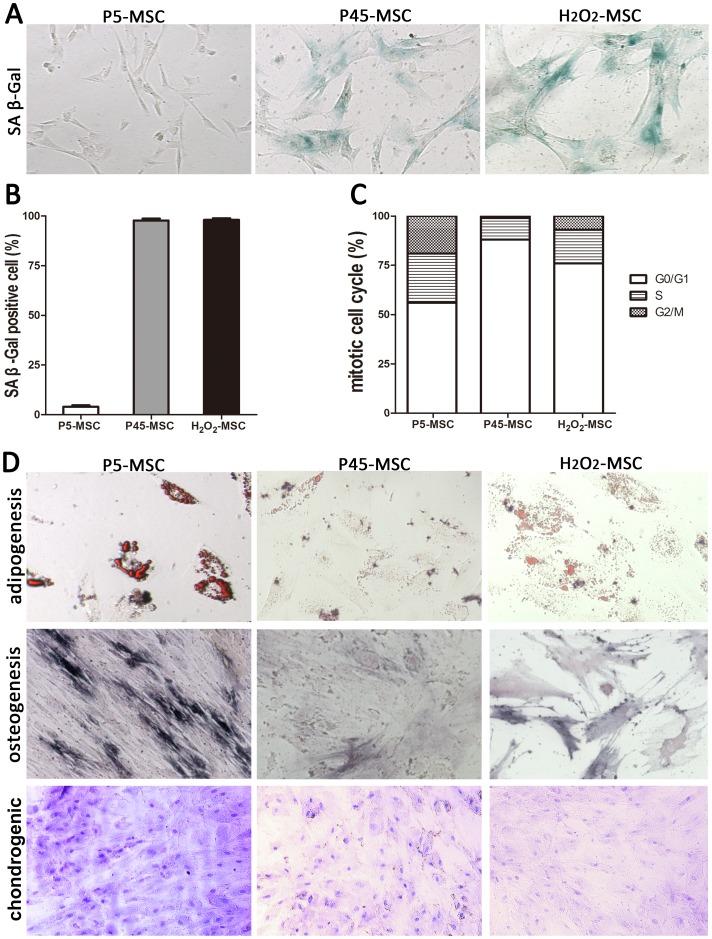
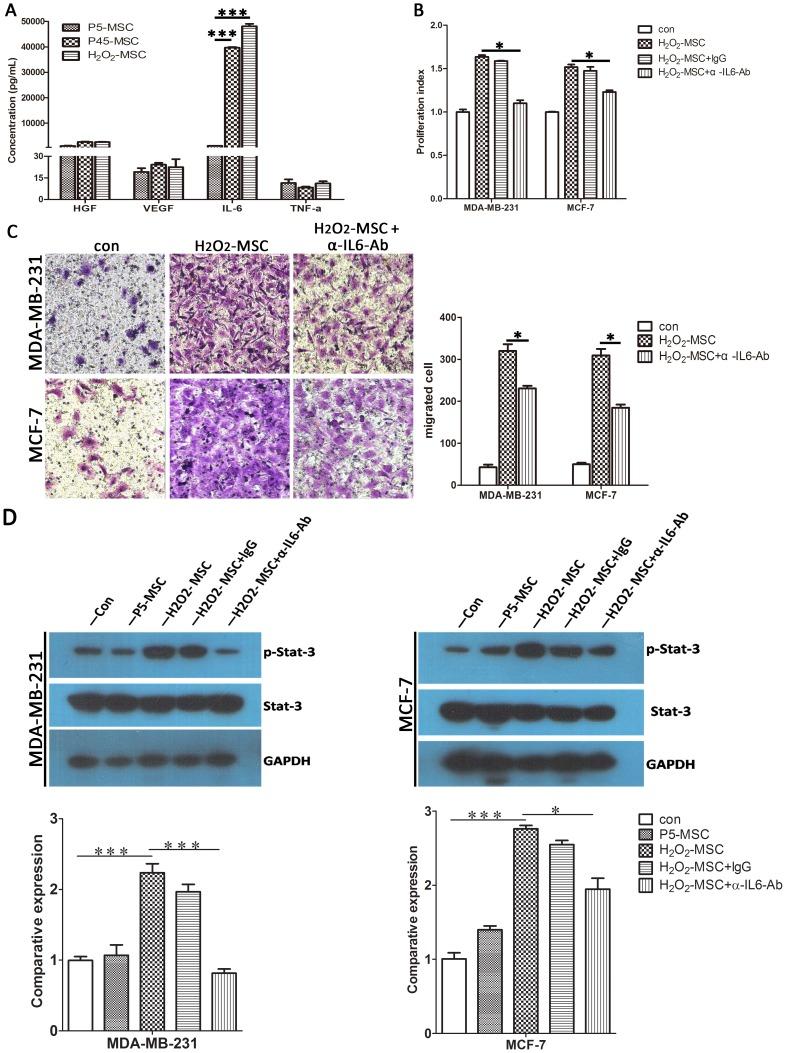
Human mesenchymal stem cells (hMSCs) are currently investigated for a variety of therapeutic applications. However, MSCs isolated from primary tissue cannot meet clinical grade needs and should be expanded in vitro for several passages. Although hMSCs show low possibility for undergoing oncogenic transformation, they do, similar to other somatic cells, undergo cellular senescence and their therapeutic potential is diminished when cultured in vitro. However, the role of senescent MSCs in tumor progression remains largely elusive. In the current study, by establishing senescent human umbilical cord mesenchymal stem cells (s-UCMSCs) through the replicative senescence model and genotoxic stress induced premature senescence model, we show that s-UCMSCs significantly stimulate proliferation and migration of breast cancer cells in vitro and tumor progression in a co-transplant xenograft mouse model compared with 'young' counterparts (defined as MSCs at passage 5, in contrast to senescent MSCs at passage 45). In addition, we identified IL-6, a known pleiotropic cytokine, as a principal mediator for the tumor-promoting activity of s-UCMSCs by induction of STAT3 phosphorylation. Depletion of IL-6 from s-UCMSCs conditioned medium partially abrogated the stimulatory effect of s-UCMSCs on the proliferation and migration of breast tumor cells.
人骨髓间充质干细胞(hMSCs)目前正被研究用于多种治疗应用。然而,从原代组织分离的间充质干细胞无法满足临床级别的需求,需要在体外传代扩增。尽管hMSCs发生致癌转化的可能性较低,但与其他体细胞一样,它们会经历细胞衰老,并且在体外培养时其治疗潜力会降低。然而,衰老的间充质干细胞在肿瘤进展中的作用仍 largely elusive。在本研究中,通过复制性衰老模型和基因毒性应激诱导的早衰模型建立衰老的人脐带间充质干细胞(s-UCMSCs),我们发现与“年轻”的对应细胞(定义为第5代的间充质干细胞,与第45代的衰老间充质干细胞形成对比)相比,s-UCMSCs在体外显著刺激乳腺癌细胞的增殖和迁移以及在共移植异种移植小鼠模型中的肿瘤进展。此外,我们确定白细胞介素-6(一种已知的多效细胞因子)是s-UCMSCs促进肿瘤活性的主要介质,通过诱导STAT3磷酸化实现。从s-UCMSCs条件培养基中去除白细胞介素-6部分消除了s-UCMSCs对乳腺肿瘤细胞增殖和迁移的刺激作用。


 Zotero 插件