Weivoda Megan M, Oursler Merry Jo
Endocrine Research Unit, Mayo Clinic, USA.
Orthop Muscular Syst. 2014;3. doi: 10.4172/2161-0533.1000161.
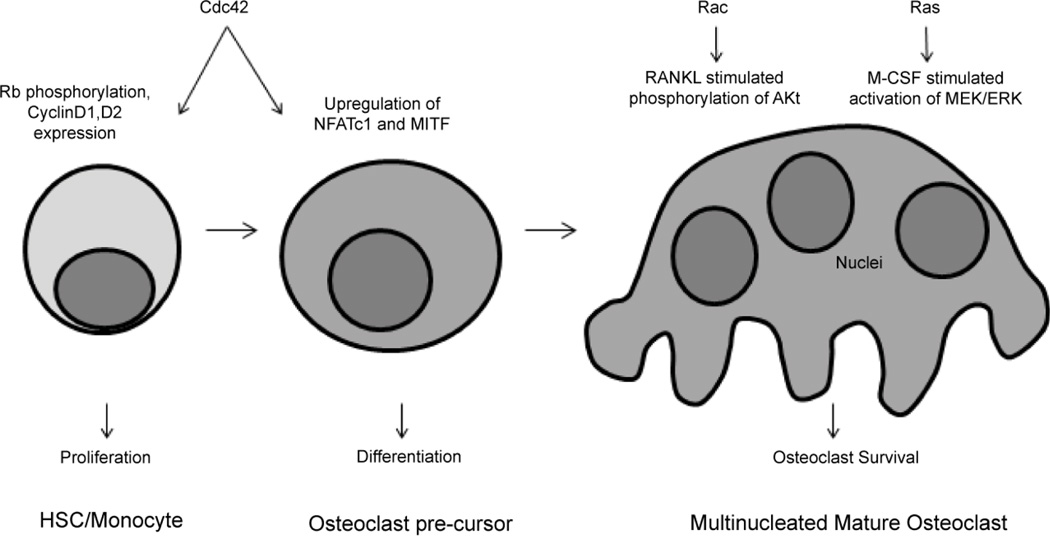
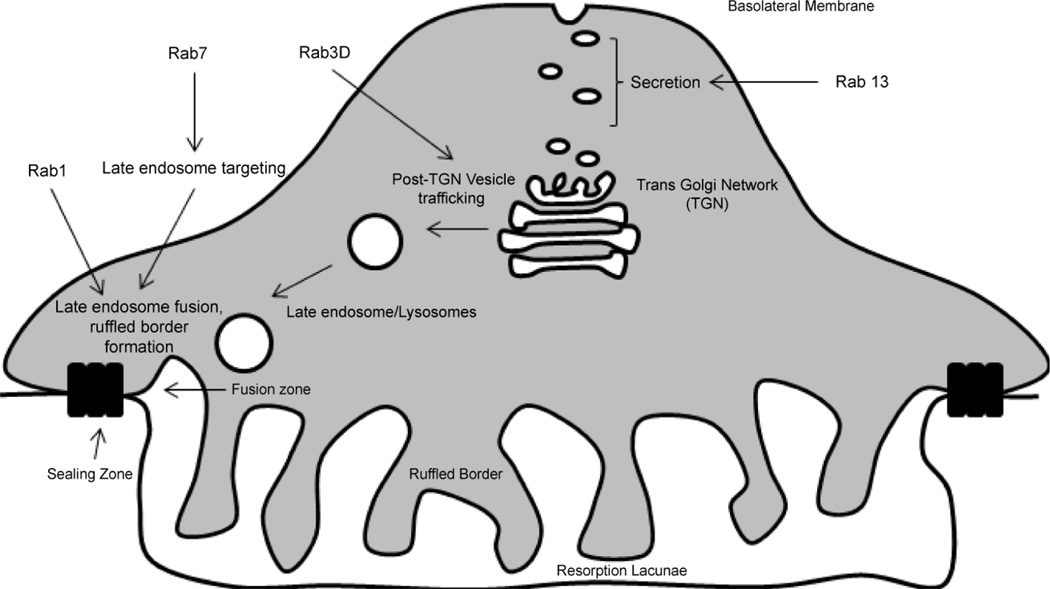
The adult skeleton undergoes bone remodeling that consists of bone formation by osteoblasts and bone resorption by osteoclasts. When the amount of bone resorbed is greater than the amount of new bone formed, low bone mass results, putting individuals at increased risk for osteoporosis and osteoporotic bone fracture. Nitrogenous bisphosphonates (NBPs) are the most common first line treatment for conditions of low bone mass. NBPs reduce osteoclast bone resorption by impairing the post-translational modification of small GTPases. Small GTPases play crucial roles in the differentiation, function, and survival of osteoclasts. Understanding the roles of individual small GTPases in osteoclast biology may lead to more targeted therapies for the treatment of low bone mass. In this review, we discuss recent investigations into the effects of individual GTPase deletion in osteoclasts and the molecular roles for small GTPases in osteoclast biology.
成人骨骼会经历骨重塑过程,该过程包括成骨细胞形成骨以及破骨细胞进行骨吸收。当骨吸收量大于新形成的骨量时,就会导致骨量降低,使个体患骨质疏松症和骨质疏松性骨折的风险增加。含氮双膦酸盐(NBPs)是治疗骨量降低病症最常用的一线药物。NBPs通过损害小GTP酶的翻译后修饰来减少破骨细胞的骨吸收。小GTP酶在破骨细胞的分化、功能及存活中发挥着关键作用。了解单个小GTP酶在破骨细胞生物学中的作用,可能会带来更具针对性的治疗低骨量的方法。在这篇综述中,我们讨论了近期关于破骨细胞中单个GTP酶缺失的影响以及小GTP酶在破骨细胞生物学中的分子作用的研究。