Srinivas Upadhyayula Sai, Dyczkowski Jerzy, Beißbarth Tim, Gaedcke Jochen, Mansour Wael Y, Borgmann Kerstin, Dobbelstein Matthias
Institute of Molecular Oncology, University Medical Center Göttingen, Germany.
Department of Medical Stastics, University Medical Center Göttingen, Germany.
Oncotarget. 2015 May 20;6(14):12574-86. doi: 10.18632/oncotarget.3728.
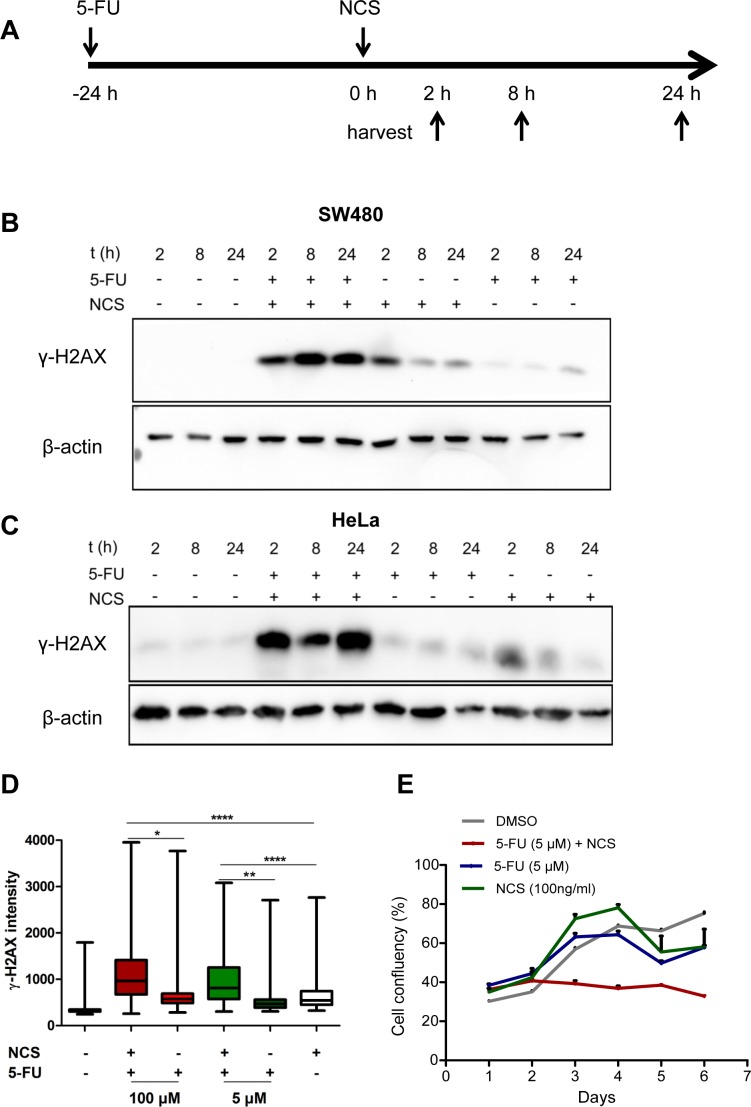
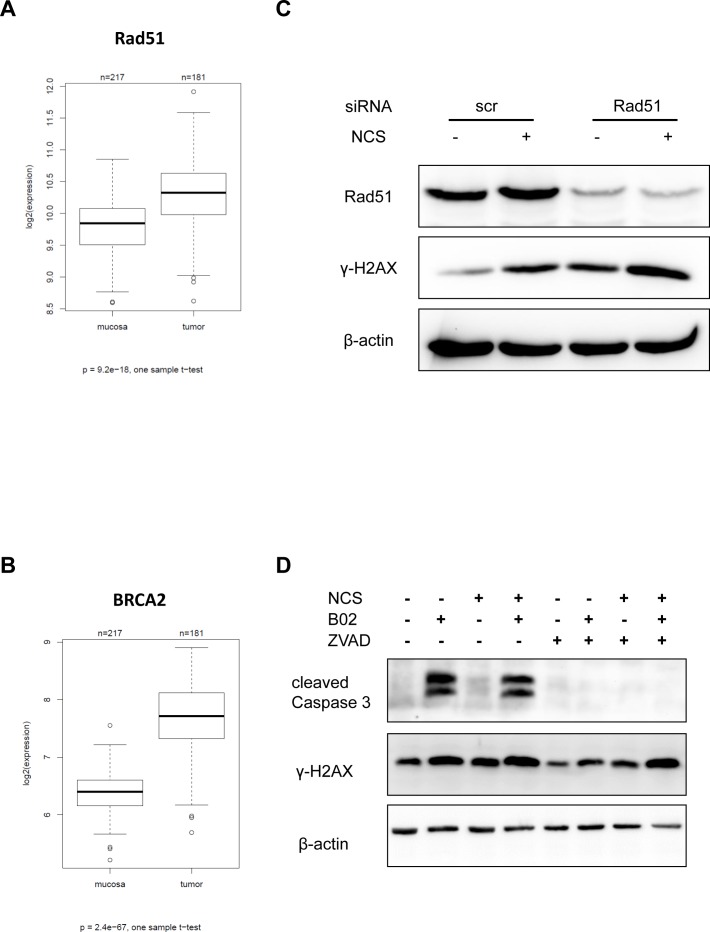
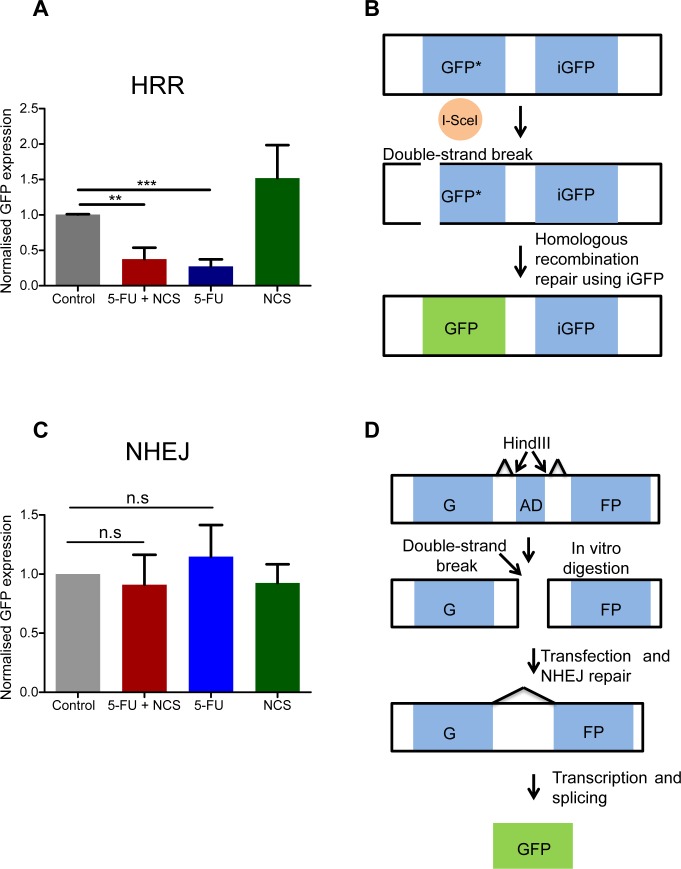
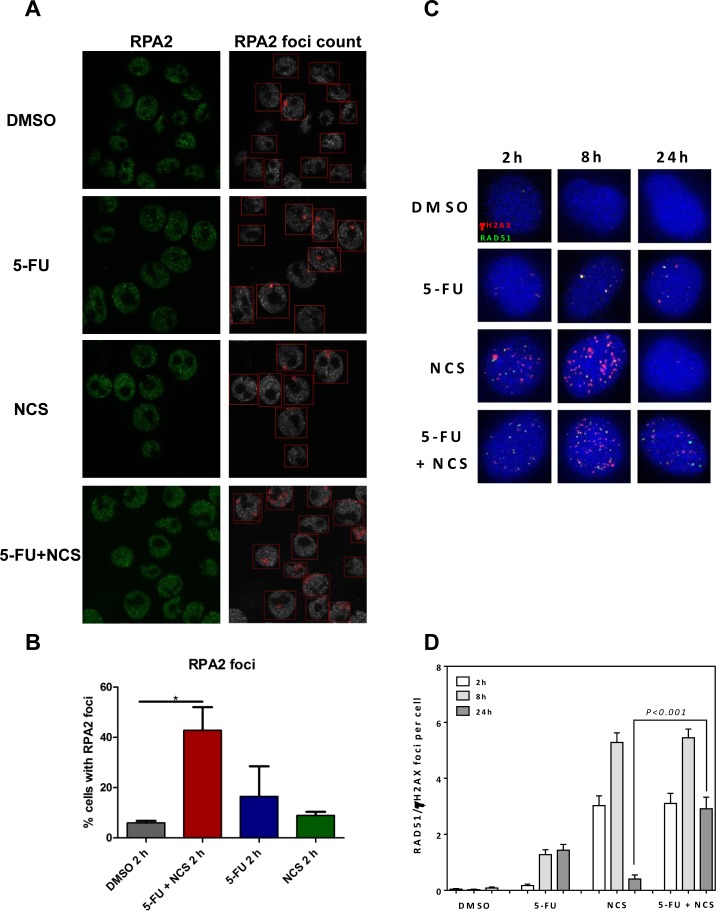
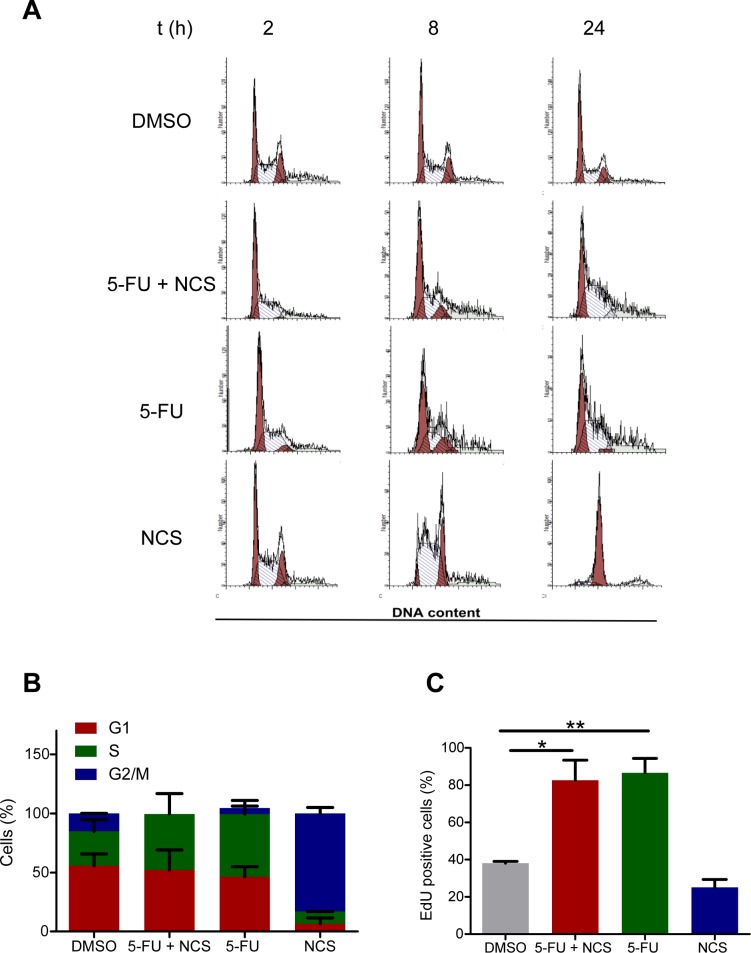
Malignant tumors of the rectum are treated by neoadjuvant radiochemotherapy. This involves a combination of 5-fluorouracil (5-FU) and double stranded DNA-break (DSB)-inducing radiotherapy. Here we explored how 5-FU cooperates with DSB-induction to achieve sustainable DNA damage in colorectal cancer (CRC) cells. After DSB induction by neocarzinostatin, phosphorylated histone 2AX (γ-H2AX) rapidly accumulated but then largely vanished within a few hours. In contrast, when CRC cells were pre-treated with 5-FU, gammaH2AX remained for at least 24 hours. GFP-reporter assays revealed that 5-FU decreases the efficiency of homologous recombination (HR) repair. However, 5-FU did not prevent the initial steps of HR repair, such as the accumulation of RPA and Rad51 at nuclear foci. Thus, we propose that 5-FU interferes with the continuation of HR repair, e. g. the synthesis of new DNA strands. Two key mediators of HR, Rad51 and BRCA2, were found upregulated in CRC biopsies as compared to normal mucosa. Inhibition of HR by targeting Rad51 enhanced DNA damage upon DSB-inducing treatment, outlining an alternative way of enhancing therapeutic efficacy. Taken together, our results strongly suggest that interfering with HR represents a key mechanism to enhance the efficacy when treating CRC with DNA-damaging therapy.
直肠癌的恶性肿瘤通过新辅助放化疗进行治疗。这涉及5-氟尿嘧啶(5-FU)与诱导双链DNA断裂(DSB)的放疗联合使用。在这里,我们探究了5-FU如何与DSB诱导协同作用,以在结直肠癌(CRC)细胞中实现持续性DNA损伤。在用新制癌菌素诱导DSB后,磷酸化组蛋白2AX(γ-H2AX)迅速积累,但在数小时内大部分消失。相比之下,当CRC细胞用5-FU预处理时,γ-H2AX至少持续24小时。绿色荧光蛋白报告基因检测显示,5-FU降低了同源重组(HR)修复的效率。然而,5-FU并未阻止HR修复的初始步骤,例如RPA和Rad51在核灶中的积累。因此,我们提出5-FU干扰了HR修复的延续,例如新DNA链的合成。与正常黏膜相比,在CRC活检组织中发现HR的两个关键介质Rad51和BRCA2上调。通过靶向Rad51抑制HR可增强DSB诱导治疗后的DNA损伤,这为提高治疗效果提供了另一种途径。综上所述,我们的结果强烈表明,干扰HR是在用DNA损伤疗法治疗CRC时提高疗效的关键机制。