Yuan Yihui, Gao Meiying
Key Laboratory of Agricultural and Environmental Microbiology, Wuhan Institute of Virology, Chinese Academy of Sciences, Wuhan, P.R. China.
Sci Rep. 2015 May 19;5:10259. doi: 10.1038/srep10259.
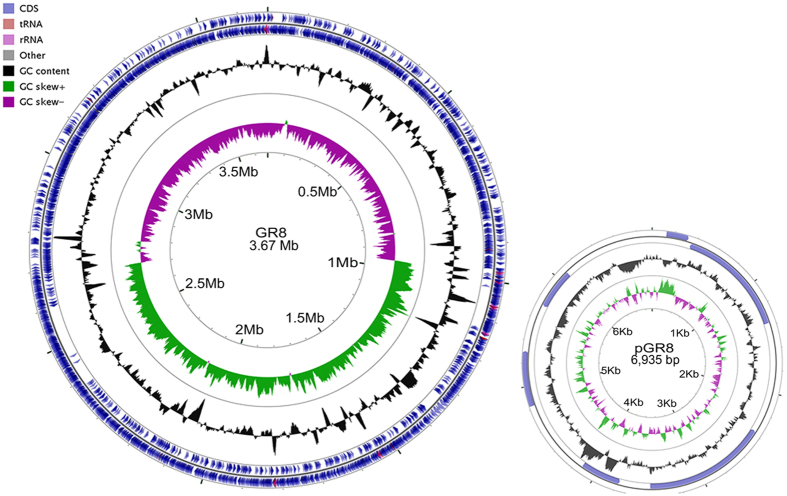
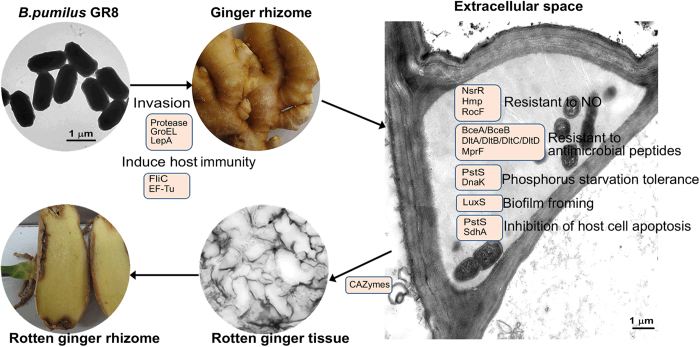
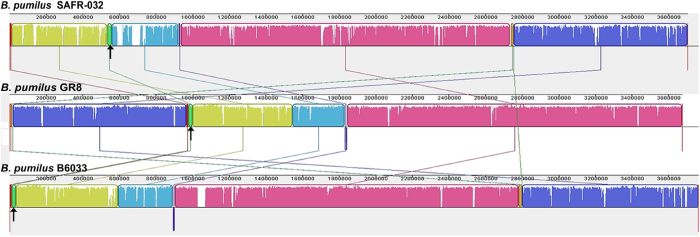
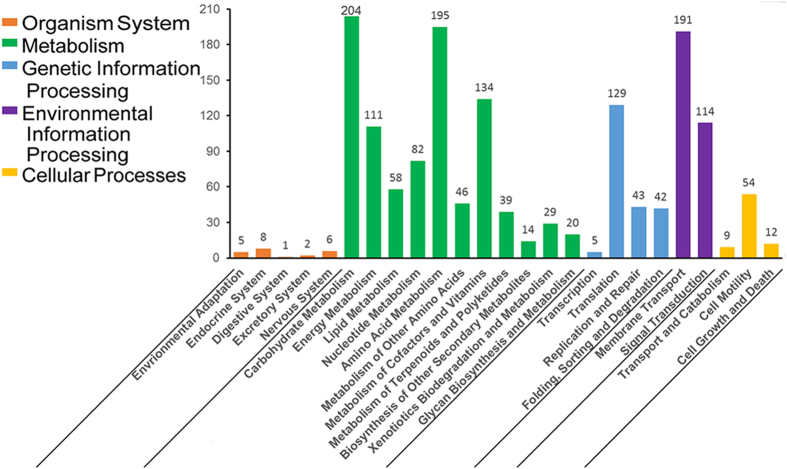
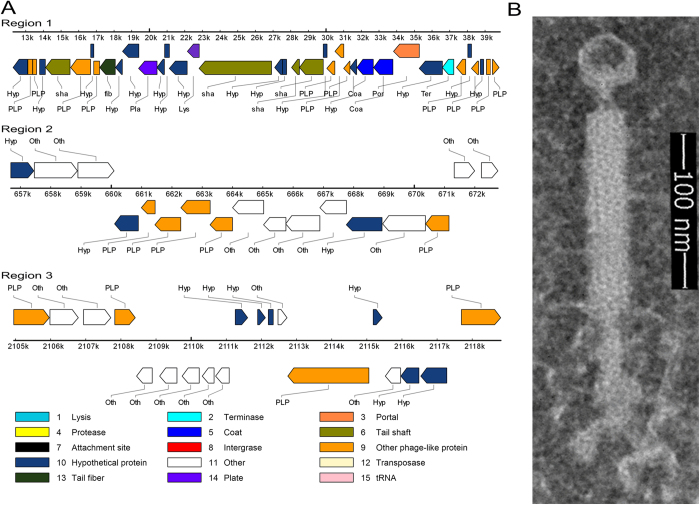
Bacillus pumilus has been widely identified as a pathogen of plant and human, while the genetic information is rarely available for pathogenic B. pumilus strains. B. pumilus GR8 is a pathogen that causes ginger rhizome rot disease by invading ginger rhizome parenchymatous tissues, growing in the extracellular space, and producing plant cell wall-degrading enzymes to destroy ginger cells. In this study, the genome of GR8 was sequenced and characterized. This genome was the third completely sequenced genome of the B. pumilus species, and it exhibited high similarity to the genome of the B. pumilus strain B6033. The genome of GR8 was 3.67 Mb in length and encoded 3,713 putative ORFs. Among these predicted proteins, numerous plant cell wall-degrading enzymes and several proteins associated with invading and adapting to the environment in the extracellular space of the ginger rhizome parenchymatous tissue were found. The GR8 genome contained only one restriction-modification system and no CRISPR/Cas system. The lack of phage-resistant system suggested that phages might be potential agents for the control of GR8. The genomic analysis of GR8 provided the understanding to the pathogenesis and the phage-control strategy of pathogenic B. pumilus strains.
短小芽孢杆菌已被广泛鉴定为植物和人类的病原体,而关于致病短小芽孢杆菌菌株的遗传信息却很少。短小芽孢杆菌GR8是一种病原体,它通过侵入生姜根茎薄壁组织、在细胞外空间生长并产生植物细胞壁降解酶来破坏生姜细胞,从而引发生姜根茎腐烂病。在本研究中,对GR8的基因组进行了测序和特征分析。该基因组是短小芽孢杆菌物种的第三个完全测序的基因组,与短小芽孢杆菌菌株B6033的基因组具有高度相似性。GR8的基因组长度为3.67 Mb,编码3713个推定的开放阅读框(ORF)。在这些预测的蛋白质中,发现了许多植物细胞壁降解酶以及几种与侵入和适应生姜根茎薄壁组织细胞外空间环境相关的蛋白质。GR8基因组仅包含一个限制修饰系统,没有CRISPR/Cas系统。缺乏抗噬菌体系统表明噬菌体可能是控制GR8的潜在因子。GR8的基因组分析为理解致病短小芽孢杆菌菌株的致病机制和噬菌体控制策略提供了依据。