Xie Qingqing, Li Zhenji, Yang Limin, Lv Jing, Jobe Timothy O, Wang Qiuquan
Department of Chemistry, the MOE Key Laboratory of Spectrochemical Analysis & Instrumentation, College of Chemistry and Chemical Engineering, Xiamen University, Xiamen 361005, China.
College of the Environment and Ecology, Xiamen University, Xiamen, 361102, China.
PLoS One. 2015 Sep 1;10(9):e0136606. doi: 10.1371/journal.pone.0136606. eCollection 2015.
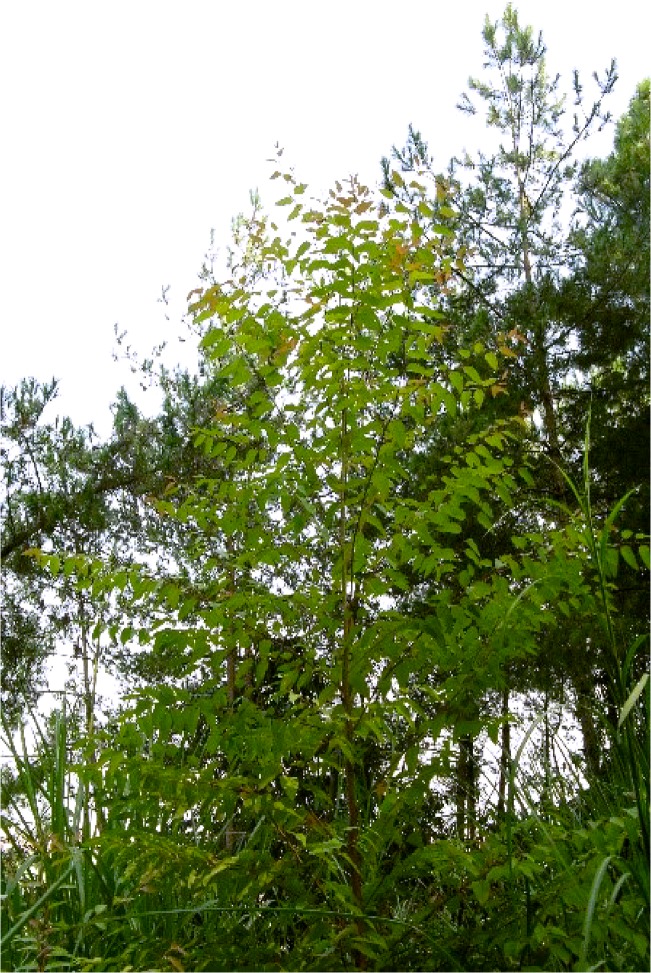
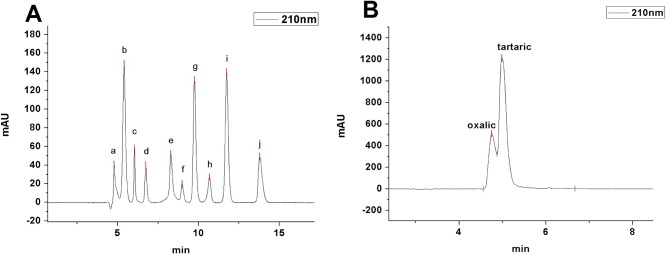
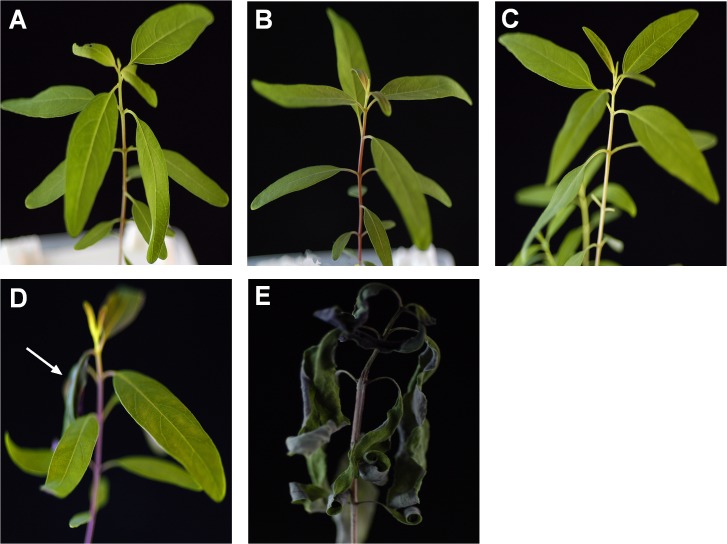
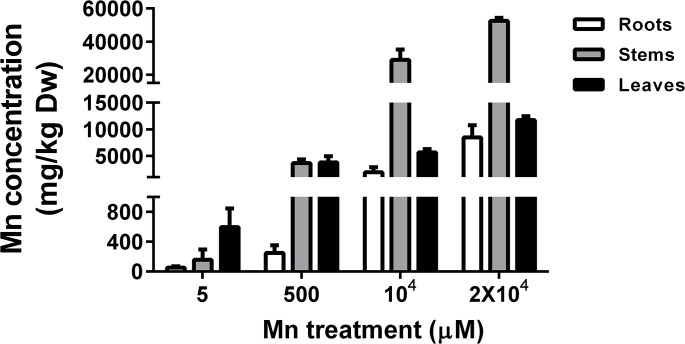
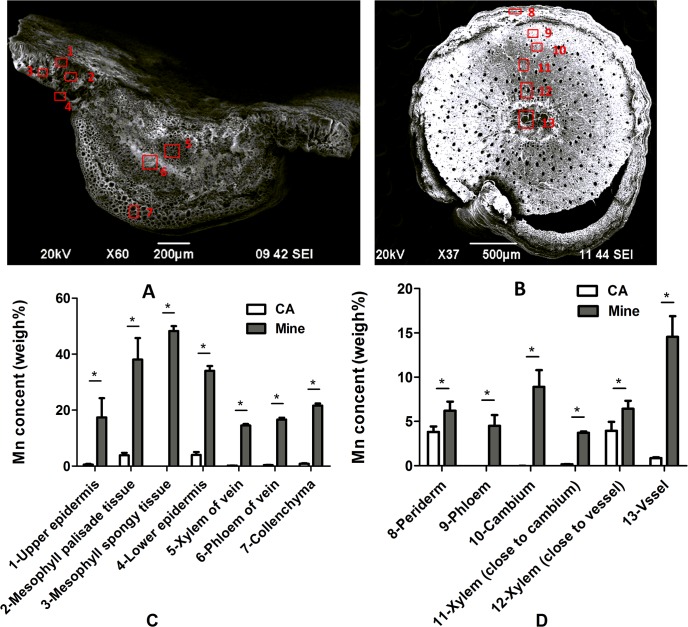
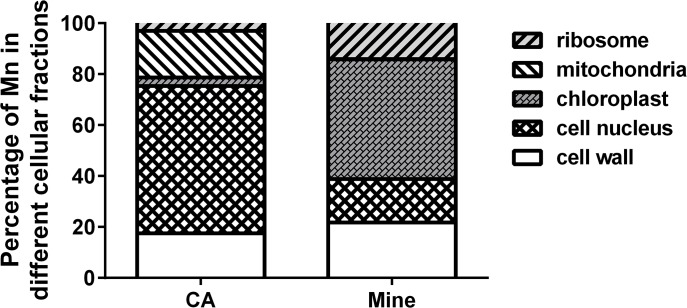
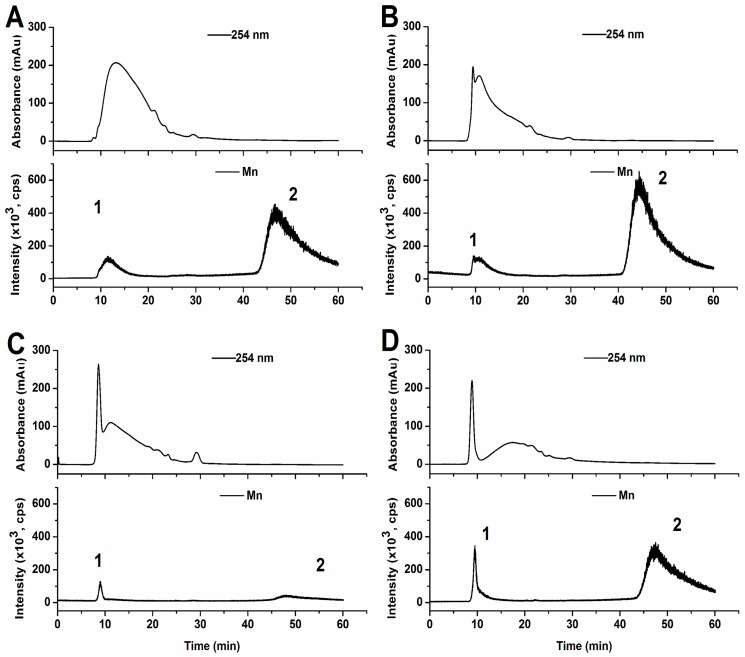
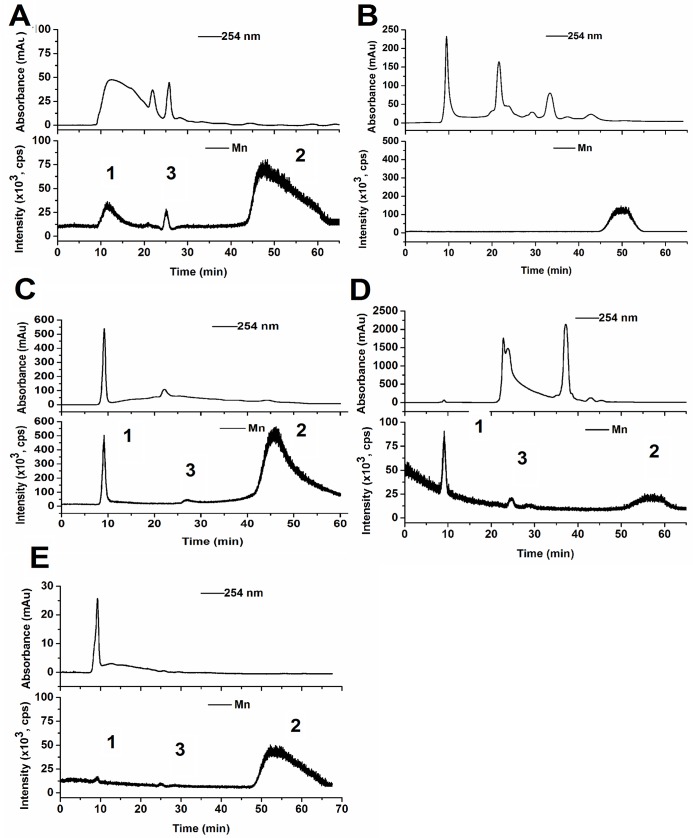
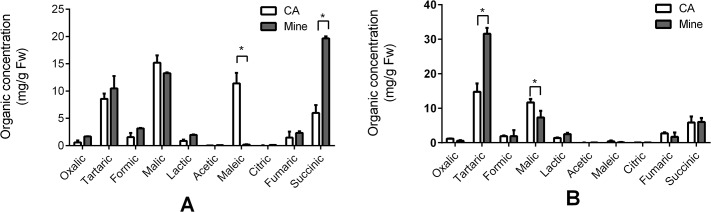
Manganese (Mn) is an essential micronutrient needed for plant growth and development, but can be toxic to plants in excess amounts. However, some plant species have detoxification mechanisms that allow them to accumulate Mn to levels that are normally toxic, a phenomenon known as hyperaccumulation. These species are excellent candidates for developing a cost-effective remediation strategy for Mn-polluted soils. In this study, we identified a new passive Mn-hyperaccumulator Eucalyptus grandis × E. urophylla during a field survey in southern China in July 2010. This hybrid can accumulate as much as 13,549 mg/kg DW Mn in its leaves. Our results from Scanning Electron Microscope (SEM) X-ray microanalysis indicate that Mn is distributed in the entire leaf and stem cross-section, especially in photosynthetic palisade, spongy mesophyll tissue, and stem xylem vessels. Results from size-exclusion chromatography coupled with ICP-MS (Inductively coupled plasma mass spectrometry) lead us to speculate that Mn associates with relatively high molecular weight proteins and low molecular weight organic acids, including tartaric acid, to avoid Mn toxicity. Our results provide experimental evidence that both proteins and organic acids play important roles in Mn detoxification in Eucalyptus grandis × E. urophylla. The key characteristics of Eucalyptus grandis × E. urophylla are an increased Mn translocation facilitated by transpiration through the xylem to the leaves and further distribution throughout the leaf tissues. Moreover, the Mn-speciation profile obtained for the first time in different cellular organelles of Eucalyptus grandis × E. urophylla suggested that different organelles have differential accumulating abilities and unique mechanisms for Mn-detoxification.
锰(Mn)是植物生长发育所必需的微量营养素,但过量时对植物有毒。然而,一些植物物种具有解毒机制,使它们能够将锰积累到通常有毒的水平,这种现象称为超积累。这些物种是开发具有成本效益的锰污染土壤修复策略的优秀候选者。在本研究中,我们于2010年7月在中国南方的一次实地调查中鉴定出一种新的被动锰超积累植物巨桉×尾叶桉。这种杂交种的叶片中可积累高达13549 mg/kg干重的锰。我们的扫描电子显微镜(SEM)X射线微分析结果表明,锰分布在整个叶片和茎的横截面上,特别是在光合栅栏组织、海绵状叶肉组织和茎木质部导管中。尺寸排阻色谱结合电感耦合等离子体质谱(ICP-MS)的结果使我们推测,锰与相对高分子量的蛋白质和低分子量的有机酸(包括酒石酸)结合,以避免锰中毒。我们的结果提供了实验证据,表明蛋白质和有机酸在巨桉×尾叶桉的锰解毒中都起着重要作用。巨桉×尾叶桉的关键特征是通过蒸腾作用促进锰通过木质部向叶片的转运,并进一步分布到整个叶片组织中。此外,首次在巨桉×尾叶桉的不同细胞器中获得的锰形态分布表明,不同细胞器具有不同的积累能力和独特的锰解毒机制。