Ju Se-Young, Park Jong-Hwan, Kwak Tong-Kyoung, Kim Kyu-Earn
Department of Food Science and Nutrition, Dankook University, Yongin, Gyeonggi 448-701, Korea.
Department of Food Science and Nutrition, Yonsei University, 50 Yonsei-ro, Seoul 120-749, Korea.
Nutr Res Pract. 2015 Oct;9(5):517-22. doi: 10.4162/nrp.2015.9.5.517. Epub 2015 Jul 21.
BACKGROUND/OBJECTIVES: The objective of this study was to investigate food allergens and prevalence rates of food allergies, followed by comparison of consumer attitudes and preferences regarding food allergy labeling by diagnosis of food allergies.
SUBJECTS/METHODS: A total of 543 individuals living in Seoul and Gyeonggi area participated in the survey from October 15 to 22 in 2013.
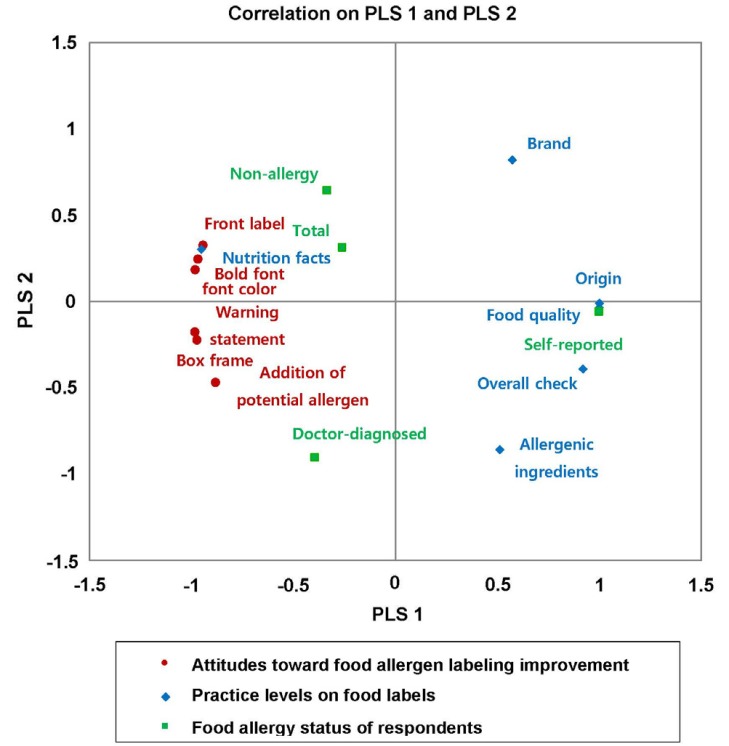
The results show that the prevalence of doctor-diagnosed food allergies was 17.5%, whereas 6.4% of respondents self-reported food allergies. The most common allergens of doctor-diagnosed and self-reported food allergy respondents were peaches (30.3%) and eggs (33.3%), respectively, followed by peanuts, cow's milk, and crab. Regarding consumer attitudes toward food labeling, checking food allergens as an item was only significantly different between allergic and non-allergic respondents among all five items (P < 0.001). All respondents reported that all six items (bold font, font color, box frame, warning statement, front label, and addition of potential allergens) were necessary for an improved food allergen labeling system. PLSR analysis determined that the doctor-diagnosed group and checking of food allergens were positively correlated, whereas the non-allergy group was more concerned with checking product brands.
An effective food labeling system is very important for health protection of allergic consumers. Additionally, government agencies must develop policies regarding prevalence of food allergies in Korea. Based on this information, the food industry and government agencies should provide clear and accurate food labeling practices for consumers.
背景/目的:本研究的目的是调查食物过敏原和食物过敏的患病率,然后通过食物过敏诊断比较消费者对食物过敏标签的态度和偏好。
对象/方法:2013年10月15日至22日,共有543名居住在首尔和京畿道地区的人参与了这项调查。
结果显示,医生诊断的食物过敏患病率为17.5%,而6.4%的受访者自我报告有食物过敏。医生诊断和自我报告的食物过敏受访者中最常见的过敏原分别是桃子(30.3%)和鸡蛋(33.3%),其次是花生、牛奶和螃蟹。关于消费者对食品标签的态度,在所有五个项目中,将检查食物过敏原作为一项内容在过敏和非过敏受访者之间仅存在显著差异(P < 0.001)。所有受访者都表示,改进后的食物过敏原标签系统需要所有六个项目(粗体字、字体颜色、方框边框、警示声明、正面标签和添加潜在过敏原)。偏最小二乘回归分析确定,医生诊断组与检查食物过敏原呈正相关,而非过敏组更关注检查产品品牌。
有效的食品标签系统对保护过敏消费者的健康非常重要。此外,政府机构必须制定有关韩国食物过敏患病率的政策。基于这些信息,食品行业和政府机构应为消费者提供清晰准确的食品标签做法。