Lü Jian, Han Li-Wei, Alsmail Nada H, Blake Alexander J, Lewis William, Cao Rong, Schröder Martin
State Key Laboratory of Structural Chemistry, Fujian Institute of Research on the Structure of Matter, Chinese Academy of Sciences , Fuzhou, 350002 Fujian, P. R. China ; School of Chemistry, University of Nottingham , University Park, Nottingham NG7 2RD, U.K.
State Key Laboratory of Structural Chemistry, Fujian Institute of Research on the Structure of Matter, Chinese Academy of Sciences , Fuzhou, 350002 Fujian, P. R. China ; School of Chemistry and Chemical Engineering, Nantong University , Nantong, 226019 Jiangsu, P. R. China.
Cryst Growth Des. 2015 Sep 2;15(9):4219-4224. doi: 10.1021/acs.cgd.5b00395. Epub 2015 Jul 28.
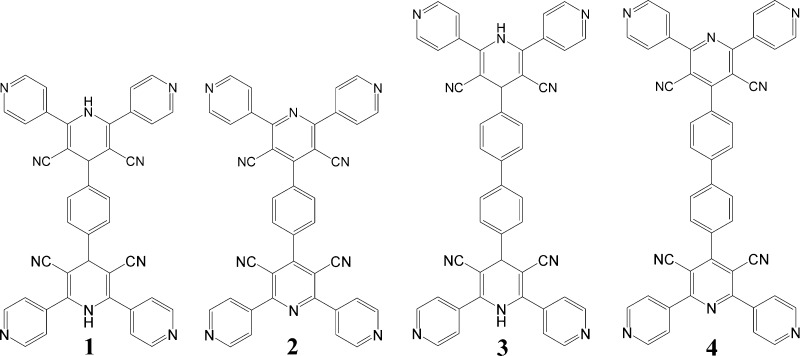
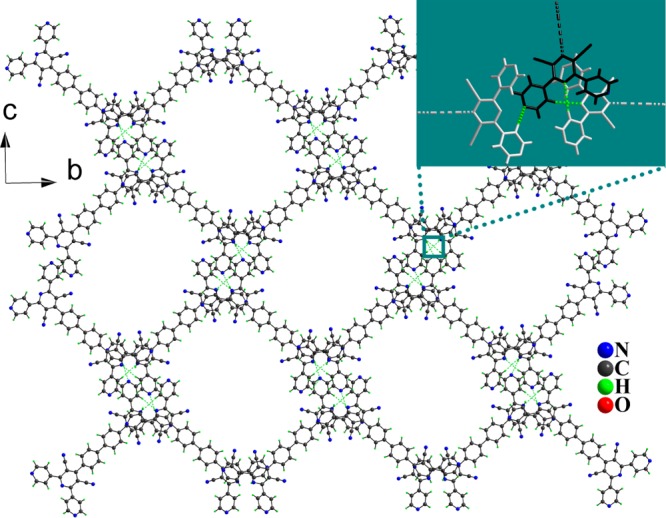
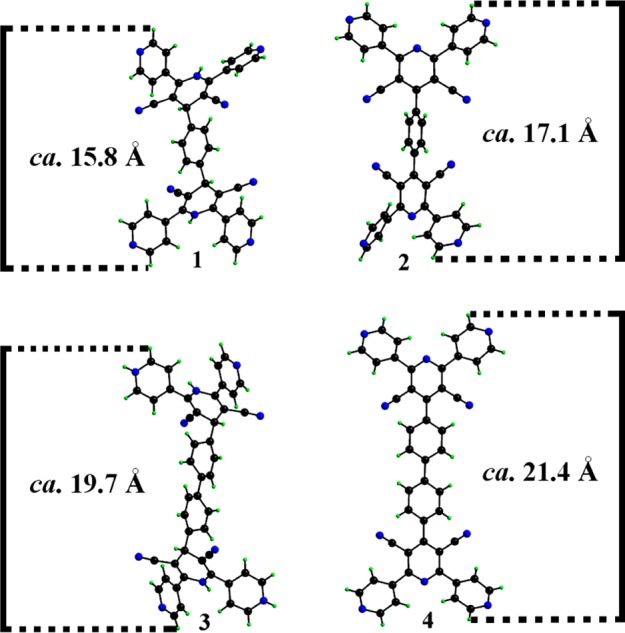
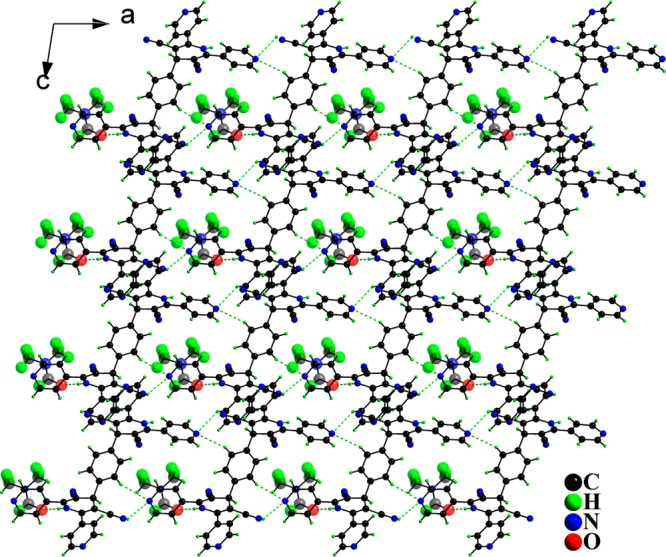
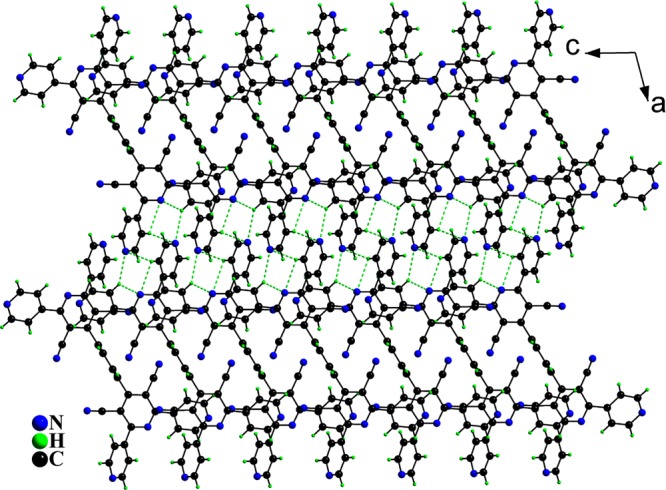
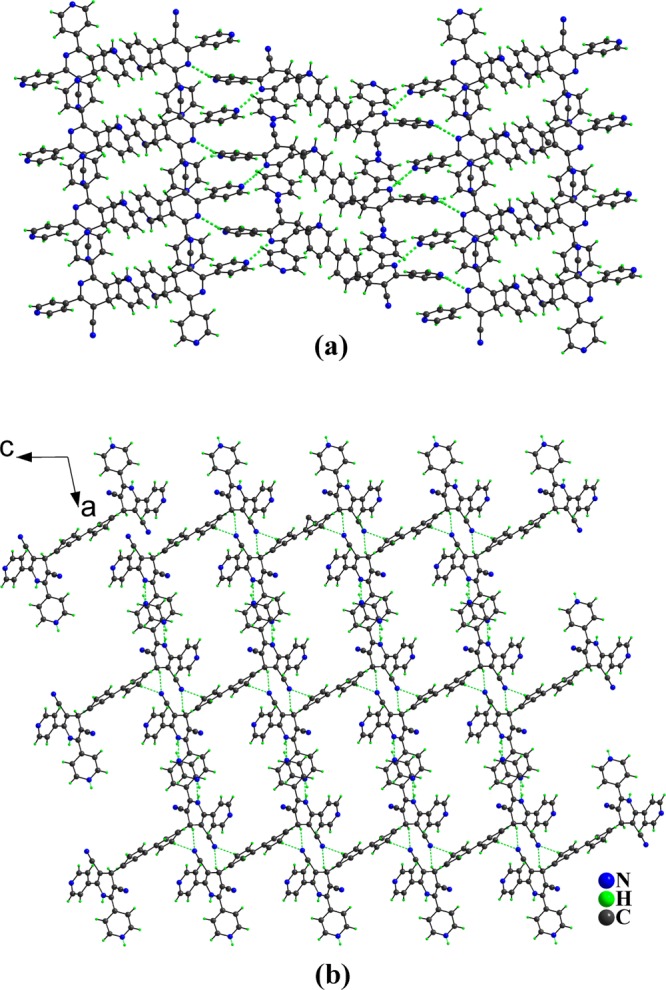
The crystallization of two dihydropyridyl molecules, 1,4-bis(4-(3,5-dicyano-2,6-dipyridyl)dihydropyridyl)benzene ([CHN]·2DMF, ·2DMF; DMF = dimethylformamide) and 1,4-bis(4-(3,5-dicyano-2,6-dipyridyl)dihydropyridyl)phenylbenzene ([CHN]·2DMF, ·2DMF), and their respective oxidized pyridyl analogues, 1,4-bis(4-(3,5-dicyano-2,6-dipyridyl)pyridyl)benzene ([CHN], ) and 1,4-bis(4-(3,5-dicyano-2,6-dipyridyl)pyridyl)phenylbenzene ([CHN]·DMF, ·DMF), has been achieved under solvothermal conditions. The dihydropyridyl molecules are converted to their pyridyl products via in situ oxidative dehydrogenation in solution. The structures of the four molecules have been fully characterized by single crystal and powder X-ray diffraction. The oxidized pyridyl products, and , are more elongated due to aromatization of the dihydropyridyl rings at each end of their parent molecules and , respectively. The solid-state supramolecular structures of the pyridyl molecules are distinct from the dihydropyridyl molecules in terms of their hierarchical assembly via hydrogen bonding due to the loss of primary N-H hydrogen bond donors in the two electron oxidized tectons. Overall, the geometrically shorter molecules and display close-packed structures, whereas the more extended and assemble into more open supramolecular systems.
在溶剂热条件下实现了两种二氢吡啶分子,即1,4-双(4-(3,5-二氰基-2,6-二吡啶基)二氢吡啶基)苯([CHN]·2DMF,·2DMF;DMF = 二甲基甲酰胺)和1,4-双(4-(3,5-二氰基-2,6-二吡啶基)二氢吡啶基)苯基苯([CHN]·2DMF,·2DMF),以及它们各自的氧化吡啶类似物,即1,4-双(4-(3,5-二氰基-2,6-二吡啶基)吡啶基)苯([CHN],)和1,4-双(4-(3,5-二氰基-2,6-二吡啶基)吡啶基)苯基苯([CHN]·DMF,·DMF)的结晶。二氢吡啶分子在溶液中通过原位氧化脱氢转化为它们的吡啶产物。这四个分子的结构已通过单晶和粉末X射线衍射进行了全面表征。氧化吡啶产物 和 由于其母体分子 和 两端的二氢吡啶环分别芳构化而更加细长。由于两个电子氧化构造中主要N-H氢键供体的丧失,吡啶基分子的固态超分子结构在通过氢键进行的分级组装方面与二氢吡啶基分子不同。总体而言,几何形状较短的分子 和 呈现密堆积结构,而延伸性更强的 和 组装成更开放的超分子体系。