Shi Q, Haenen G R, Maas L, Arlt V M, Spina D, Vasquez Y Riffo, Moonen E, Veith C, Van Schooten F J, Godschalk R W L
Department of Pharmacology and Toxicology, NUTRIM School of Nutrition and Translational Research in Metabolism, Maastricht University, PO Box 616, 6200 MD, Maastricht, The Netherlands.
Analytical and Environmental Sciences Division, MRC-PHE Centre for Environmental and Health, King's College London, 150 Stamford Street, London, SE1 9NH, UK.
Arch Toxicol. 2016 Sep;90(9):2261-2273. doi: 10.1007/s00204-015-1593-7. Epub 2015 Oct 5.
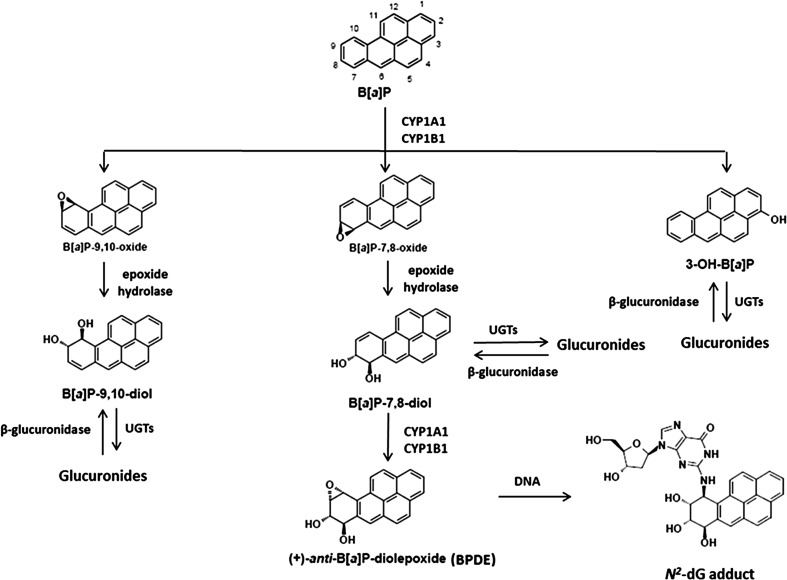
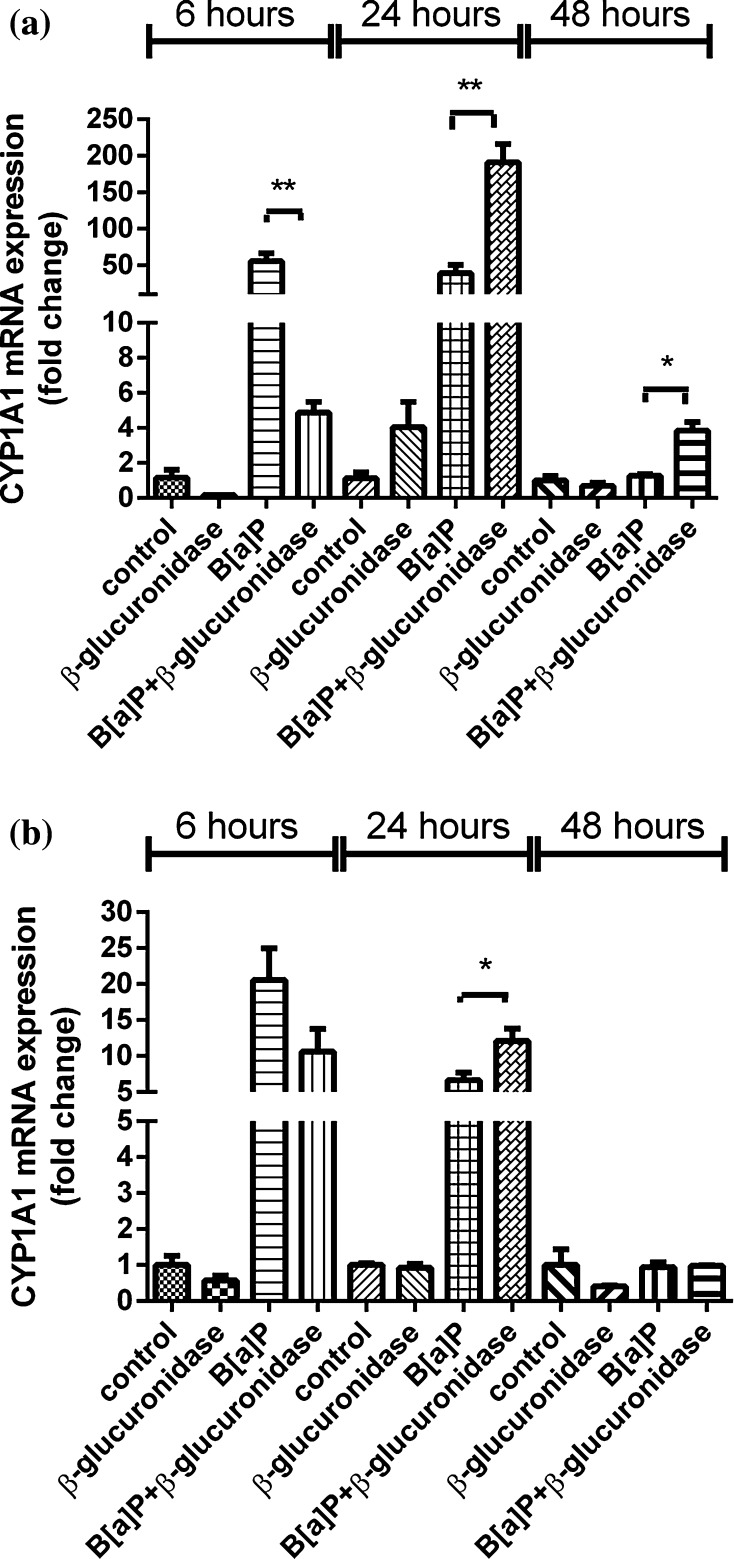
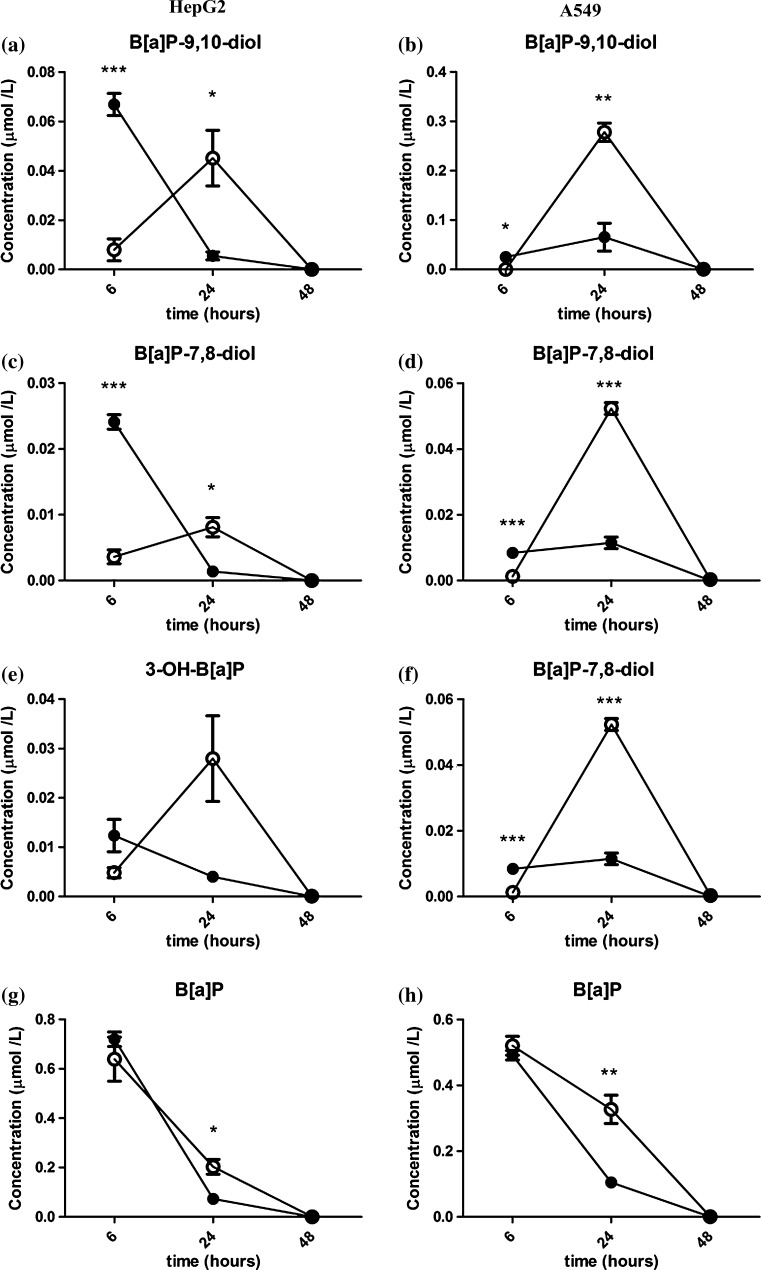
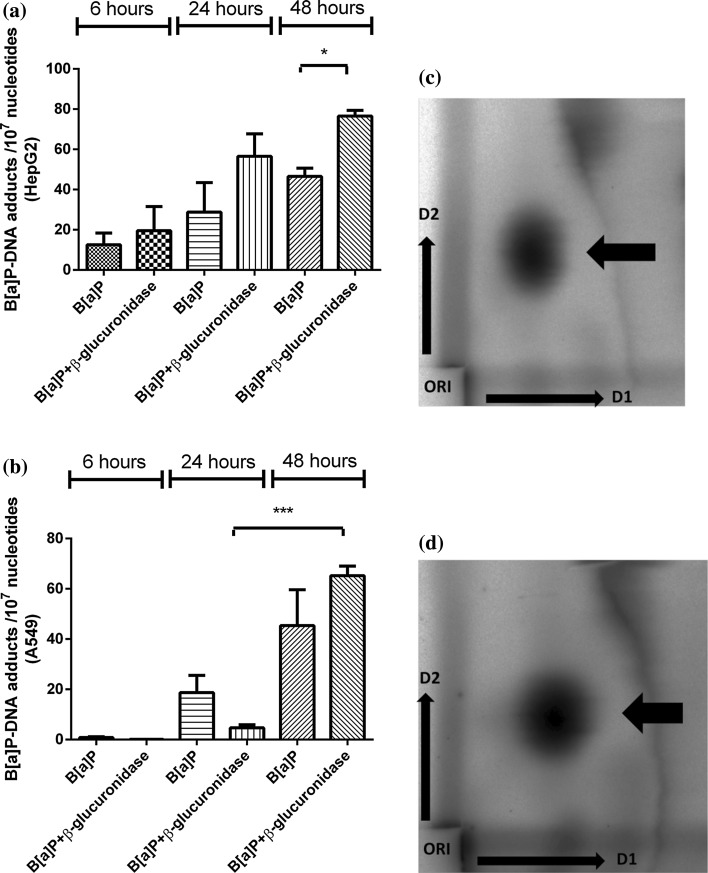
Neutrophils infiltrate tissues during inflammation, and when activated, they release β-glucuronidase. Since inflammation is associated with carcinogenesis, we investigated how extracellular β-glucuronidase changed the in vitro cellular response to the chemical carcinogen benzo(a)pyrene (B[a]P). For this we exposed human liver (HepG2) and lung (A549) cells to B[a]P in the presence or absence of β-glucuronidase. β-Glucuronidase reduced B[a]P-induced expression of CYP1A1 and CYP1B1 at 6 h after exposure, which did not depend on β-glucuronidase activity, because the inhibitor D-saccharic acid 1,4-lactone monohydrate did not antagonize the effect of β-glucuronidase. On the other hand, the inhibitory effect of β-glucuronidase on CYP expression was dependent on signalling via the insulin-like growth factor receptor (IGF2R, a known receptor for β-glucuronidase), because co-incubation with the IGF2R inhibitor mannose-6-phosphate completely abolished the effect of β-glucuronidase. Extracellular β-glucuronidase also reduced the formation of several B[a]P metabolites and B[a]P-DNA adducts. Interestingly, at 24 h of exposure, β-glucuronidase significantly enhanced CYP expression, probably because β-glucuronidase de-glucuronidated B[a]P metabolites, which continued to trigger the aryl hydrocarbon receptor (Ah receptor) and induced expression of CYP1A1 (in both cell lines) and CYP1B1 (in A549 only). Consequently, significantly higher concentrations of B[a]P metabolites and DNA adducts were found in β-glucuronidase-treated cells at 24 h. DNA adduct levels peaked at 48 h in cells that were exposed to B[a]P and treated with β-glucuronidase. Overall, these data show that β-glucuronidase alters the cellular response to B[a]P and ultimately enhances B[a]P-induced DNA adduct levels.
在炎症过程中,中性粒细胞会浸润组织,激活后会释放β-葡萄糖醛酸酶。由于炎症与致癌作用相关,我们研究了细胞外β-葡萄糖醛酸酶如何改变体外细胞对化学致癌物苯并(a)芘(B[a]P)的反应。为此,我们在有或没有β-葡萄糖醛酸酶的情况下,将人肝癌细胞(HepG2)和肺癌细胞(A549)暴露于B[a]P。β-葡萄糖醛酸酶在暴露后6小时降低了B[a]P诱导的CYP1A1和CYP1B1的表达,这并不依赖于β-葡萄糖醛酸酶的活性,因为抑制剂D-糖二酸1,4-内酯一水合物并不能拮抗β-葡萄糖醛酸酶的作用。另一方面,β-葡萄糖醛酸酶对CYP表达的抑制作用依赖于通过胰岛素样生长因子受体(IGF2R,一种已知的β-葡萄糖醛酸酶受体)的信号传导,因为与IGF2R抑制剂6-磷酸甘露糖共同孵育完全消除了β-葡萄糖醛酸酶的作用。细胞外β-葡萄糖醛酸酶还减少了几种B[a]P代谢产物和B[a]P-DNA加合物的形成。有趣的是,在暴露24小时时,β-葡萄糖醛酸酶显著增强了CYP表达,可能是因为β-葡萄糖醛酸酶使B[a]P代谢产物去葡萄糖醛酸化,这些代谢产物继续触发芳烃受体(Ah受体)并诱导CYP1A1(在两种细胞系中)和CYP1B1(仅在A549中)的表达。因此,在24小时时,在经β-葡萄糖醛酸酶处理的细胞中发现了显著更高浓度的B[a]P代谢产物和DNA加合物。在暴露于B[a]P并用β-葡萄糖醛酸酶处理的细胞中,DNA加合物水平在48小时达到峰值。总体而言,这些数据表明β-葡萄糖醛酸酶改变了细胞对B[a]P的反应,并最终提高了B[a]P诱导的DNA加合物水平。