Jeon Young-Tae, Na Hyeongjin, Ryu Heeju, Chung Yeonseok
Department of Anesthesiology and Pain Medicine, College of Medicine, Seoul National University, Seoul, Republic of Korea.
Laboratory of Immune Regulation, Institute of Pharmaceutical Sciences, College of Pharmacy, Seoul National University, Seoul, Republic of Korea.
PLoS One. 2015 Oct 7;10(10):e0139845. doi: 10.1371/journal.pone.0139845. eCollection 2015.
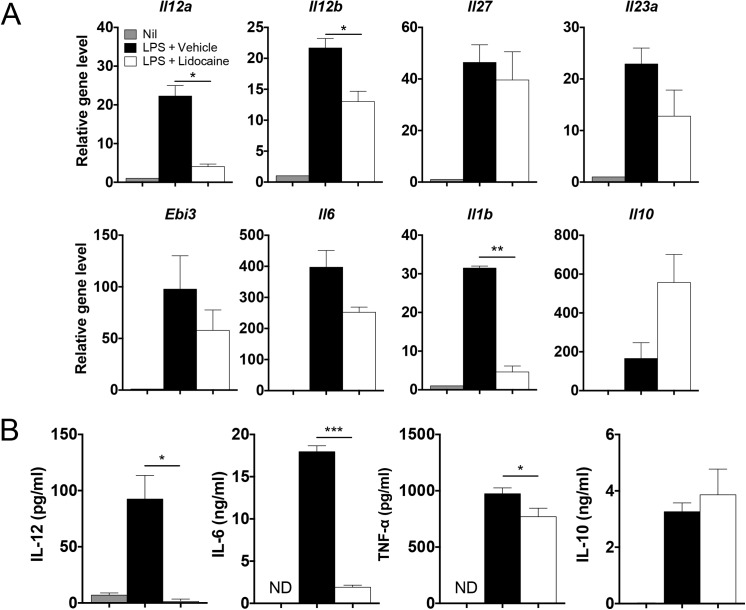
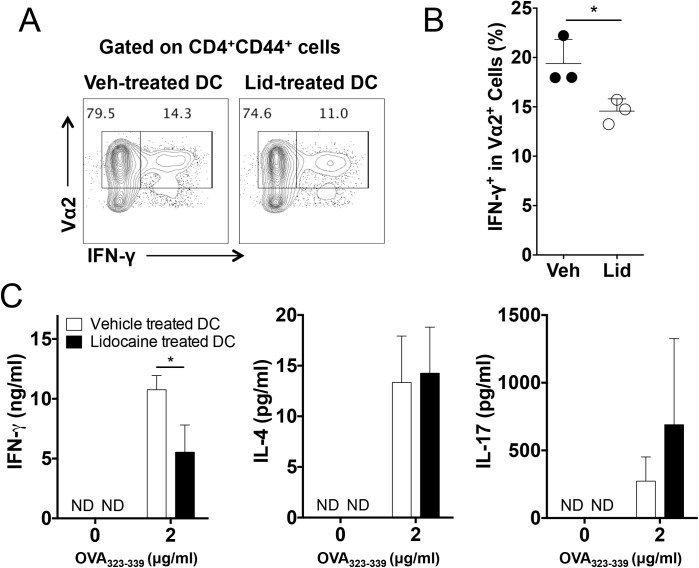
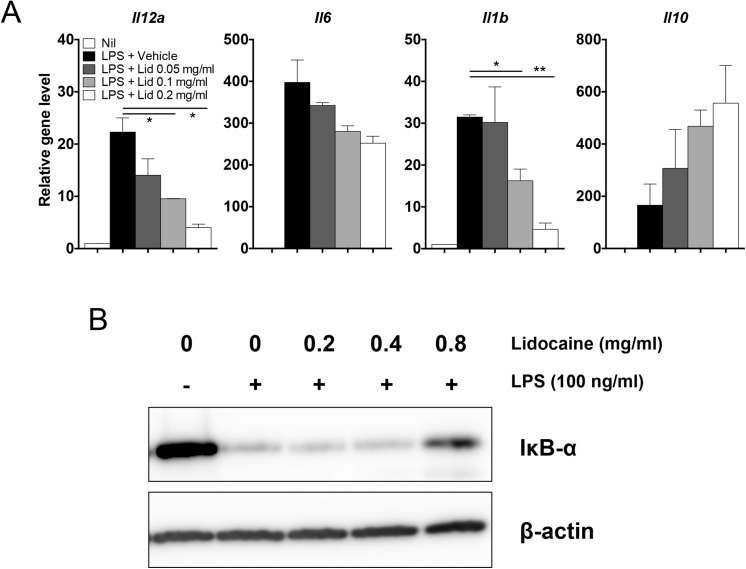
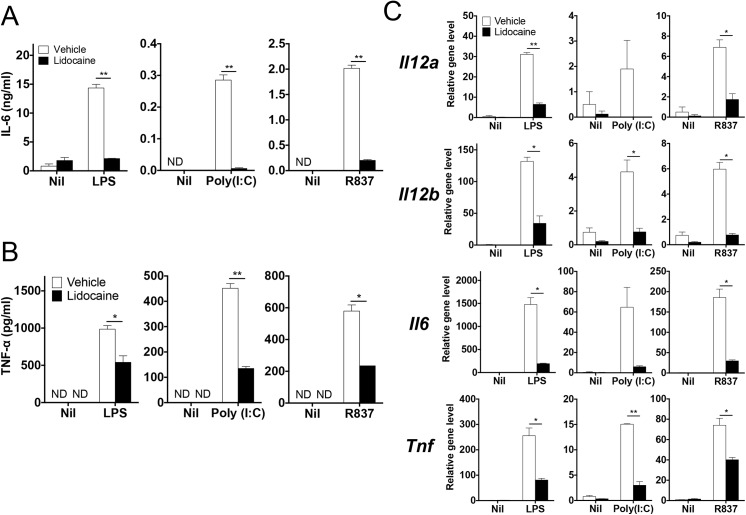
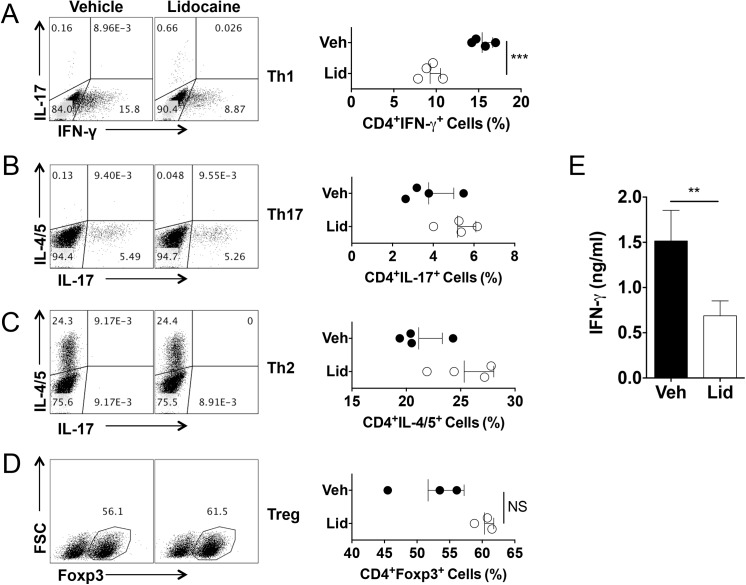
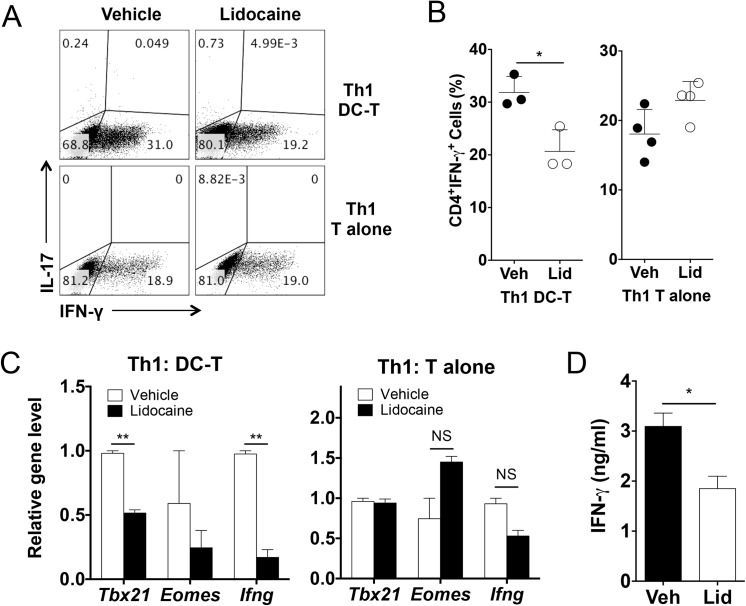
Dendritic cells play an essential role in bridging innate and adaptive immunity by recognizing cellular stress including pathogen- and damage-associated molecular patterns and by shaping the types of antigen-specific T cell immunity. Although lidocaine is widely used in clinical settings that trigger cellular stress, it remains unclear whether such treatment impacts the activation of innate immune cells and subsequent differentiation of T cells. Here we showed that lidocaine inhibited the production of IL-6, TNFα and IL-12 from dendritic cells in response to toll-like receptor ligands including lipopolysaccharide, poly(I:C) and R837 in a dose-dependent manner. Notably, the differentiation of Th1 cells was significantly suppressed by the addition of lidocaine while the same treatment had little effect on the differentiation of Th17, Th2 and regulatory T cells in vitro. Moreover, lidocaine suppressed the ovalbumin-specific Th1 cell responses in vivo induced by the adoptive transfer of ovalbumin-pulsed dendritic cells. These results demonstrate that lidocaine inhibits the activation of dendritic cells in response to toll-like receptor signals and subsequently suppresses the differentiation of Th1 cell responses.
树突状细胞在连接固有免疫和适应性免疫方面发挥着重要作用,它通过识别包括病原体和损伤相关分子模式在内的细胞应激,并塑造抗原特异性T细胞免疫的类型来实现这一功能。尽管利多卡因广泛应用于引发细胞应激的临床环境中,但这种治疗是否会影响固有免疫细胞的激活以及随后T细胞的分化仍不清楚。在这里,我们表明利多卡因以剂量依赖的方式抑制树突状细胞对包括脂多糖、聚肌苷酸:聚胞苷酸和R837在内的Toll样受体配体产生白细胞介素-6、肿瘤坏死因子α和白细胞介素-12。值得注意的是,在体外添加利多卡因可显著抑制Th1细胞的分化,而相同处理对Th17、Th2和调节性T细胞的分化影响很小。此外,利多卡因在体内抑制了卵清蛋白脉冲树突状细胞过继转移诱导的卵清蛋白特异性Th1细胞反应。这些结果表明,利多卡因抑制树突状细胞对Toll样受体信号的激活,并随后抑制Th1细胞反应的分化。