Koehler Gage, Rohloff Jens, Wilson Robert C, Kopka Joachim, Erban Alexander, Winge Per, Bones Atle M, Davik Jahn, Alsheikh Muath K, Randall Stephen K
Department of Biology, Indiana University-Purdue University Indianapolis, Indianapolis IN, USA.
Department of Biology, Norwegian University of Science and Technology Trondheim, Norway.
Front Plant Sci. 2015 Oct 15;6:826. doi: 10.3389/fpls.2015.00826. eCollection 2015.
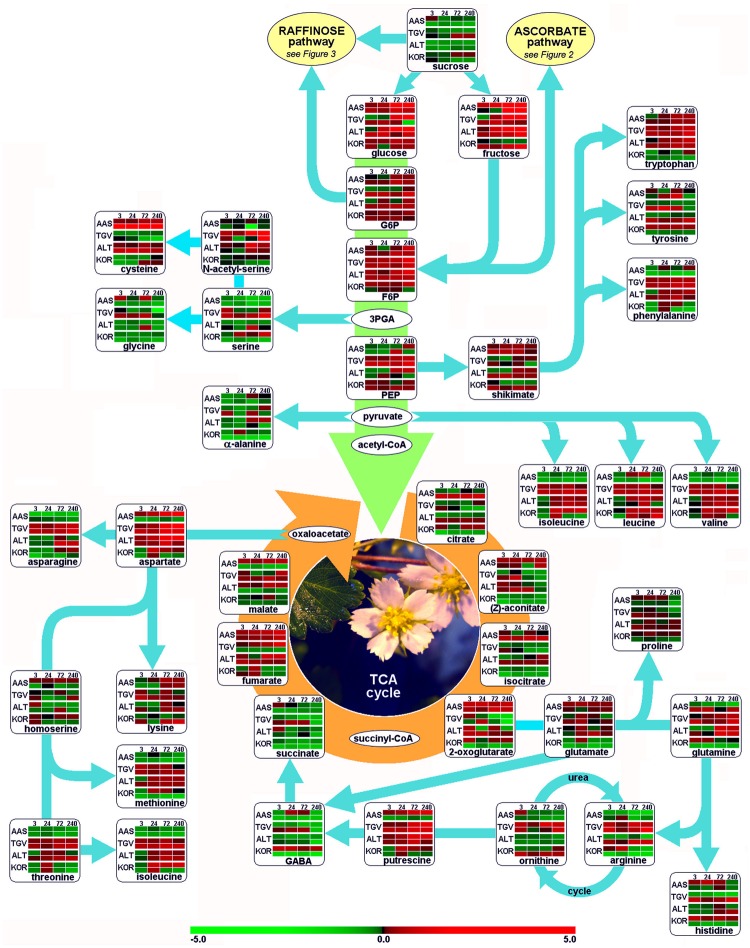
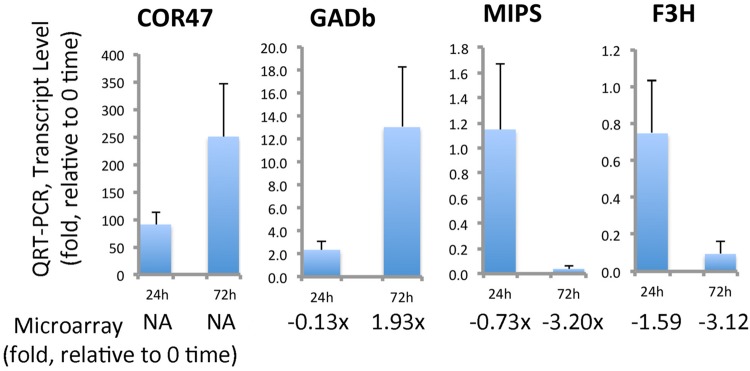
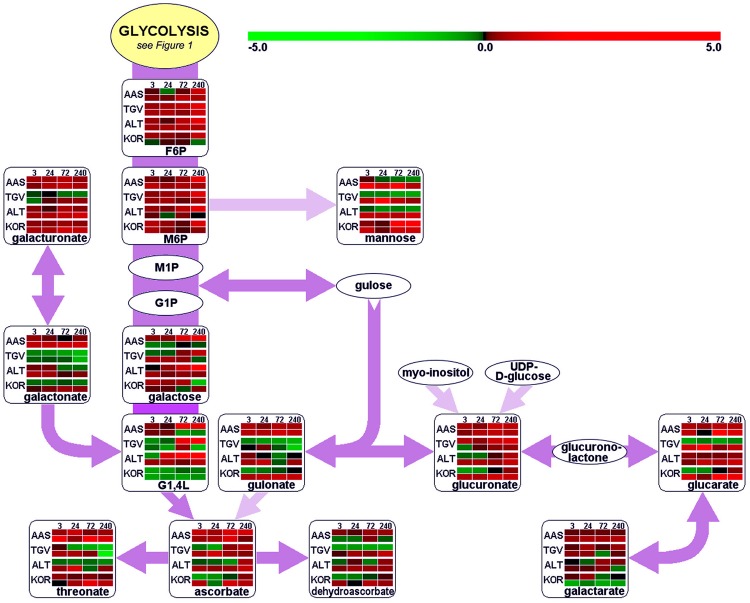
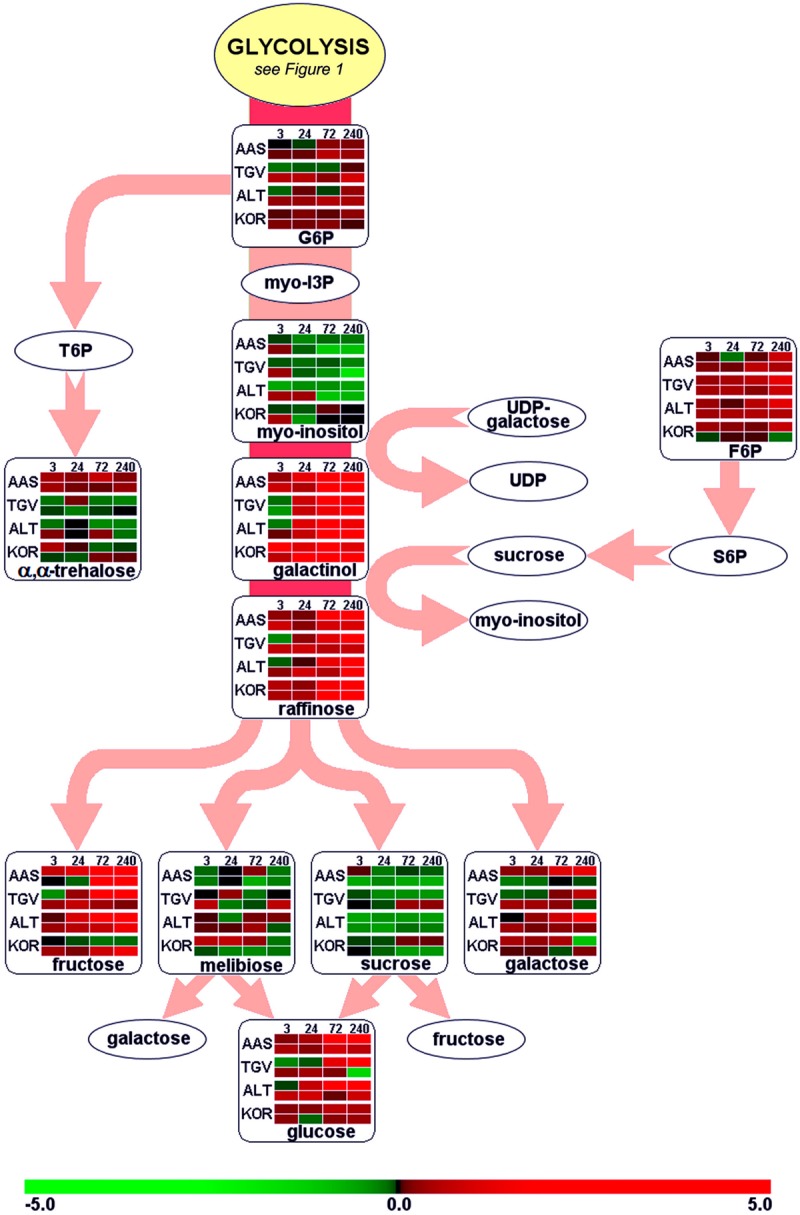
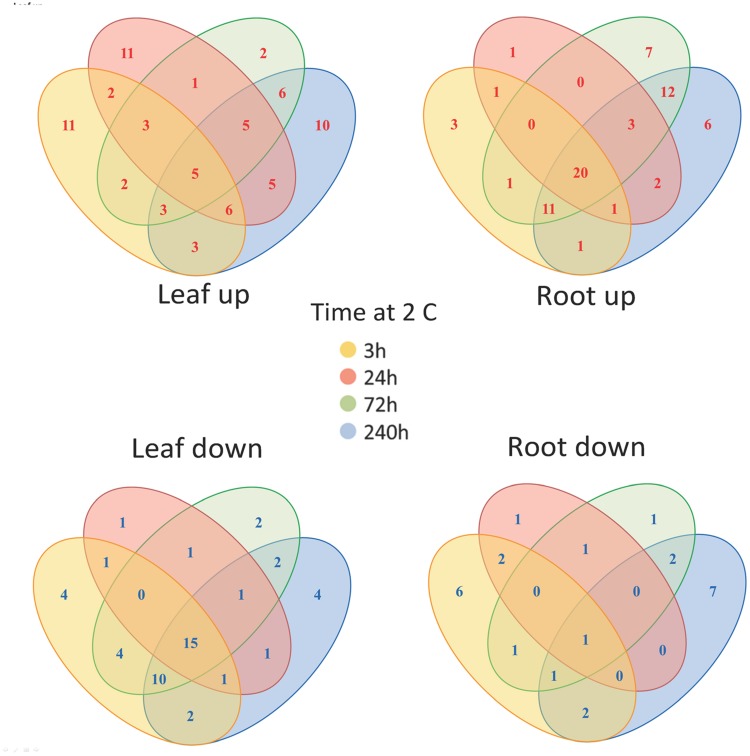
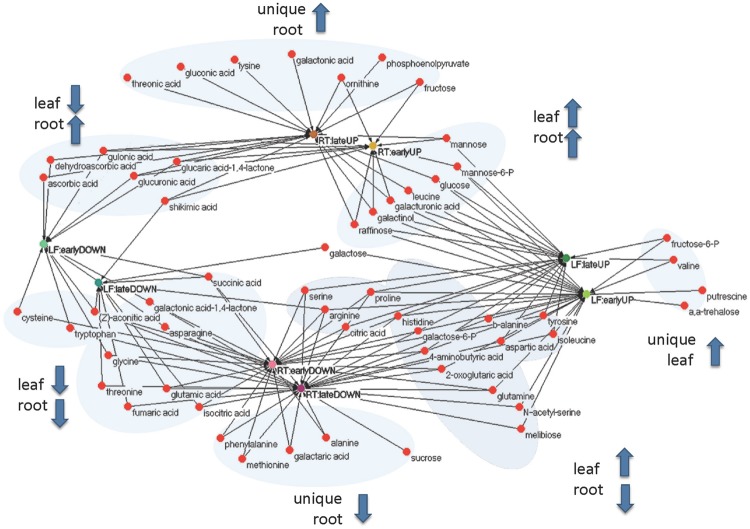
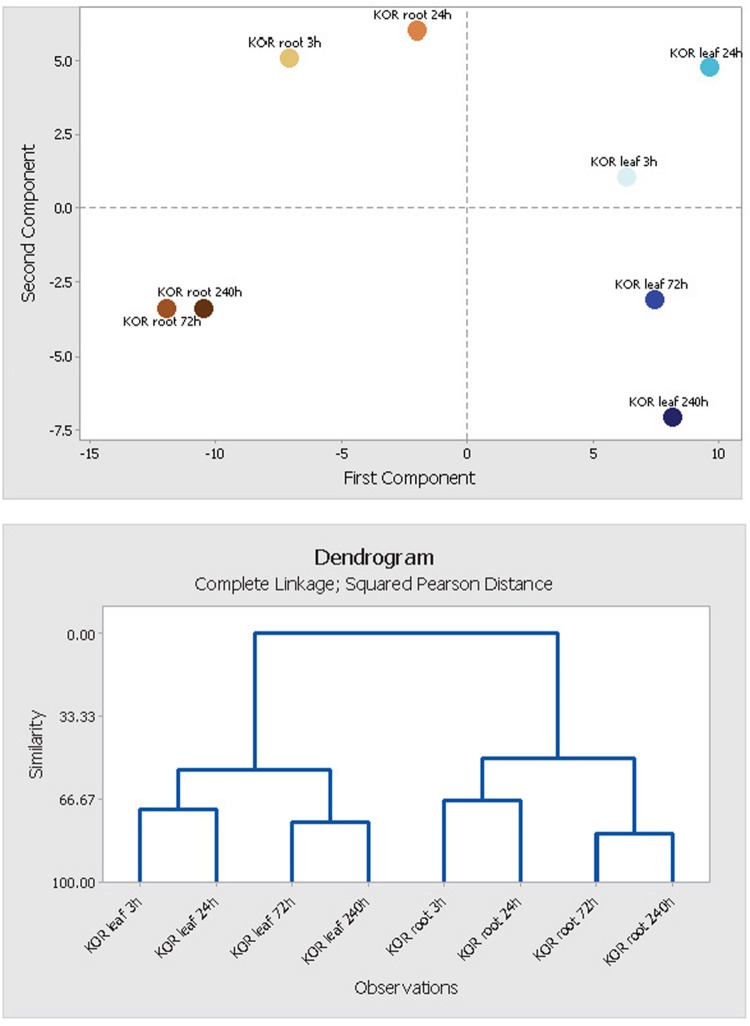
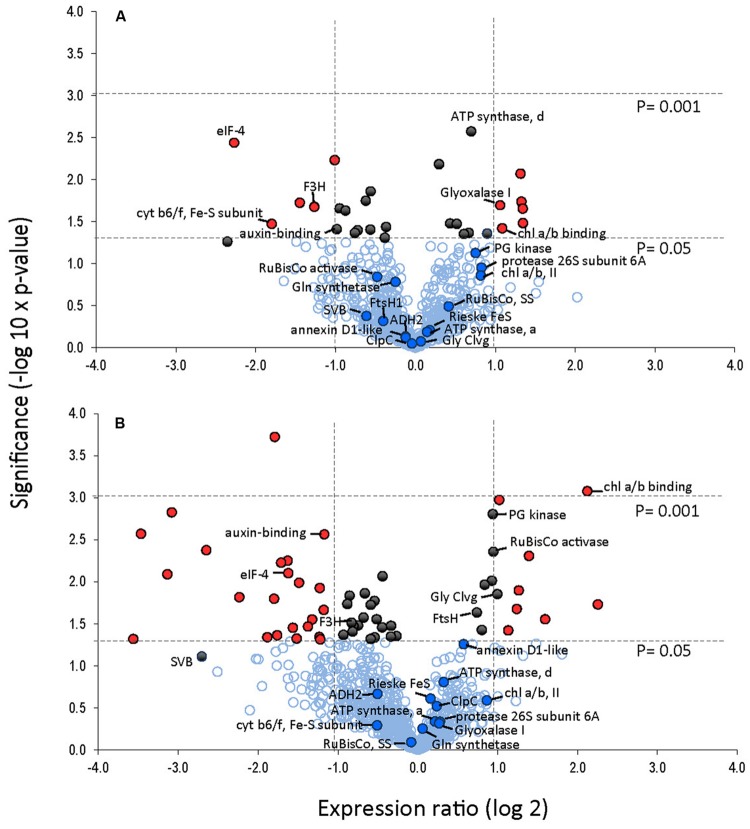
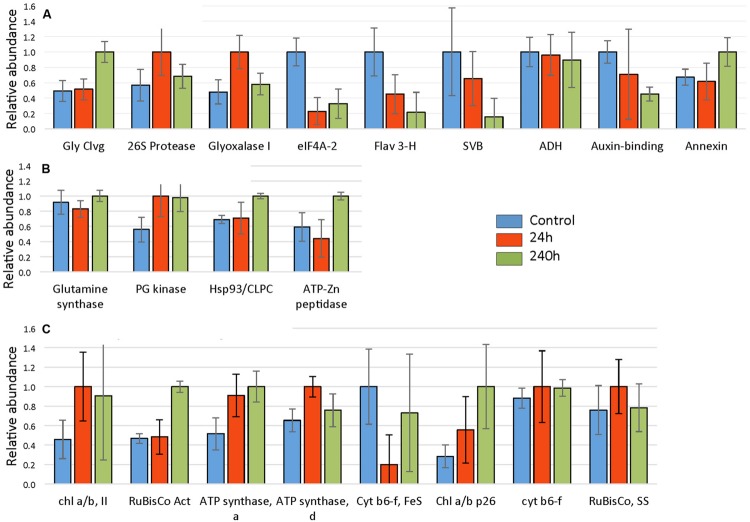
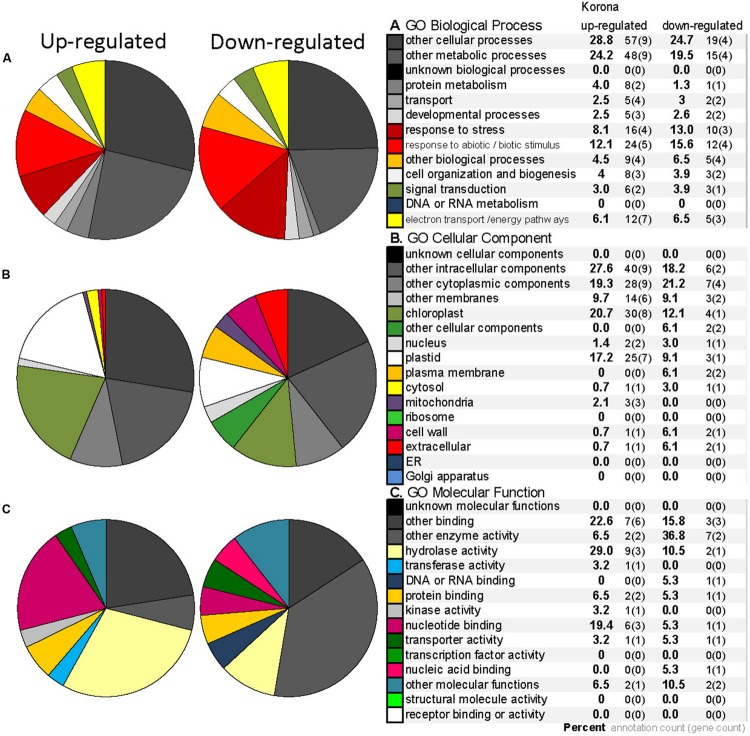
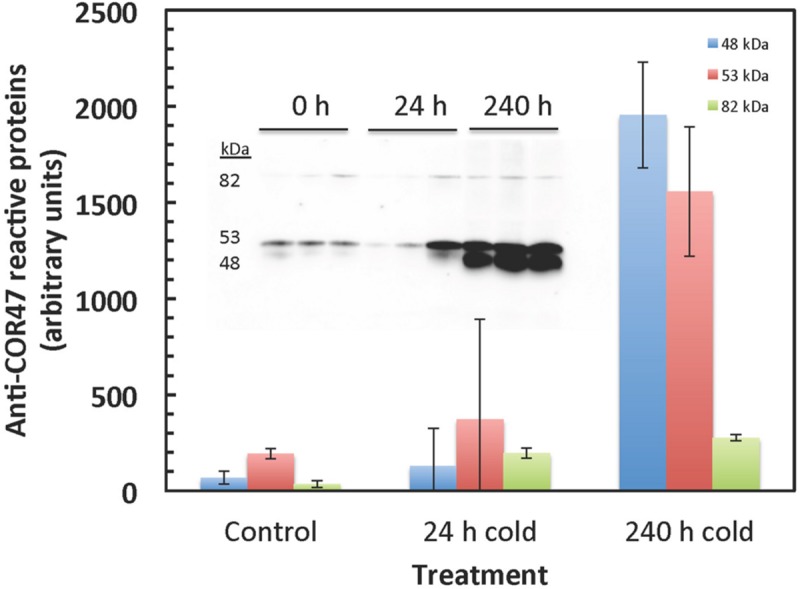
To assess underlying metabolic processes and regulatory mechanisms during cold exposure of strawberry, integrative "omic" approaches were applied to Fragaria × ananassa Duch. 'Korona.' Both root and leaf tissues were examined for responses to the cold acclimation processes. Levels of metabolites, proteins, and transcripts in tissues from plants grown at 18°C were compared to those following 1-10 days of cold (2°C) exposure. When leaves and roots were subjected to GC/TOF-MS-based metabolite profiling, about 160 compounds comprising mostly structurally annotated primary and secondary metabolites, were found. Overall, 'Korona' showed a modest increase of protective metabolites such as amino acids (aspartic acid, leucine, isoleucine, and valine), pentoses, phosphorylated and non-phosphorylated hexoses, and distinct compounds of the raffinose pathway (galactinol and raffinose). Distinctive responses were observed in roots and leaves. By 2DE proteomics a total of 845 spots were observed in leaves; 4.6% changed significantly in response to cold. Twenty-one proteins were identified, many of which were associated with general metabolism or photosynthesis. Transcript levels in leaves were determined by microarray, where dozens of cold associated transcripts were quantitatively characterized, and levels of several potential key contributors (e.g., the dehydrin COR47 and GADb) to cold tolerance were confirmed by qRT-PCR. Cold responses are placed within the existing knowledge base of low temperature-induced changes in plants, allowing an evaluation of the uniqueness or generality of Fragaria responses in photosynthetic tissues. Overall, the cold response characteristics of 'Korona' are consistent with a moderately cold tolerant plant.
为了评估草莓冷暴露期间潜在的代谢过程和调控机制,对凤梨草莓‘Korona’应用了整合“组学”方法。研究了根和叶组织对冷驯化过程的响应。将18°C下生长的植株组织中的代谢物、蛋白质和转录本水平与冷(2°C)暴露1 - 10天后的水平进行了比较。当对叶和根进行基于GC/TOF-MS的代谢物谱分析时,发现了约160种化合物,其中大部分是结构已注释的初级和次级代谢物。总体而言,‘Korona’显示出保护性代谢物的适度增加,如氨基酸(天冬氨酸、亮氨酸、异亮氨酸和缬氨酸)、戊糖、磷酸化和非磷酸化己糖以及棉子糖途径的独特化合物(肌醇半乳糖苷和棉子糖)。在根和叶中观察到了不同的响应。通过二维电泳蛋白质组学,在叶中总共观察到845个斑点;其中4.6%在冷处理后发生了显著变化。鉴定出了21种蛋白质,其中许多与一般代谢或光合作用相关。通过微阵列测定叶中的转录本水平,对数十种与冷相关的转录本进行了定量表征,并通过qRT-PCR证实了几种对耐寒性有潜在关键作用的转录本(如脱水蛋白COR47和GADb)的水平。将冷响应置于植物低温诱导变化的现有知识库中,从而能够评估草莓光合组织中响应的独特性或普遍性。总体而言,‘Korona’的冷响应特征与中度耐寒植物一致。