
诊断陷阱:表现为孤立性舌下神经麻痹的舌腺样囊性癌,病例报告及文献综述
Diagnostic pitfall: Adenoid cystic carcinoma of the tongue presenting as an isolated hypoglossal nerve palsy, case report and literature review.
作者信息
Wee Hide Elfrida, Azhar Rafay, Tang Po Yin, Teo Tze Hern, Iyer Narayanan Gopalakrishna, Tan Hiang Khoon, Tan Ngian Chye
机构信息
Department of Surgical Oncology, National Cancer Centre Singapore, 11 Hospital Drive, Singapore 169610.
Singapore General Hospital, Outram Rd, Singapore 169608.
出版信息
Int J Surg Case Rep. 2016;25:102-5. doi: 10.1016/j.ijscr.2016.05.060. Epub 2016 Jun 4.
INTRODUCTION
We describe a patient with an unusual presentation of an isolated hypoglossal nerve palsy as a result of perineural invasion (PI) from adenoid cystic carcinoma (ACC). We will also discuss the diagnostic pitfalls as well as present a short literature review of adenoid cystic carcinomas and suggest improvement to the current diagnostic algorithm for isolated hypoglossal nerve palsies.
PRESENTATION OF CASE
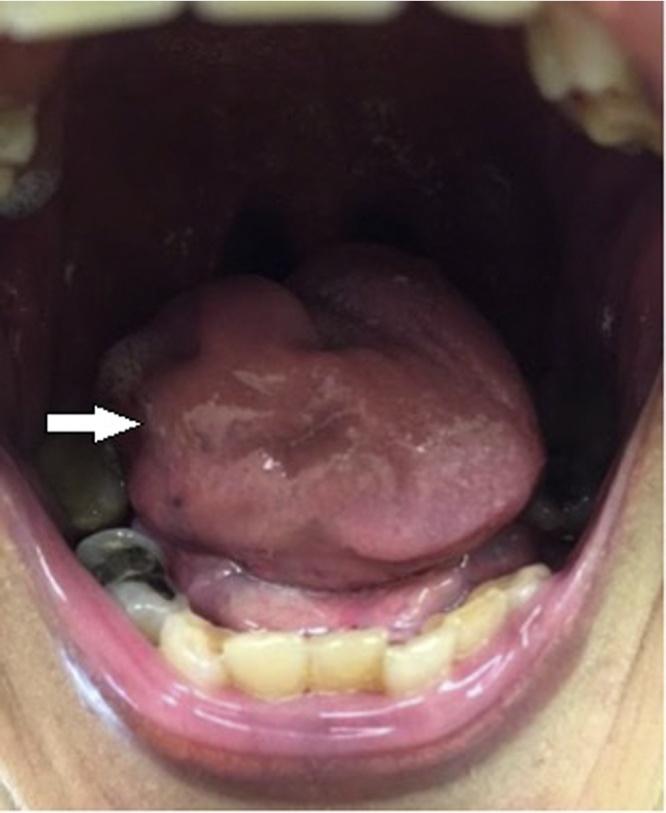
A 63year old Malay female presented with progressive dysphagia and slurred speech for one year. Physical examination showed unilateral right tongue wasting, fasciculation and deviation to the right. An MRI showed atrophy of the tongue due to denervation and subsequently she was treated in a neurology clinic for 8 months. Due to lack of improvement, she was referred to our surgical unit and underwent examination under anaesthesia (EUA) and biopsy. Histology showed adenoid cystic carcinoma with perineural involvement, resulting in lower motor neuron signs. She underwent radiotherapy to the base of her tongue (70Gy/35#). A PET-CT one month post treatment showed complete response.
DISCUSSION
Adenoid cystic carcinoma (ACC) is a salivary gland neoplasm. It is characterized by local invasiveness with frequent recurrence and indolent growth. It affects major salivary glands more than minor salivary glands. In malignancies that have a propensity for PI such as ACC, patients may present atypically with nerve palsies. In infiltrative lesions, the primary tumour may not be evident on magnetic resonance imaging. Therefore, to achieve a diagnosis, a high index of suspicion is required. When the diagnosis is in question, deep biopsy and positron emission tomography may be useful.
引言
我们描述了一名患者,其因腺样囊性癌(ACC)的神经周围浸润(PI)导致孤立性舌下神经麻痹,呈现出不寻常的表现。我们还将讨论诊断中的陷阱,并对腺样囊性癌进行简短的文献综述,并建议改进当前针对孤立性舌下神经麻痹的诊断算法。
病例介绍
一名63岁的马来女性,出现进行性吞咽困难和言语不清一年。体格检查显示右侧舌肌单侧萎缩、肌束震颤并偏向右侧。磁共振成像(MRI)显示由于去神经支配导致舌肌萎缩,随后她在神经科诊所接受了8个月的治疗。由于病情没有改善,她被转诊至我们的外科病房,接受了麻醉下检查(EUA)和活检。组织学检查显示为腺样囊性癌伴神经周围受累,导致下运动神经元体征。她接受了舌根部放疗(70Gy/35次)。治疗后一个月的正电子发射断层扫描(PET-CT)显示完全缓解。
讨论
腺样囊性癌(ACC)是一种唾液腺肿瘤。其特点是局部侵袭性强,复发频繁且生长缓慢。它对大唾液腺的影响大于小唾液腺。在像ACC这样容易发生神经周围浸润的恶性肿瘤中,患者可能会以神经麻痹的非典型表现出现。在浸润性病变中,原发性肿瘤在磁共振成像上可能不明显。因此,要做出诊断,需要高度的怀疑指数。当诊断存疑时,深部活检和正电子发射断层扫描可能会有所帮助。



 Zotero 插件