Nishida Kentaro, Kubota Teruyo, Matsumoto Saki, Kato Junki, Watanabe Yu, Yamamoto Atsuko, Furui Mari, Ohishi Akihiro, Nagasawa Kazuki
Department of Environmental Biochemistry, Kyoto Pharmaceutical University, 5 Nakauchi-cho, Misasagi, Yamashina-ku, Kyoto, Japan.
PLoS One. 2016 Jun 27;11(6):e0158401. doi: 10.1371/journal.pone.0158401. eCollection 2016.
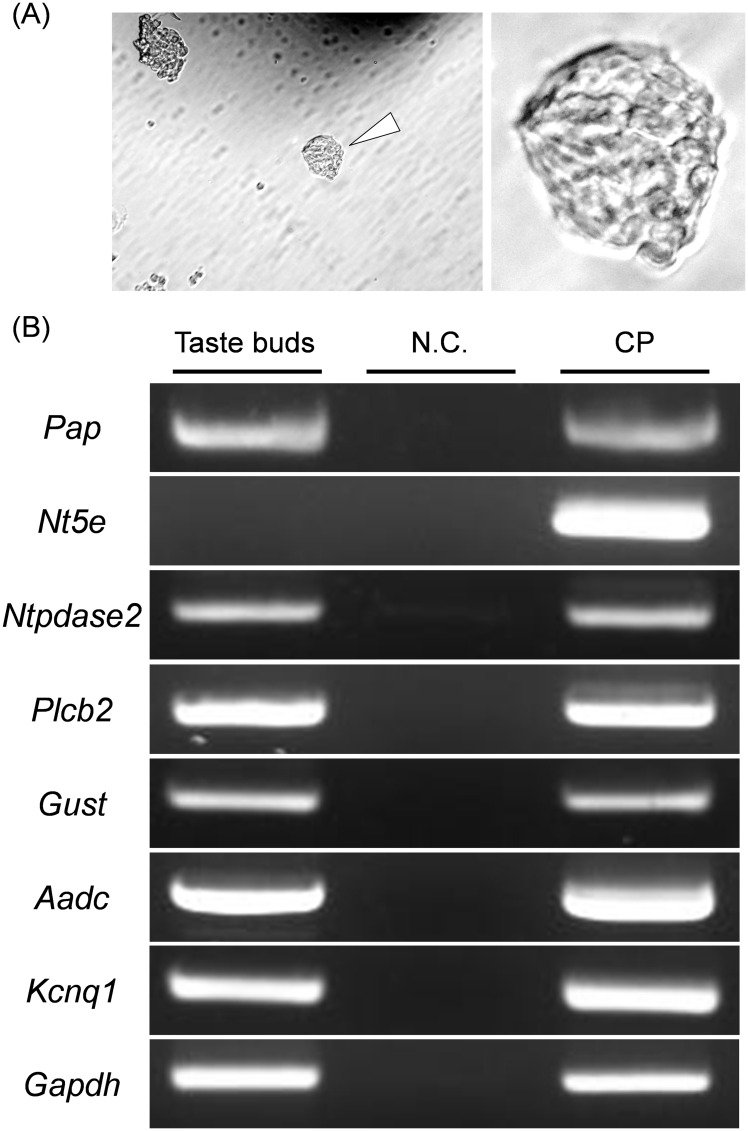
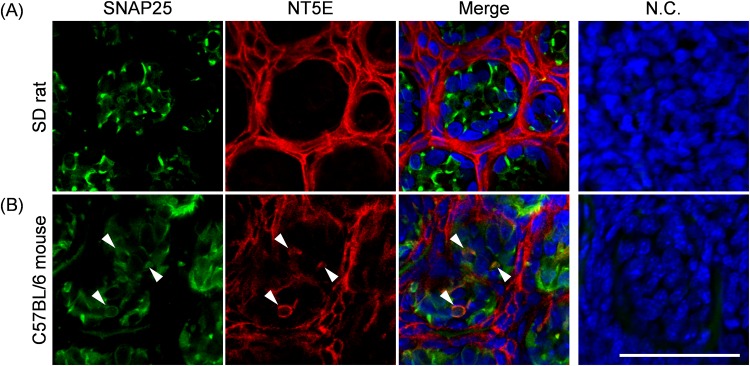
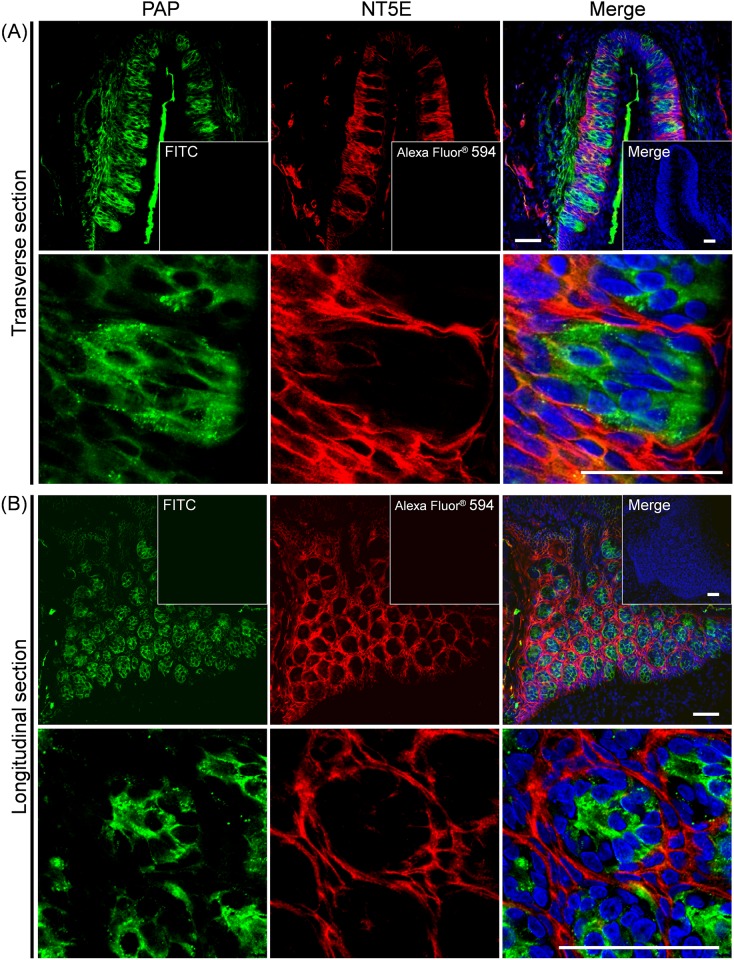
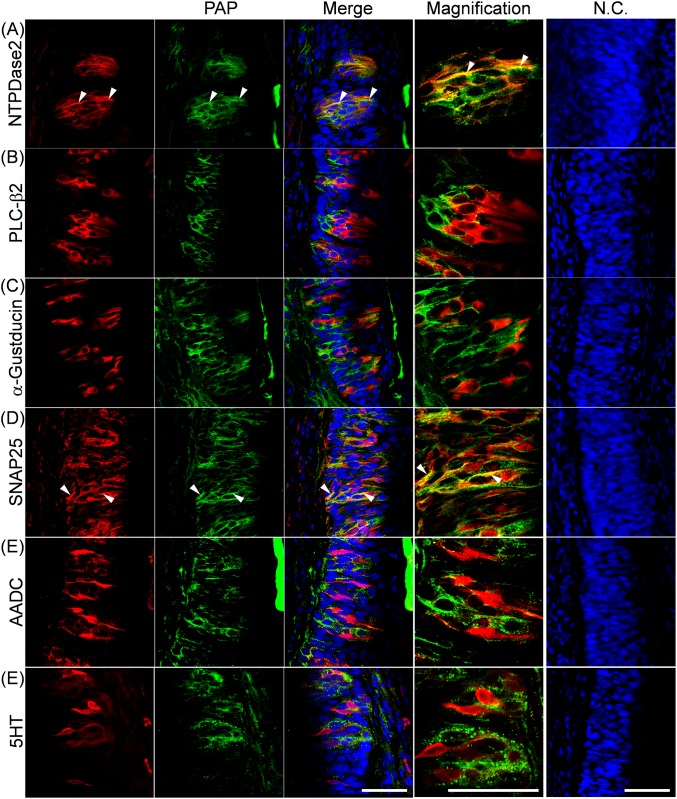
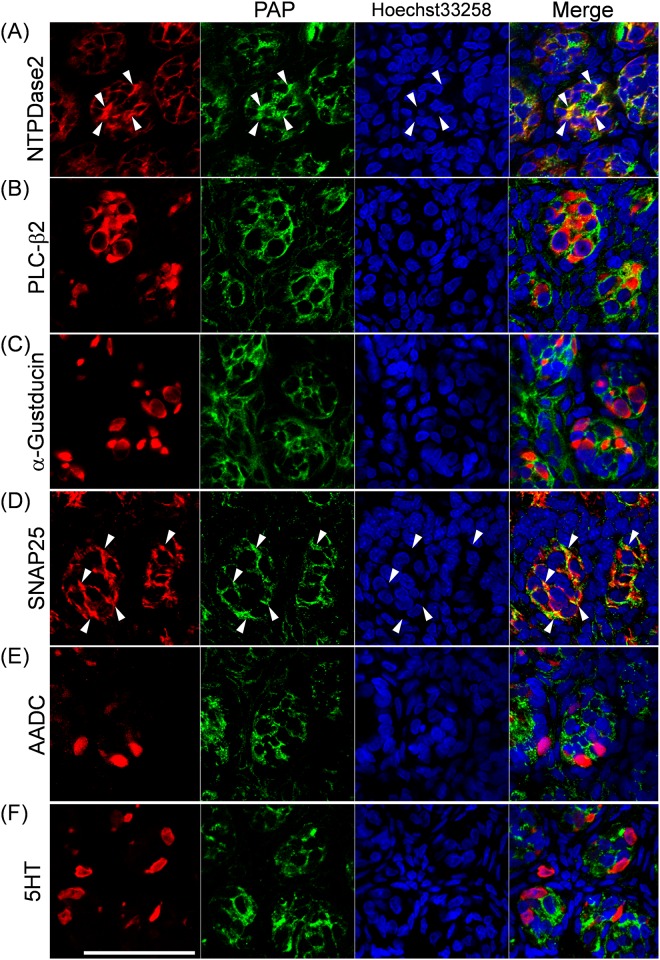
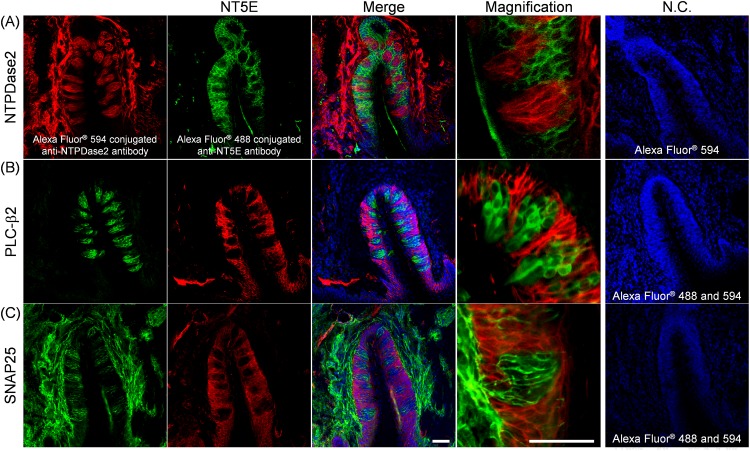
ATP and its metabolites are important for taste signaling in taste buds, and thus a clearance system for them would play critical roles in maintenance of gustatory function. A previous report revealed that mRNAs for ecto-5'-nucleotidase (NT5E) and prostatic acid phosphatase (PAP) were expressed by taste cells of taste buds, and NT5E-immunoreactivity was detected in taste cells. However, there was no information on PAP-immunoreactivity in taste buds. In this study, we examined the expression profile of PAP in rat taste buds. In the isolated rat taste buds, we detected expression of mRNA for PAP, but NT5E was not detected differing from the case of mouse ones (Dando et al., 2012, J Neuroscience). On immunohistochemical analysis, PAP-immunoreactivity was found predominantly in NTPDase2-positive type I and SNAP25-positive type III taste cells, while there were no apparent signals of it in PLC-β2-positive type II, α-gustducin-positive type II, AADC-positive type III and 5HT-positive type III ones. As for NT5E, we could not detect its immunoreactivity in rat taste buds, and co-localization of it with any taste cell markers, although mouse taste buds expressed NT5E as reported previously. These findings suggest that PAP expressed by type I and one of type III taste cells of rats may contribute to metabolic regulation of the extracellular levels of adenine nucleotides in the taste buds of circumvallate papillae, and the regulating mechanisms for adenine nucleotides in taste buds might be different between rats and mice.
三磷酸腺苷(ATP)及其代谢产物对味蕾中的味觉信号传导很重要,因此针对它们的清除系统在维持味觉功能方面起着关键作用。先前的一份报告显示,味蕾的味觉细胞表达了胞外5'-核苷酸酶(NT5E)和前列腺酸性磷酸酶(PAP)的信使核糖核酸(mRNA),并且在味觉细胞中检测到了NT5E免疫反应性。然而,关于味蕾中PAP免疫反应性尚无相关信息。在本研究中,我们检测了大鼠味蕾中PAP的表达情况。在分离出的大鼠味蕾中,我们检测到了PAP的mRNA表达,但未检测到NT5E,这与小鼠的情况不同(丹多等人,2012年,《神经科学杂志》)。免疫组织化学分析显示,PAP免疫反应性主要存在于NTPDase2阳性的I型和SNAP25阳性的III型味觉细胞中,而在PLC-β2阳性的II型、α-味导素阳性的II型、AADC阳性的III型和5HT阳性的III型味觉细胞中未发现明显信号。至于NT5E,我们在大鼠味蕾中未检测到其免疫反应性,也未发现它与任何味觉细胞标记物的共定位情况,尽管先前报道小鼠味蕾表达NT5E。这些发现表明,大鼠I型和一种III型味觉细胞表达的PAP可能有助于代谢调节轮廓乳头味蕾细胞外腺嘌呤核苷酸水平,并且大鼠和小鼠味蕾中腺嘌呤核苷酸的调节机制可能不同。