José Jaime Herrera-Pérez, Venus Benítez-Coronel, Graciela Jiménez-Rubio, Tania Hernández-Hernández Olivia, Lucía Martínez-Mota
Laboratorio de Farmacología Conductual, Dirección de Investigaciones en Neurociencias, Instituto Nacional de Psiquiatría Ramón de la Fuente Muñiz, Calzada México-Xochimilco 101, Colonia San Lorenzo Huipulco, Delegación Tlalpan, 14370 Ciudad de México, DF, Mexico.
Consejo Nacional de Ciencia y Tecnología, Instituto Nacional de Psiquiatría Ramón de la Fuente Muñiz, Calzada México-Xochimilco 101, Colonia San Lorenzo Huipulco, Delegación Tlalpan, 14370 Ciudad de México, DF, Mexico.
Neurosci J. 2016;2016:5317242. doi: 10.1155/2016/5317242. Epub 2016 Jun 28.
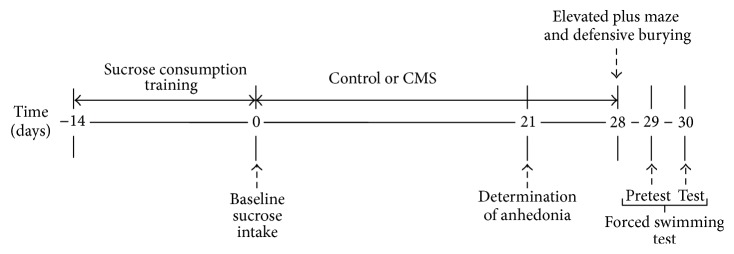
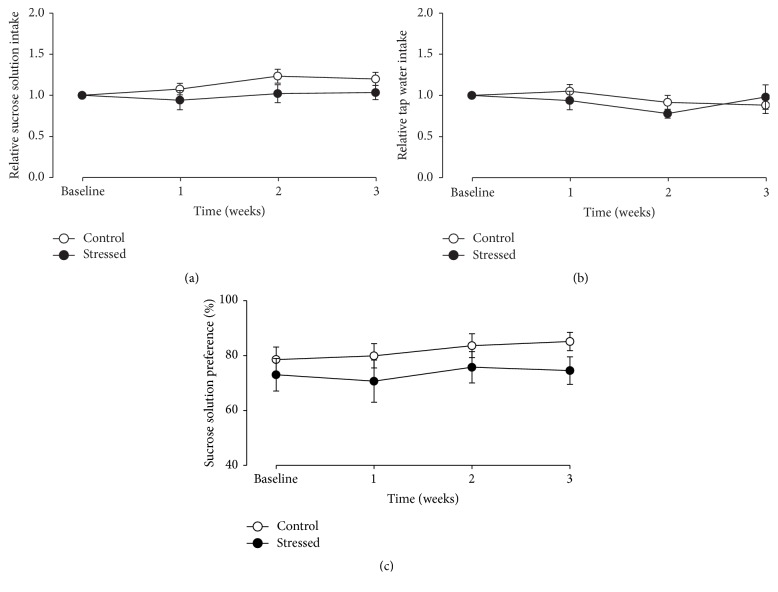
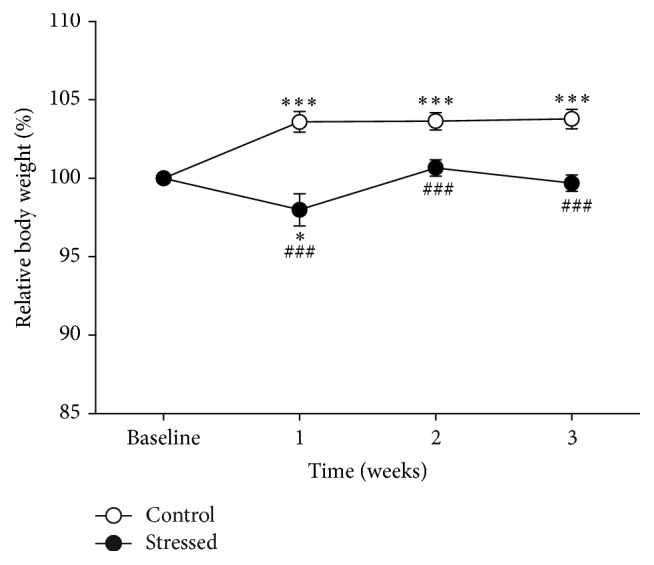
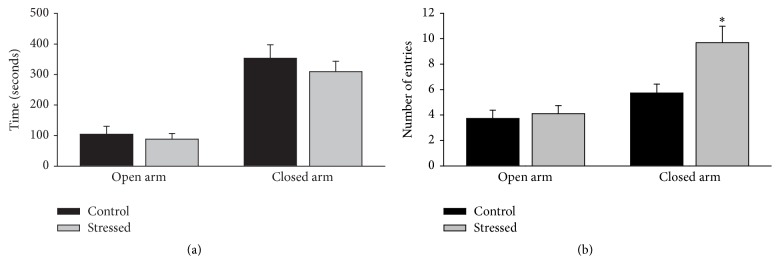
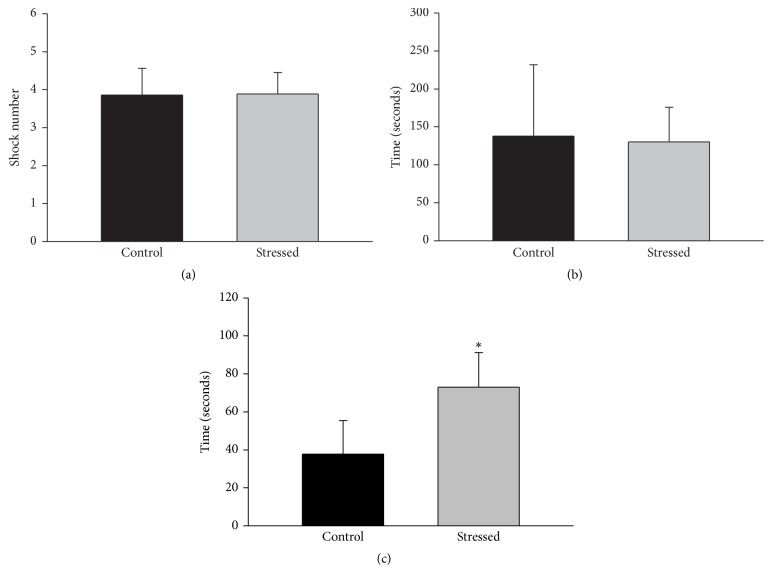
In a previous study, we found that chronic mild stress (CMS) paradigm did not induce anhedonia in young-adult male rats but it reduced their body weight gain. These contrasting results encouraged us to explore other indicators of animal's vulnerability to stress such as anxious-like behaviors, since stress is an etiologic factor also for anxiety. Thus, in this study, we evaluated the vulnerability of these animals to CMS using behavioral tests of depression or anxiety and measuring serum corticosterone. Male Wistar rats were exposed to four weeks of CMS; the animals' body weight and sucrose preference (indicator of anhedonia) were assessed after three weeks, and, after the fourth week, some animals were evaluated in a behavioral battery (elevated plus maze, defensive burying behavior, and forced swimming tests); meanwhile, others were used to measure serum corticosterone. We found that CMS (1) did not affect sucrose preference, immobility behavior in the forced swimming test, or serum corticosterone; (2) decreased body weight gain; and (3) increased the rat's entries into closed arms of the plus maze and the cumulative burying behavior. These data indicate that young male rats' vulnerability to CMS is reflected as poor body weight gain and anxious-like instead of depressive-like behaviors.
在先前的一项研究中,我们发现慢性轻度应激(CMS)范式并未在成年雄性大鼠中诱发快感缺失,但却降低了它们的体重增加。这些相互矛盾的结果促使我们探索动物对压力易感性的其他指标,如焦虑样行为,因为压力也是焦虑的一个病因。因此,在本研究中,我们通过抑郁或焦虑行为测试以及测量血清皮质酮来评估这些动物对CMS的易感性。雄性Wistar大鼠接受了为期四周的CMS处理;在三周后评估动物的体重和蔗糖偏好(快感缺失的指标),在第四周后,一些动物接受行为测试组合(高架十字迷宫、防御性埋埋行为和强迫游泳测试)评估;与此同时,其他动物用于测量血清皮质酮。我们发现CMS(1)不影响蔗糖偏好、强迫游泳测试中的不动行为或血清皮质酮;(2)降低了体重增加;(3)增加了大鼠进入十字迷宫封闭臂的次数和累积埋埋行为。这些数据表明,年轻雄性大鼠对CMS的易感性表现为体重增加不佳和焦虑样行为,而非抑郁样行为。