Park Haeseong, Garrido-Laguna Ignacio, Naing Aung, Fu Siqing, Falchook Gerald S, Piha-Paul Sarina A, Wheler Jennifer J, Hong David S, Tsimberidou Apostolia M, Subbiah Vivek, Zinner Ralph G, Kaseb Ahmed O, Patel Shreyaskumar, Fanale Michelle A, Velez-Bravo Vivianne M, Meric-Bernstam Funda, Kurzrock Razelle, Janku Filip
Department of Investigational Cancer Therapeutics (Phase I Clinical Trials Program), Division of Cancer Medicine, The University of Texas MD Anderson Cancer Center, Houston, TX, USA.
Department of Internal Medicine (Division of Oncology), Washington University School of Medicine, St. Louis, MO, USA.
Oncotarget. 2016 Oct 11;7(41):67521-67531. doi: 10.18632/oncotarget.11750.
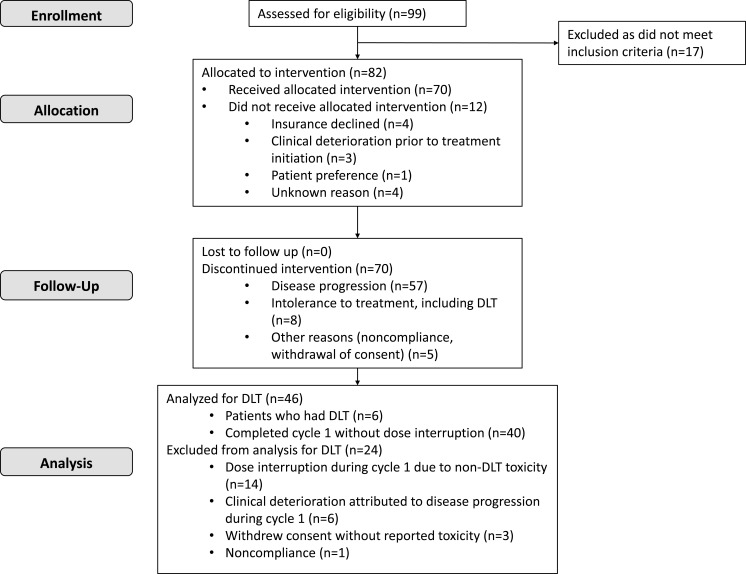
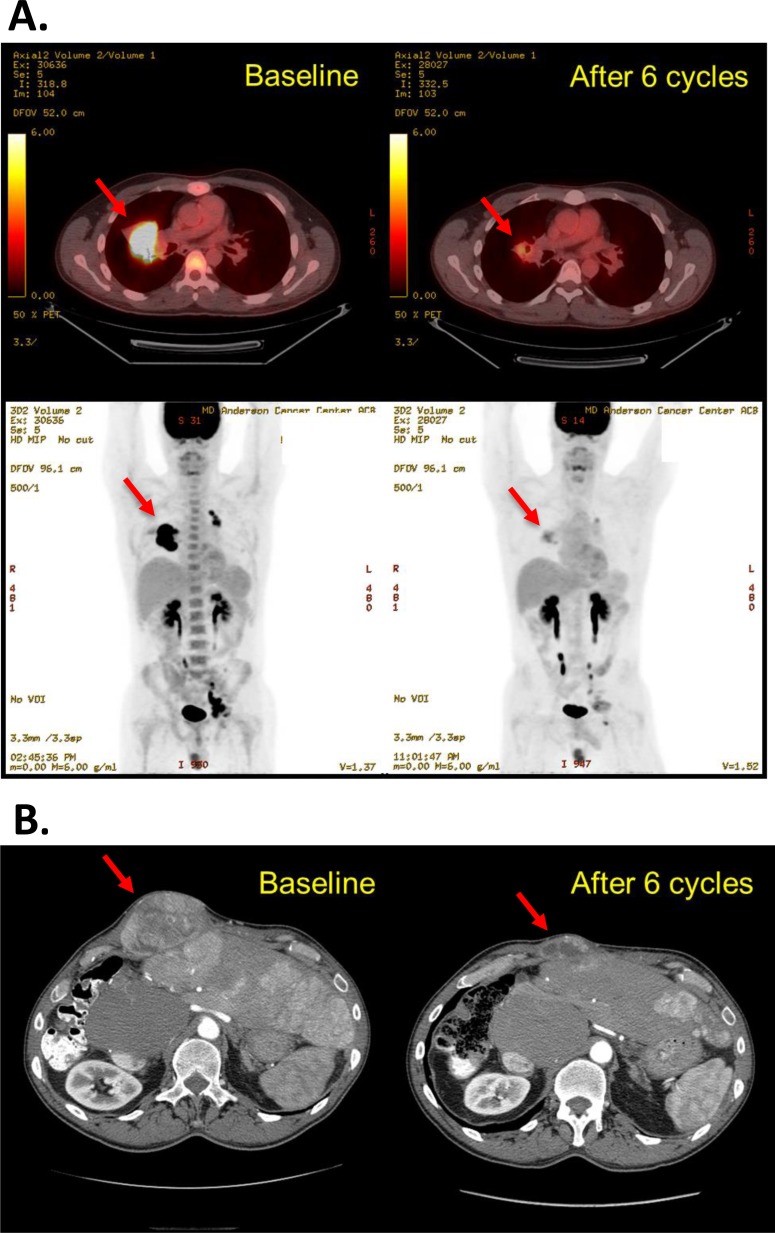
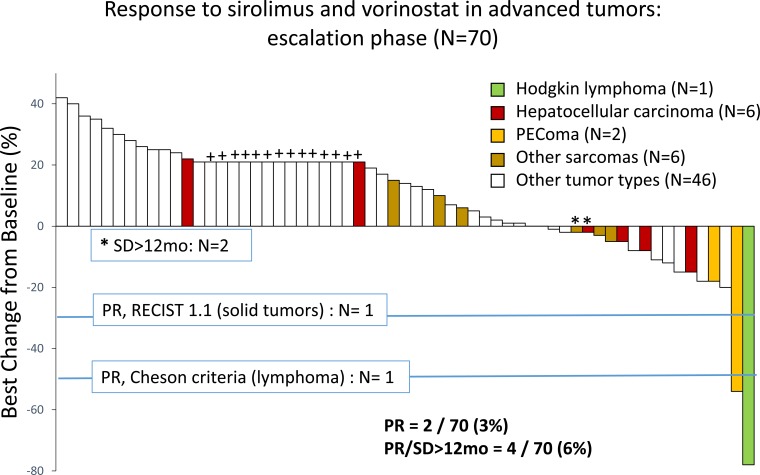
Preclinical models suggest that histone deacetylase (HDAC) and mammalian target of rapamycin (mTOR) inhibitors have synergistic anticancer activity. We designed a phase I study to determine the safety, maximum tolerated dose (MTD), recommended phase II dose (RP2D), and dose-limiting toxicities (DLTs) of combined mTOR inhibitor sirolimus (1 mg-5 mg PO daily) and HDAC inhibitor vorinostat (100 mg-400 mg PO daily) in patients with advanced cancer. Seventy patients were enrolled and 46 (66%) were evaluable for DLT assessment since they completed cycle 1 without dose modification unless they had DLT. DLTs comprised grade 4 thrombocytopenia (n = 6) and grade 3 mucositis (n = 1). Sirolimus 4 mg and vorinostat 300 mg was declared RP2D because MTD with sirolimus 5 mg caused significant thrombocytopenia. The grade 3 and 4 drug-related toxic effects (including DLTs) were thrombocytopenia (31%), neutropenia (8%), anemia (7%), fatigue (3%), mucositis (1%), diarrhea (1%), and hyperglycemia (1%). Of the 70 patients, 35 (50%) required dose interruption or modification and 61 were evaluable for response. Partial responses were observed in refractory Hodgkin lymphoma (-78%) and perivascular epithelioid tumor (-54%), and stable disease in hepatocellular carcinoma and fibromyxoid sarcoma. In conclusion, the combination of sirolimus and vorinostat was feasible, with thrombocytopenia as the main DLT. Preliminary anticancer activity was observed in patients with refractory Hodgkin lymphoma, perivascular epithelioid tumor, and hepatocellular carcinoma.
临床前模型表明,组蛋白去乙酰化酶(HDAC)抑制剂和雷帕霉素哺乳动物靶点(mTOR)抑制剂具有协同抗癌活性。我们设计了一项I期研究,以确定联合使用mTOR抑制剂西罗莫司(每日口服1 mg - 5 mg)和HDAC抑制剂伏立诺他(每日口服100 mg - 400 mg)治疗晚期癌症患者的安全性、最大耐受剂量(MTD)、推荐的II期剂量(RP2D)和剂量限制性毒性(DLT)。招募了70例患者,其中46例(66%)可用于DLT评估,因为他们在未调整剂量的情况下完成了第1周期,除非出现DLT。DLT包括4级血小板减少(n = 6)和3级黏膜炎(n = 1)。西罗莫司4 mg和伏立诺他300 mg被确定为RP2D,因为西罗莫司5 mg的MTD导致了显著的血小板减少。3级和4级药物相关毒性效应(包括DLT)有血小板减少(31%)、中性粒细胞减少(8%)、贫血(7%)、疲劳(3%)、黏膜炎(1%)、腹泻(1%)和高血糖(1%)。70例患者中,35例(50%)需要中断或调整剂量,61例可评估疗效。在难治性霍奇金淋巴瘤(-78%)和血管周上皮样细胞瘤(-54%)中观察到部分缓解,在肝细胞癌和纤维黏液样肉瘤中观察到病情稳定。总之,西罗莫司和伏立诺他联合使用是可行的,血小板减少是主要的DLT。在难治性霍奇金淋巴瘤、血管周上皮样细胞瘤和肝细胞癌患者中观察到了初步的抗癌活性。