
计算移动声源声学散射效应的数值方法。
Numerical method to compute acoustic scattering effect of a moving source.
作者信息
Song Hao, Yi Mingxu, Huang Jun, Pan Yalin, Liu Dawei
机构信息
School of Aeronautic Science and Engineering, Beihang University, Beijing, 100191 People's Republic of China.
出版信息
Springerplus. 2016 Aug 24;5(1):1404. doi: 10.1186/s40064-016-3080-x. eCollection 2016.
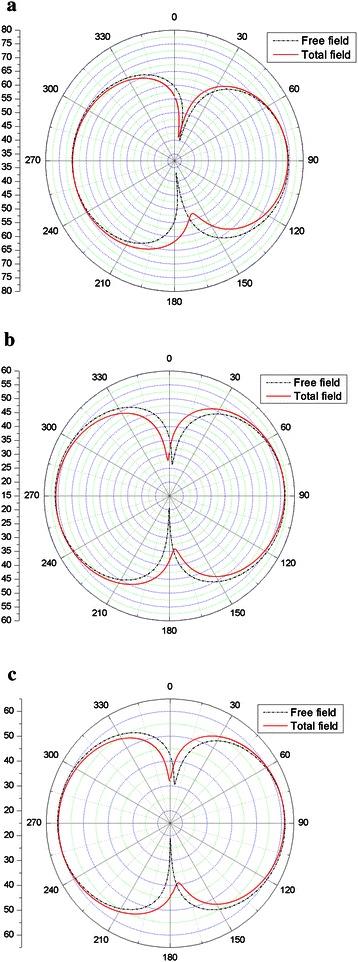
In this paper, the aerodynamic characteristic of a ducted tail rotor in hover has been numerically studied using CFD method. An analytical time domain formulation based on Ffowcs Williams-Hawkings (FW-H) equation is derived for the prediction of the acoustic velocity field and used as Neumann boundary condition on a rigid scattering surface. In order to predict the aerodynamic noise, a hybrid method combing computational aeroacoustics with an acoustic thin-body boundary element method has been proposed. The aerodynamic results and the calculated sound pressure levels (SPLs) are compared with the known method for validation. Simulation results show that the duct can change the value of SPLs and the sound directivity. Compared with the isolate tail rotor, the SPLs of the ducted tail rotor are smaller at certain azimuth.
本文采用计算流体力学(CFD)方法对涵道尾桨在悬停状态下的气动特性进行了数值研究。基于Ffowcs Williams-Hawkings(FW-H)方程推导了一种解析时域公式,用于预测声速场,并将其用作刚性散射面上的 Neumann 边界条件。为了预测气动噪声,提出了一种将计算气动声学与声学薄体边界元法相结合的混合方法。将气动结果和计算得到的声压级(SPL)与已知方法进行比较以进行验证。仿真结果表明,涵道可以改变声压级的值和声指向性。与孤立尾桨相比,涵道尾桨在特定方位角处的声压级较小。






 Zotero 插件