Malek E, Abdel-Malek M A Y, Jagannathan S, Vad N, Karns R, Jegga A G, Broyl A, van Duin M, Sonneveld P, Cottini F, Anderson K C, Driscoll J J
Department of Hematology and Oncology, Case Western Reserve University School of Medicine, Cleveland, OH, USA.
The Vontz Center for Molecular Studies, University of Cincinnati College of Medicine, Cincinnati, OH, USA.
Leukemia. 2017 Mar;31(3):645-653. doi: 10.1038/leu.2016.258. Epub 2016 Sep 28.
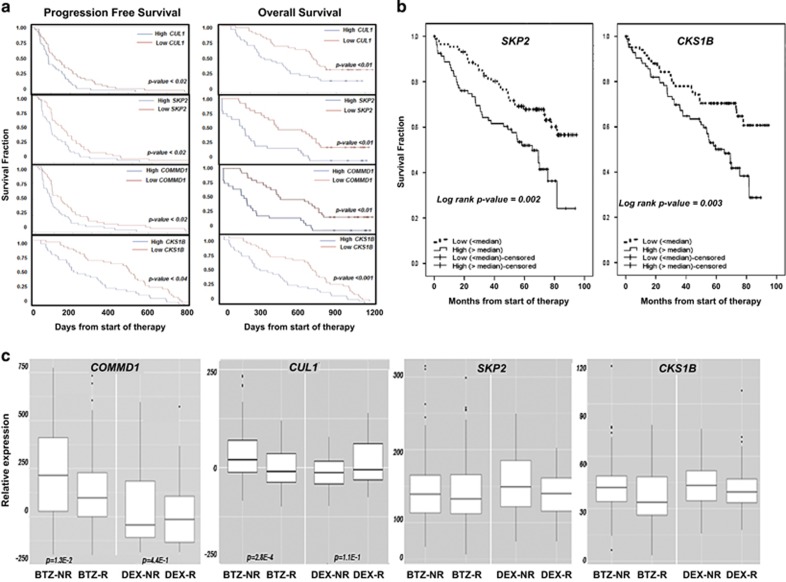
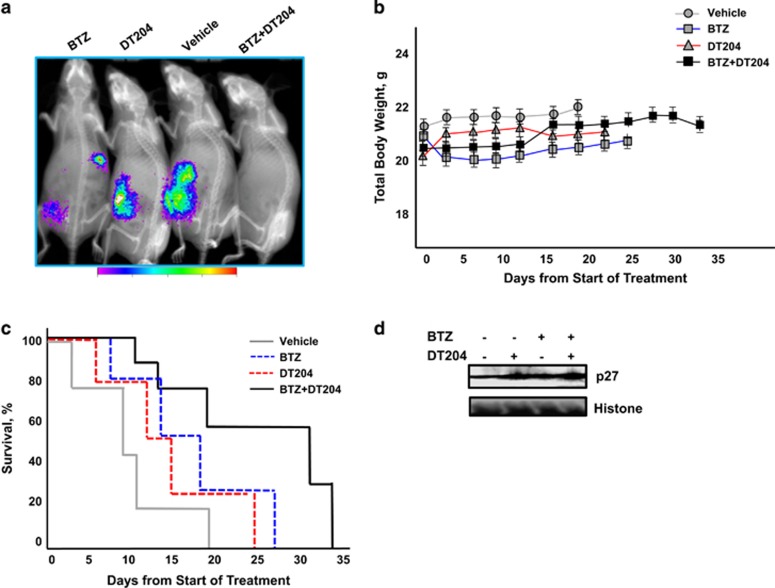
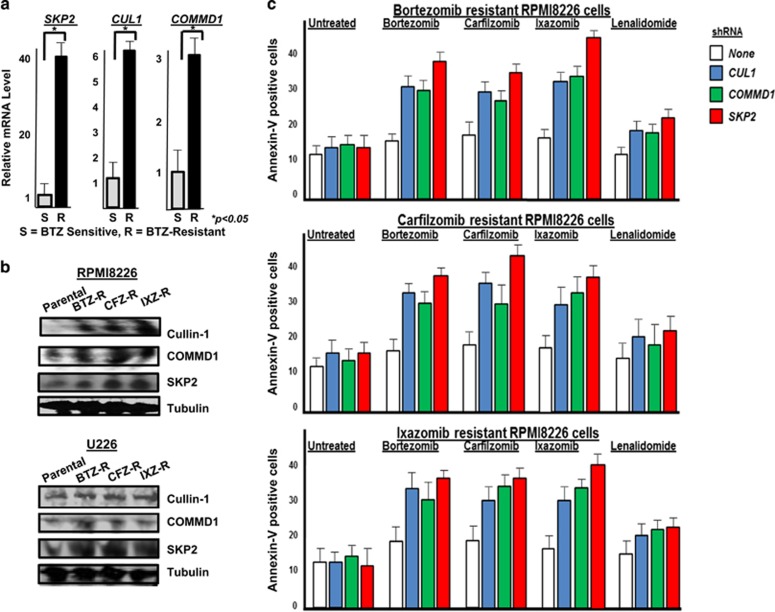
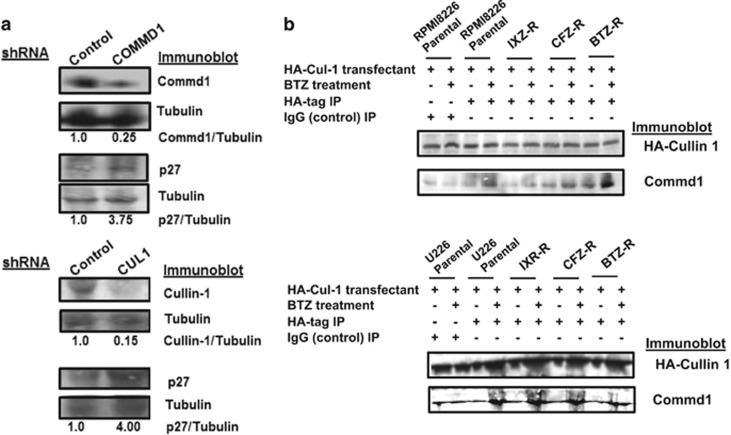
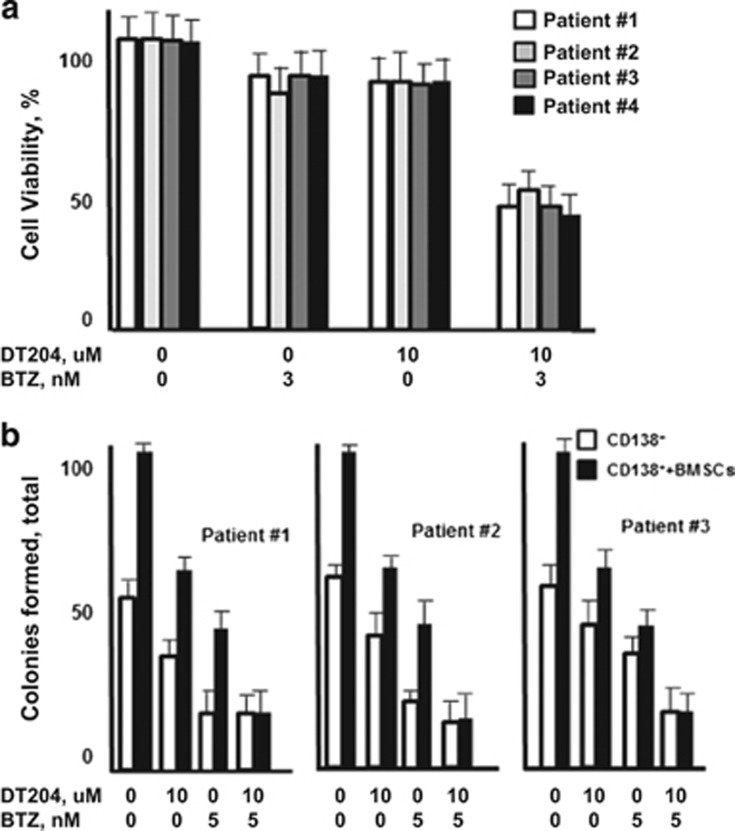
While clinical benefit of the proteasome inhibitor (PI) bortezomib (BTZ) for multiple myeloma (MM) patients remains unchallenged, dose-limiting toxicities and drug resistance limit the long-term utility. The E3 ubiquitin ligase Skp1-Cullin-1-Skp2 (SCF) promotes proteasomal degradation of the cell cycle inhibitor p27 to enhance tumor growth. Increased SKP2 expression and reduced p27 levels are frequent in human cancers and are associated with therapeutic resistance. SCF activity is increased by the Cullin-1-binding protein Commd1 and the Skp2-binding protein Cks1B. Here we observed higher CUL1, COMMD1 and SKP2 mRNA levels in CD138 cells isolated from BTZ-resistant MM patients. Higher CUL1, COMMD1, SKP2 and CKS1B mRNA levels in patient CD138 cells correlated with decreased progression-free and overall survival. Genetic knockdown of CUL1, COMMD1 or SKP2 disrupted the SCF complex, stabilized p27 and increased the number of annexin-V-positive cells after BTZ treatment. Chemical library screens identified a novel compound, designated DT204, that reduced Skp2 binding to Cullin-1 and Commd1, and synergistically enhanced BTZ-induced apoptosis. DT204 co-treatment with BTZ overcame drug resistance and reduced the in vivo growth of myeloma tumors in murine models with survival benefit. Taken together, the results provide proof of concept for rationally designed drug combinations that incorporate SCF inhibitors to treat BTZ resistant disease.
虽然蛋白酶体抑制剂(PI)硼替佐米(BTZ)对多发性骨髓瘤(MM)患者的临床益处仍无可争议,但剂量限制性毒性和耐药性限制了其长期应用。E3泛素连接酶Skp1-Cullin-1-Skp2(SCF)促进细胞周期抑制剂p27的蛋白酶体降解,以增强肿瘤生长。SKP2表达增加和p27水平降低在人类癌症中很常见,并与治疗耐药性相关。Cullin-1结合蛋白Commd1和Skp2结合蛋白Cks1B可增加SCF活性。在此,我们观察到从硼替佐米耐药的MM患者分离的CD138细胞中CUL1、COMMD1和SKP2的mRNA水平较高。患者CD138细胞中较高的CUL1、COMMD1、SKP2和CKS1B mRNA水平与无进展生存期和总生存期缩短相关。对CUL1、COMMD1或SKP2进行基因敲低会破坏SCF复合物,使p27稳定,并增加硼替佐米治疗后膜联蛋白-V阳性细胞的数量。化学文库筛选鉴定出一种新型化合物DT204,它可减少Skp2与Cullin-1和Commd1的结合,并协同增强硼替佐米诱导的细胞凋亡。DT204与硼替佐米联合治疗克服了耐药性,并减少了小鼠模型中骨髓瘤肿瘤的体内生长,具有生存益处。综上所述,这些结果为合理设计包含SCF抑制剂的药物组合以治疗硼替佐米耐药疾病提供了概念验证。