Merlo Anna, Bernardo-Castiñeira Cristóbal, Sáenz-de-Santa-María Inés, Pitiot Ana S, Balbín Milagros, Astudillo Aurora, Valdés Nuria, Scola Bartolomé, Del Toro Raquel, Méndez-Ferrer Simón, Piruat José I, Suarez Carlos, Chiara María-Dolores
Otorhinolaryngology Service, Hospital Universitario Central de Asturias, Instituto Universitario de Oncología del Principado de Asturias, Universidad de Oviedo, CIBERONC, Oviedo, Spain.
Service of Molecular Oncology, Hospital Universitario Central de Asturias, Instituto Universitario de Oncología del Principado de Asturias, Universidad de Oviedo, Oviedo, Spain.
Oncotarget. 2017 Jan 24;8(4):6700-6717. doi: 10.18632/oncotarget.14265.
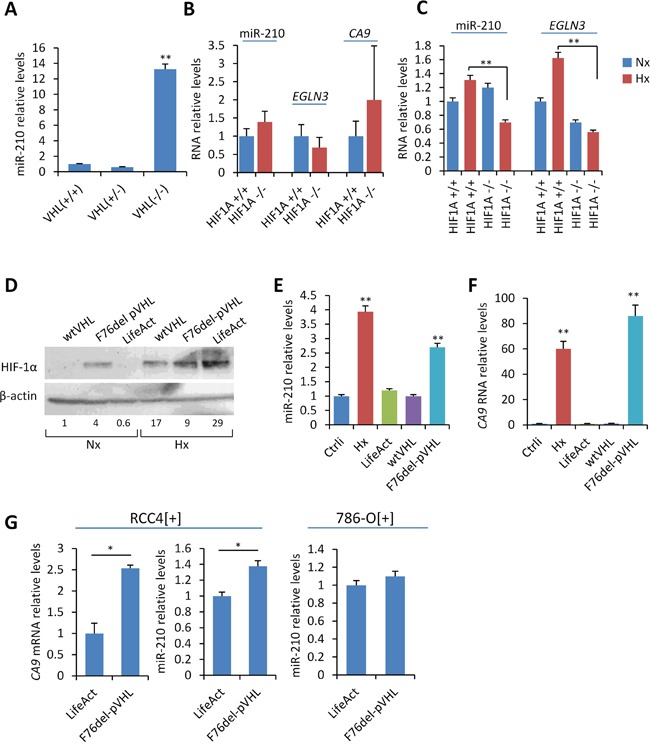
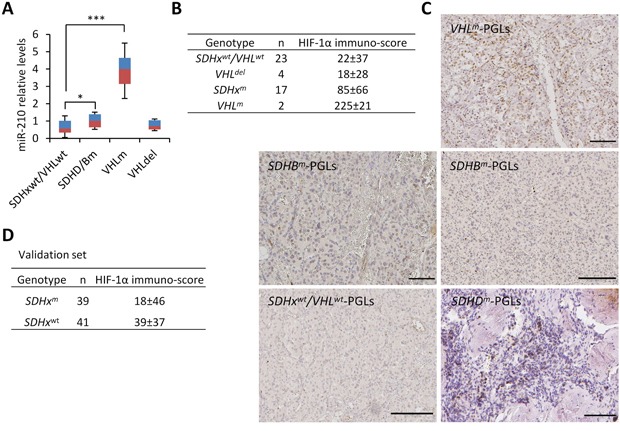
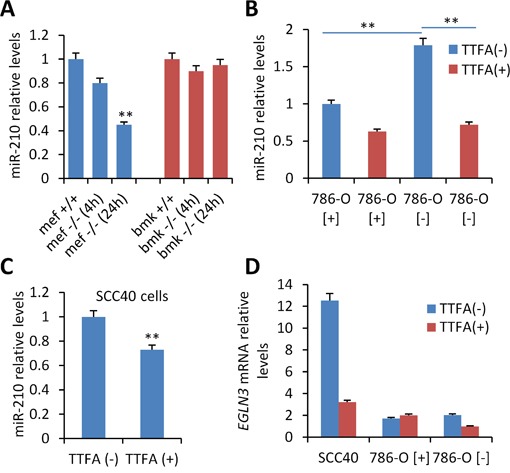
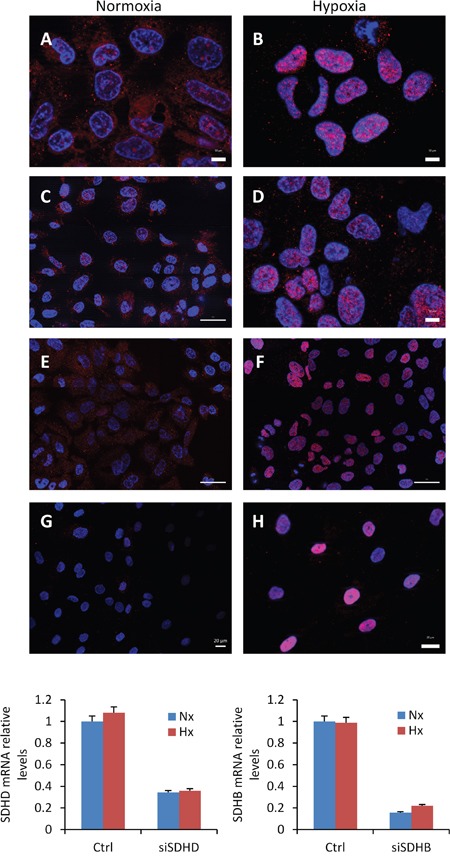
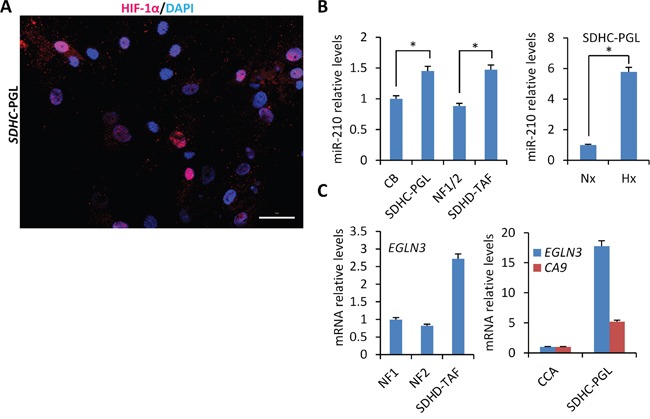
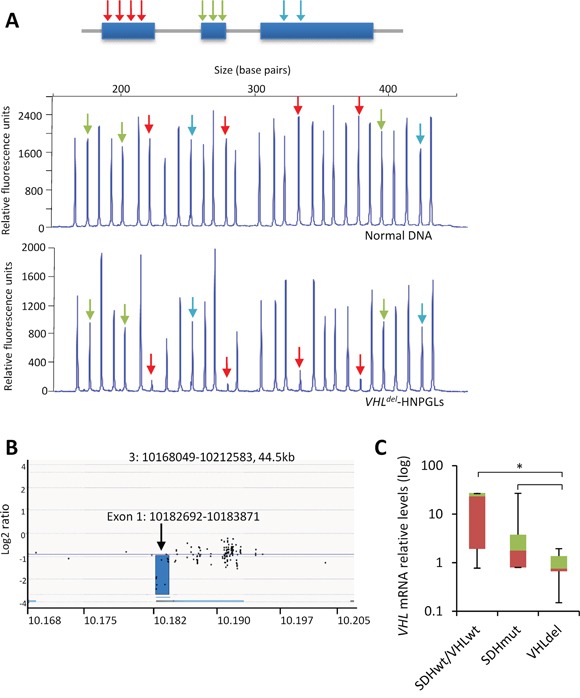
The hypoxia-inducible factor 1α (HIF-1α) and its microRNA target, miR-210, are candidate tumor-drivers of metabolic reprogramming in cancer. Neuroendocrine neoplasms such as paragangliomas (PGLs) are particularly appealing for understanding the cancer metabolic adjustments because of their associations with deregulations of metabolic enzymes, such as succinate dehydrogenase (SDH), and the von Hippel Lindau (VHL) gene involved in HIF-1α stabilization. However, the role of miR-210 in the pathogenesis of SDH-related tumors remains an unmet challenge. Herein is described an in vivo genetic analysis of the role of VHL, HIF1A and SDH on miR-210 by using knockout murine models, siRNA gene silencing, and analyses of human tumors. HIF-1α knockout abolished hypoxia-induced miR-210 expression in vivo but did not alter its constitutive expression in paraganglia. Normoxic miR-210 levels substantially increased by complete, but not partial, VHL silencing in paraganglia of knockout VHL-mice and by over-expression of p76del-mutated pVHL. Similarly, VHL-mutated PGLs, not those with decreased VHL-gene/mRNA dosage, over-expressed miR-210 and accumulate HIF-1α in most tumor cells. Ablation of SDH activity in SDHD-null cell lines or reduction of the SDHD or SDHB protein levels elicited by siRNA-induced gene silencing did not induce miR-210 whereas the presence of SDH mutations in PGLs and tumor-derived cell lines was associated with mild increase of miR-210 and the presence of a heterogeneous, HIF-1α-positive and HIF-1α-negative, tumor cell population. Thus, activation of HIF-1α is likely an early event in VHL-defective PGLs directly linked to VHL mutations, but it is a late event favored but not directly triggered by SDHx mutations. This combined analysis provides insights into the mechanisms of HIF-1α/miR-210 regulation in normal and tumor tissues potentially useful for understanding the pathogenesis of cancer and other diseases sharing similar underpinnings.
缺氧诱导因子1α(HIF-1α)及其微小RNA靶点miR-210是癌症中代谢重编程的候选肿瘤驱动因子。神经内分泌肿瘤,如副神经节瘤(PGLs),因其与代谢酶(如琥珀酸脱氢酶(SDH))失调以及参与HIF-1α稳定化的冯·希佩尔-林道(VHL)基因的关联,对于理解癌症代谢调整特别有吸引力。然而,miR-210在SDH相关肿瘤发病机制中的作用仍是一个未解决的挑战。本文描述了通过使用基因敲除小鼠模型、小干扰RNA(siRNA)基因沉默以及对人类肿瘤的分析,对VHL、HIF1A和SDH在miR-210作用方面进行的体内遗传学分析。HIF-1α基因敲除消除了体内缺氧诱导的miR-210表达,但未改变其在副神经节中的组成性表达。在敲除VHL基因的小鼠副神经节中,完全而非部分的VHL沉默以及p76del突变型pVHL的过表达,使常氧状态下的miR-210水平显著升高。同样,VHL突变的PGLs(而非VHL基因/信使核糖核酸剂量降低的那些)在大多数肿瘤细胞中过表达miR-210并积累HIF-1α。在SDHD基因缺失的细胞系中消除SDH活性,或通过siRNA诱导的基因沉默降低SDHD或SDHB蛋白水平,均未诱导miR-210表达,而PGLs和肿瘤来源细胞系中SDH突变的存在与miR-210的轻度增加以及异质性、HIF-1α阳性和HIF-1α阴性肿瘤细胞群体的存在相关。因此,HIF-1α的激活可能是VHL缺陷型PGLs中的早期事件,直接与VHL突变相关,但它是由SDHx突变促进而非直接触发的晚期事件。这种综合分析为正常和肿瘤组织中HIF-1α/miR-210调控机制提供了见解,可能有助于理解癌症及其他具有相似基础的疾病的发病机制。