Li Shuzhen, Sun Zhenzhen, Zhang Yue, Ruan Yuan, Chen Qiuxia, Gong Wei, Yu Jing, Xia Weiwei, He John Ci-Jiang, Huang Songming, Zhang Aihua, Ding Guixia, Jia Zhanjun
Department of Nephrology, Children's Hospital of Nanjing Medical University, Nanjing 210008, China.
Jiangsu Key Laboratory of Pediatrics, Nanjing Medical University, Nanjing 210029, China.
Oncotarget. 2017 Feb 7;8(6):10185-10198. doi: 10.18632/oncotarget.14363.
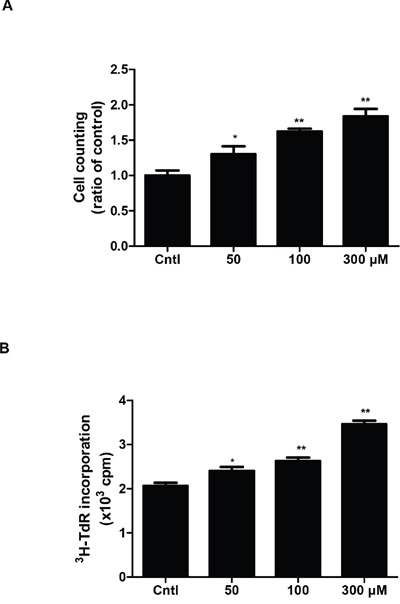
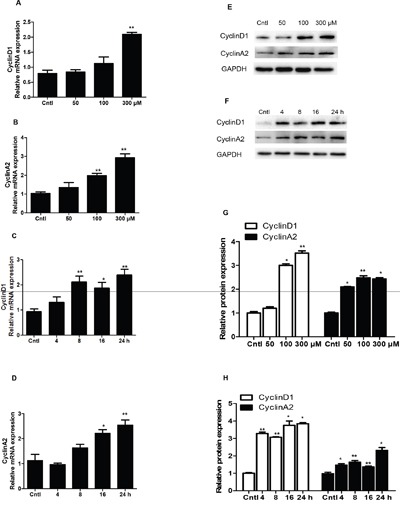
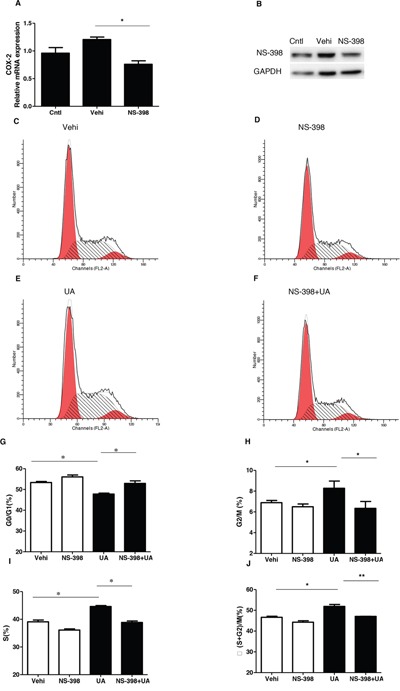
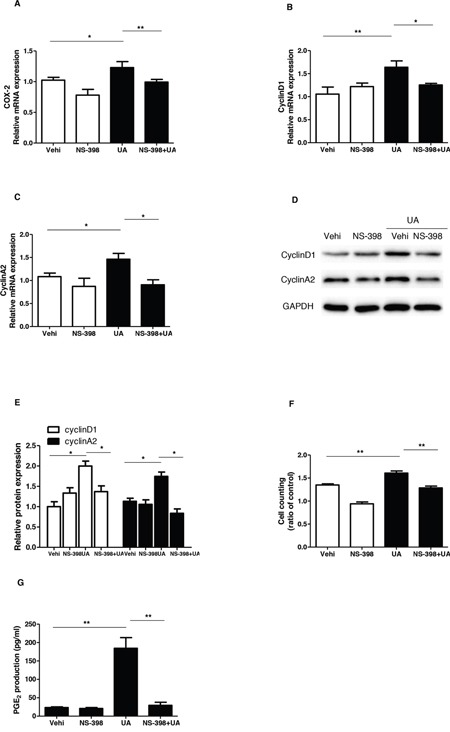
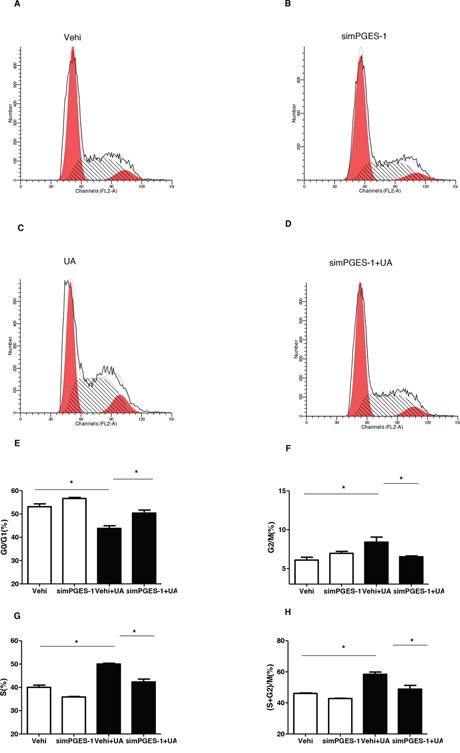
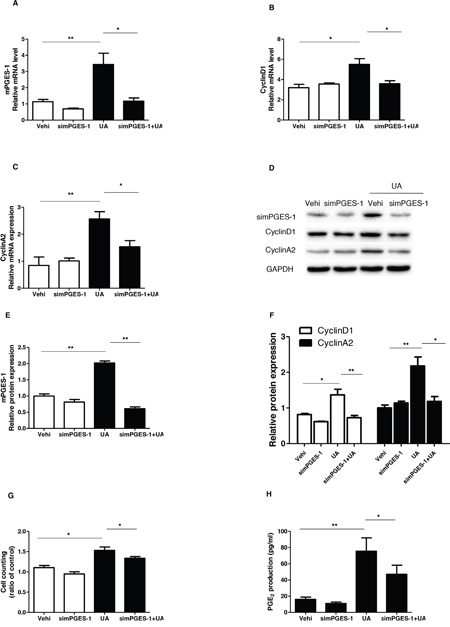
Hyperuricemia is not only the main feature of gout but also a cause of gout-related organ injuries including glomerular hypertrophy and sclerosis. Uric acid (UA) has been proven to directly cause mesangial cell (MC) proliferation with elusive mechanisms. The present study was undertaken to examined the role of inflammatory cascade of COX-2/mPGES-1/PGE2 in UA-induced MC proliferation. In the dose- and time-dependent experiments, UA increased cell proliferation shown by the increased total cell number, DNA synthesis rate, and the number of cells in S and G2 phases in parallel with the upregulation of cyclin A2 and cyclin D1. Interestingly, UA-induced cell proliferation was accompanied with the upregulation of COX-2 and mPGES-1 at both mRNA and protein levels. Strikingly, inhibition of COX-2 via a specific COX-2 inhibitor NS-398 markedly blocked UA-induced MC proliferation. Meanwhile, UA-induced PGE2 production was almost entirely abolished. Furthermore, inhibiting mPGES-1 by a siRNA approach in MCs also ameliorated UA-induced MC proliferation in line with a significant blockade of PGE2 secretion. More importantly, in gout patients, we observed a significant elevation of urinary PGE2 excretion compared with healthy controls, indicating a translational potential of this study to the clinic. In conclusion, our findings indicated that COX-2/mPGES-1/PGE2 cascade activation mediated UA-induced MC proliferation. This study offered new insights into the understanding and the intervention of UA-related glomerular injury.
高尿酸血症不仅是痛风的主要特征,也是痛风相关器官损伤的原因,包括肾小球肥大和硬化。尿酸(UA)已被证明可直接导致系膜细胞(MC)增殖,但其机制尚不清楚。本研究旨在探讨COX-2/mPGES-1/PGE2炎症级联反应在UA诱导的MC增殖中的作用。在剂量和时间依赖性实验中,UA通过增加总细胞数、DNA合成率以及S期和G2期细胞数量,同时上调细胞周期蛋白A2和细胞周期蛋白D1,从而增加细胞增殖。有趣的是,UA诱导的细胞增殖伴随着COX-2和mPGES-1在mRNA和蛋白质水平的上调。引人注目的是,通过特异性COX-2抑制剂NS-398抑制COX-2可显著阻断UA诱导的MC增殖。同时,UA诱导的PGE2产生几乎完全被消除。此外,通过小干扰RNA沉默MC中的mPGES-1也可改善UA诱导的MC增殖,同时显著阻断PGE2分泌。更重要的是,在痛风患者中,我们观察到与健康对照相比,尿中PGE2排泄显著升高,表明本研究具有临床转化潜力。总之,我们的研究结果表明,COX-2/mPGES-1/PGE2级联反应激活介导了UA诱导的MC增殖。本研究为理解和干预UA相关的肾小球损伤提供了新的见解。