Park Min-Ho, Shin Seok-Ho, Byeon Jin-Ju, Lee Gwan-Ho, Yu Byung-Yong, Shin Young G
College of Pharmacy, Chungnam National University, Daejeon 34134, Korea.
Department of Chemistry and Research Institute for Basic Sciences, Kyung Hee University, Seoul 02453, Korea.
Korean J Physiol Pharmacol. 2017 Jan;21(1):107-115. doi: 10.4196/kjpp.2017.21.1.107. Epub 2016 Dec 21.
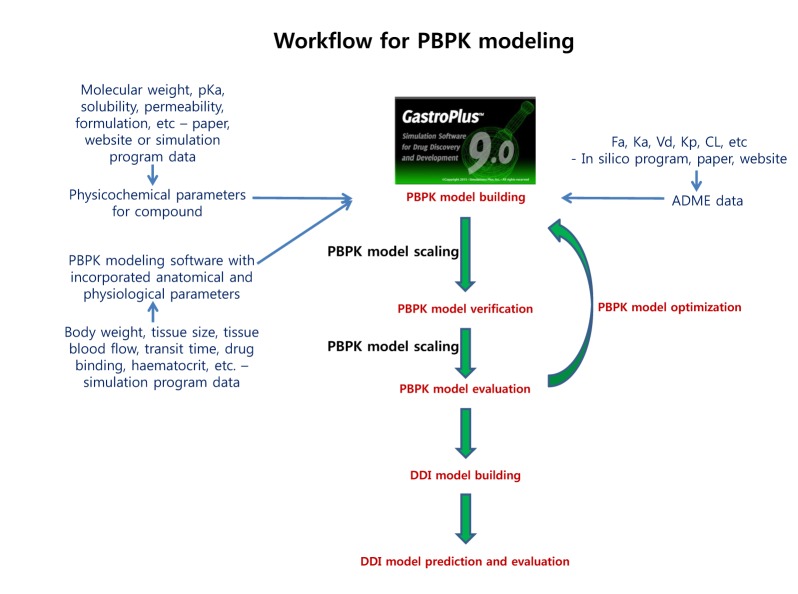
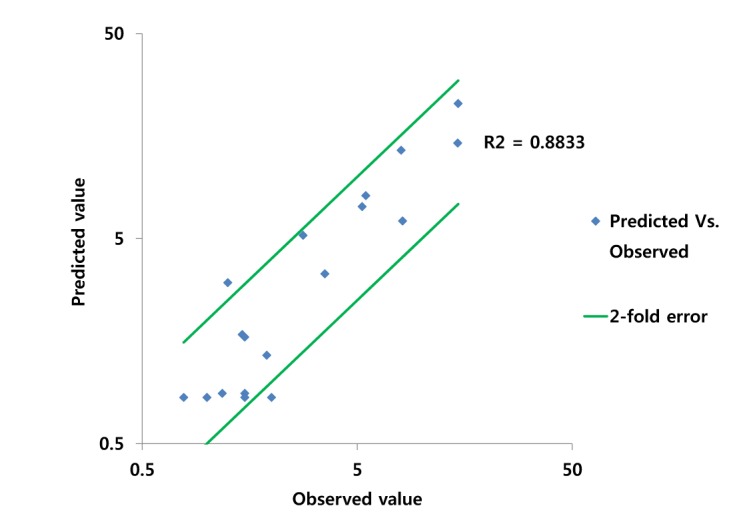
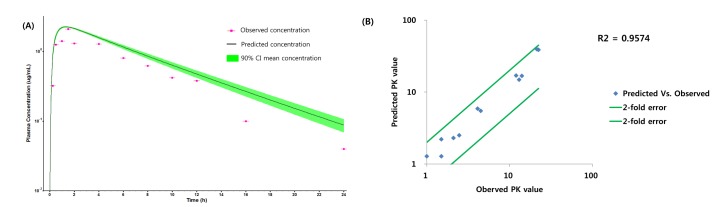
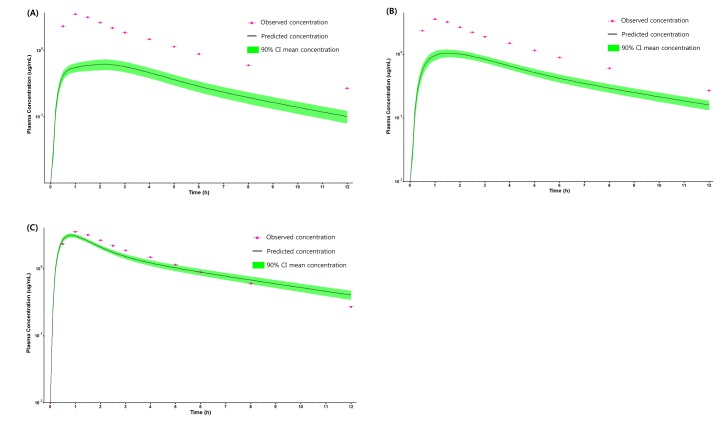
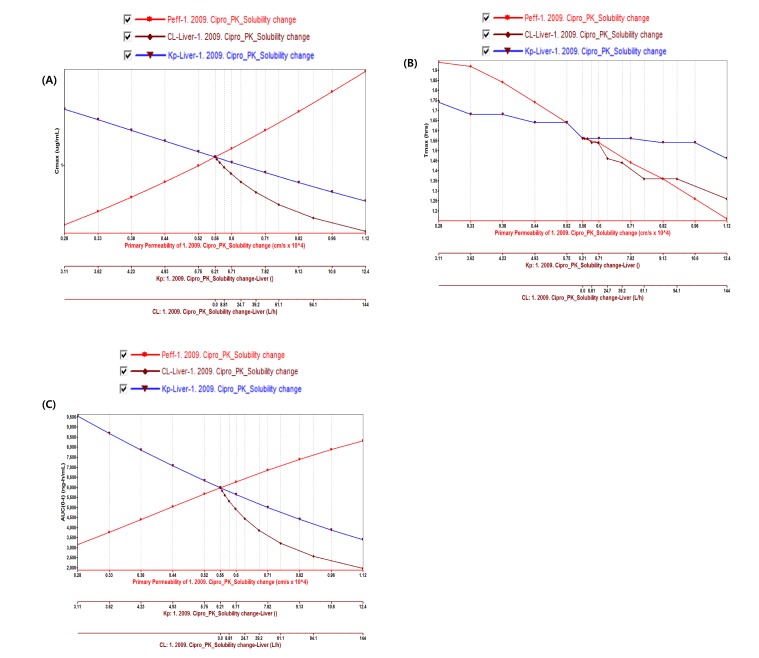
Over the last decade, physiologically based pharmacokinetics (PBPK) application has been extended significantly not only to predicting preclinical/human PK but also to evaluating the drug-drug interaction (DDI) liability at the drug discovery or development stage. Herein, we describe a case study to illustrate the use of PBPK approach in predicting human PK as well as DDI using , and derived parameters. This case was composed of five steps such as: simulation, verification, understanding of parameter sensitivity, optimization of the parameter and final evaluation. Caffeine and ciprofloxacin were used as tool compounds to demonstrate the "fit for purpose" application of PBPK modeling and simulation for this study. Compared to caffeine, the PBPK modeling for ciprofloxacin was challenging due to several factors including solubility, permeability, clearance and tissue distribution etc. Therefore, intensive parameter sensitivity analysis (PSA) was conducted to optimize the PBPK model for ciprofloxacin. Overall, the increase in C of caffeine by ciprofloxacin was not significant. However, the increase in AUC was observed and was proportional to the administered dose of ciprofloxacin. The predicted DDI and PK results were comparable to observed clinical data published in the literatures. This approach would be helpful in identifying potential key factors that could lead to significant impact on PBPK modeling and simulation for challenging compounds.
在过去十年中,基于生理学的药代动力学(PBPK)的应用不仅在预测临床前/人体药代动力学方面有了显著扩展,而且在药物发现或开发阶段评估药物 - 药物相互作用(DDI)风险方面也有了显著扩展。在此,我们描述一个案例研究,以说明使用PBPK方法预测人体药代动力学以及使用[具体物质1]、[具体物质2]和[具体物质3]推导参数进行药物 - 药物相互作用评估的情况。该案例由五个步骤组成,例如:模拟、验证、参数敏感性理解、参数优化和最终评估。咖啡因和环丙沙星被用作工具化合物,以证明PBPK建模和模拟在本研究中的“适用性”应用。与咖啡因相比,环丙沙星的PBPK建模具有挑战性,这是由于包括溶解度、渗透性、清除率和组织分布等多个因素。因此,进行了深入的参数敏感性分析(PSA)以优化环丙沙星的PBPK模型。总体而言,环丙沙星使咖啡因的C增加不显著。然而,观察到AUC增加,并且与环丙沙星的给药剂量成正比。预测的药物 - 药物相互作用和药代动力学结果与文献中发表的观察到的临床数据相当。这种方法将有助于识别可能对具有挑战性的化合物的PBPK建模和模拟产生重大影响的潜在关键因素。