Orlovskis Zigmunds, Canale Maria Cristina, Haryono Mindia, Lopes João Roberto Spotti, Kuo Chih-Horng, Hogenhout Saskia A
John Innes Centre, Department of Cell and Developmental Biology, Norwich Research Park, Norwich NR4 7UH, UK.
Luiz de Queiroz College of Agriculture, University of São Paulo, Department of Entomology and Acarology, Piracicaba 13·418-900, Brazil.
Ann Bot. 2017 Mar 1;119(5):869-884. doi: 10.1093/aob/mcw213.
Maize bushy stunt phytoplasma (MBSP) is a bacterial pathogen of maize ( Zea mays L.) across Latin America. MBSP belongs to the 16SrI-B sub-group within the genus ' Candidatus Phytoplasma'. MBSP and its insect vector Dalbulus maidis (Hemiptera: Cicadellidae) are restricted to maize; both are thought to have coevolved with maize during its domestication from a teosinte-like ancestor. MBSP-infected maize plants show a diversity of symptoms. and it is likely that MBSP is under strong selection for increased virulence and insect transmission on maize hybrids that are widely grown in Brazil. In this study it was investigated whether the differences in genome sequences of MBSP isolates from two maize-growing regions in South-east Brazil explain variations in symptom severity of the MBSP isolates on various maize genotypes.
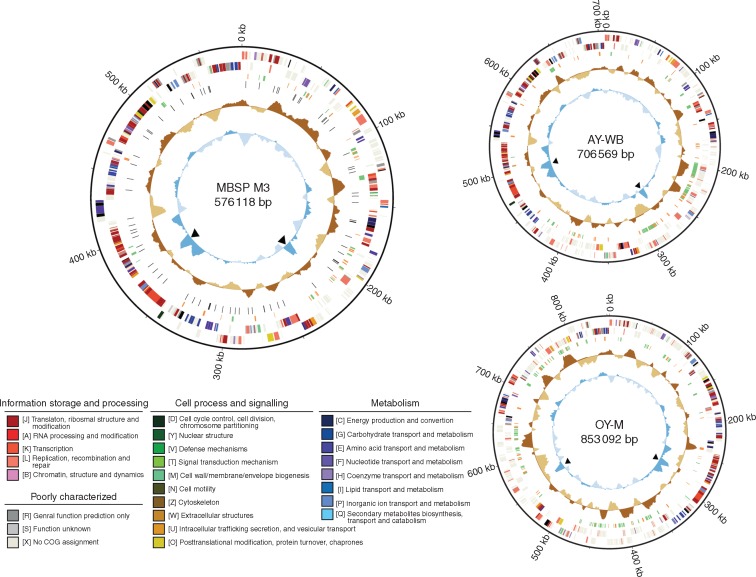
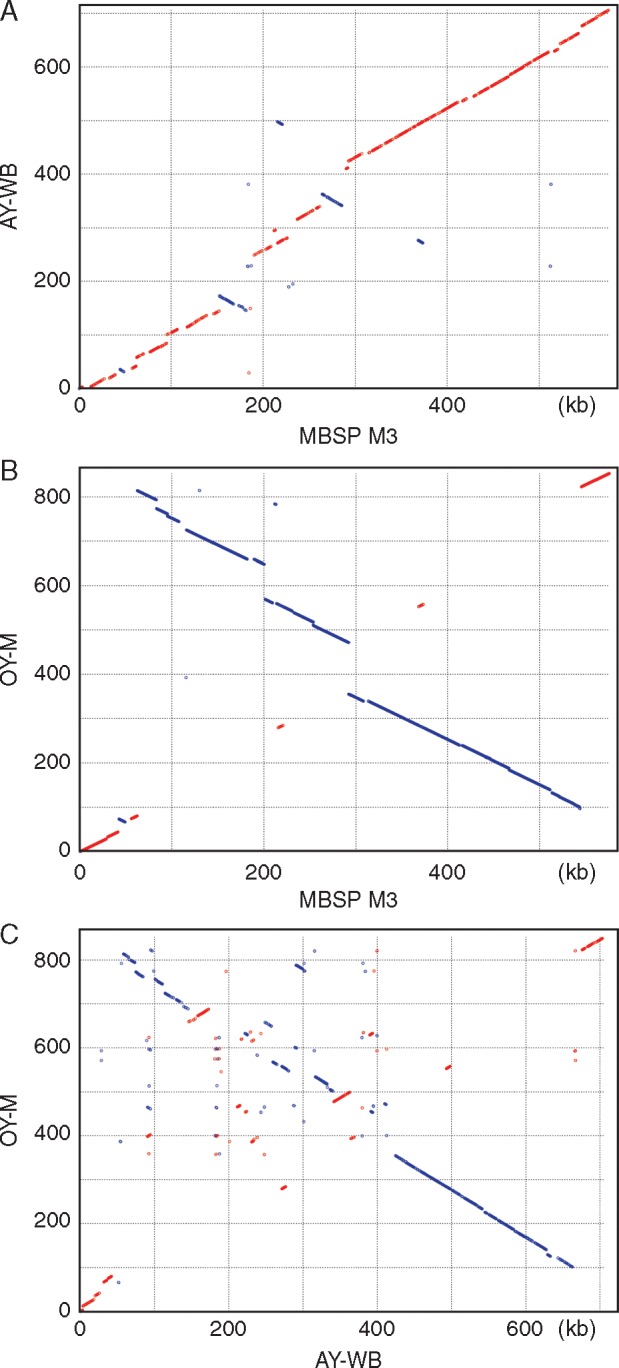
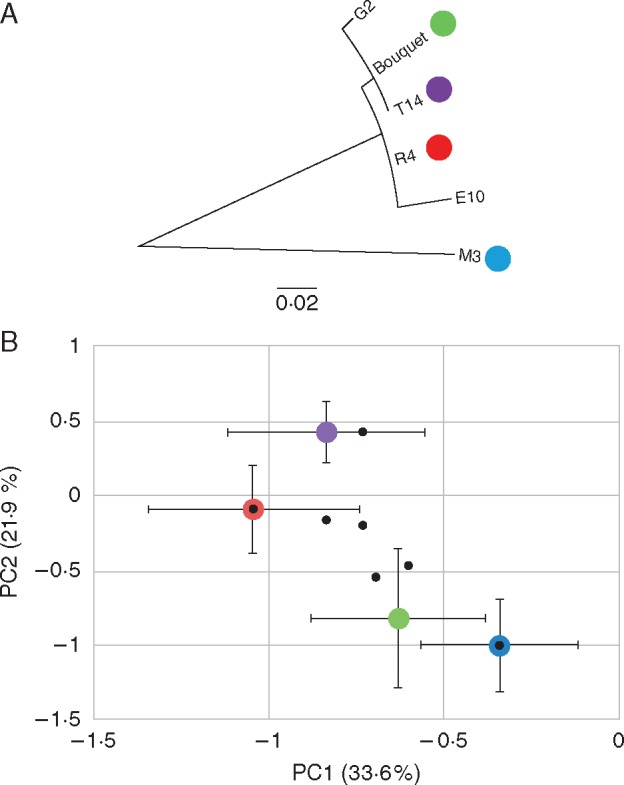
MBSP isolates were collected from maize production fields in Guaíra and Piracicaba in South-east Brazil for infection assays. One representative isolate was chosen for de novo whole-genome assembly and for the alignment of sequence reads from the genomes of other phytoplasma isolates to detect polymorphisms. Statistical methods were applied to investigate the correlation between variations in disease symptoms of infected maize plants and MBSP sequence polymorphisms.
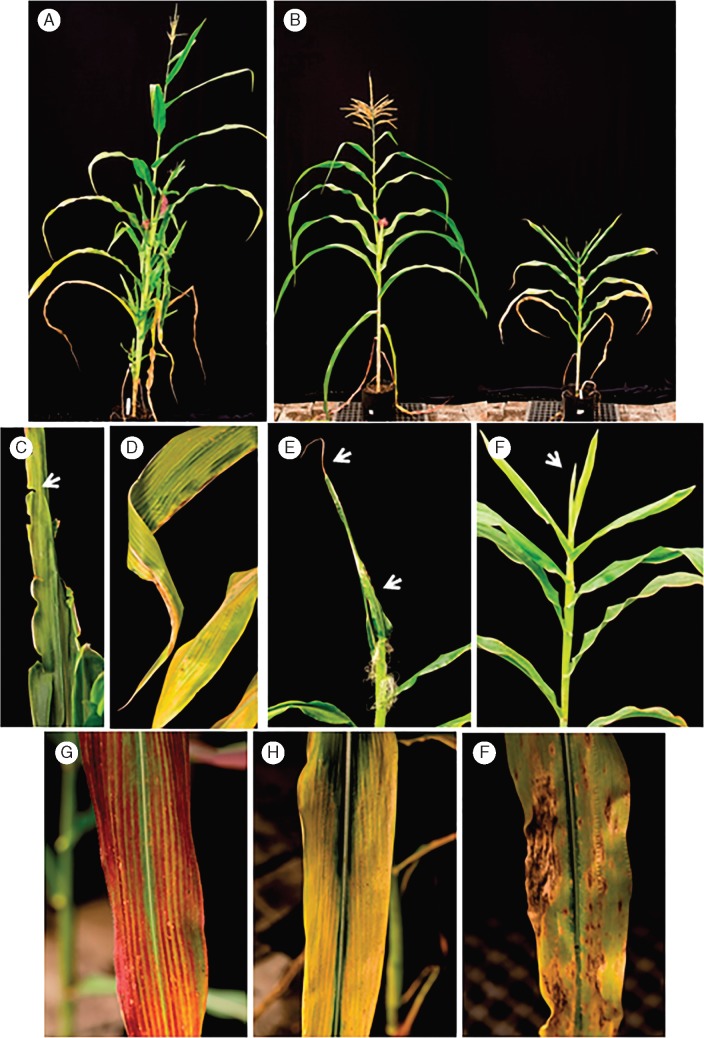
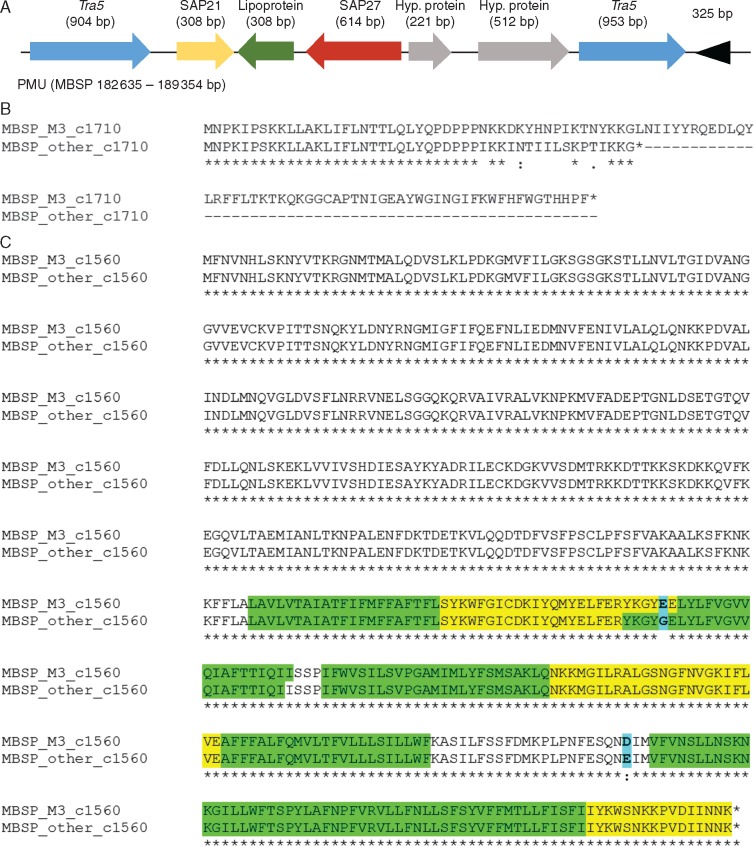
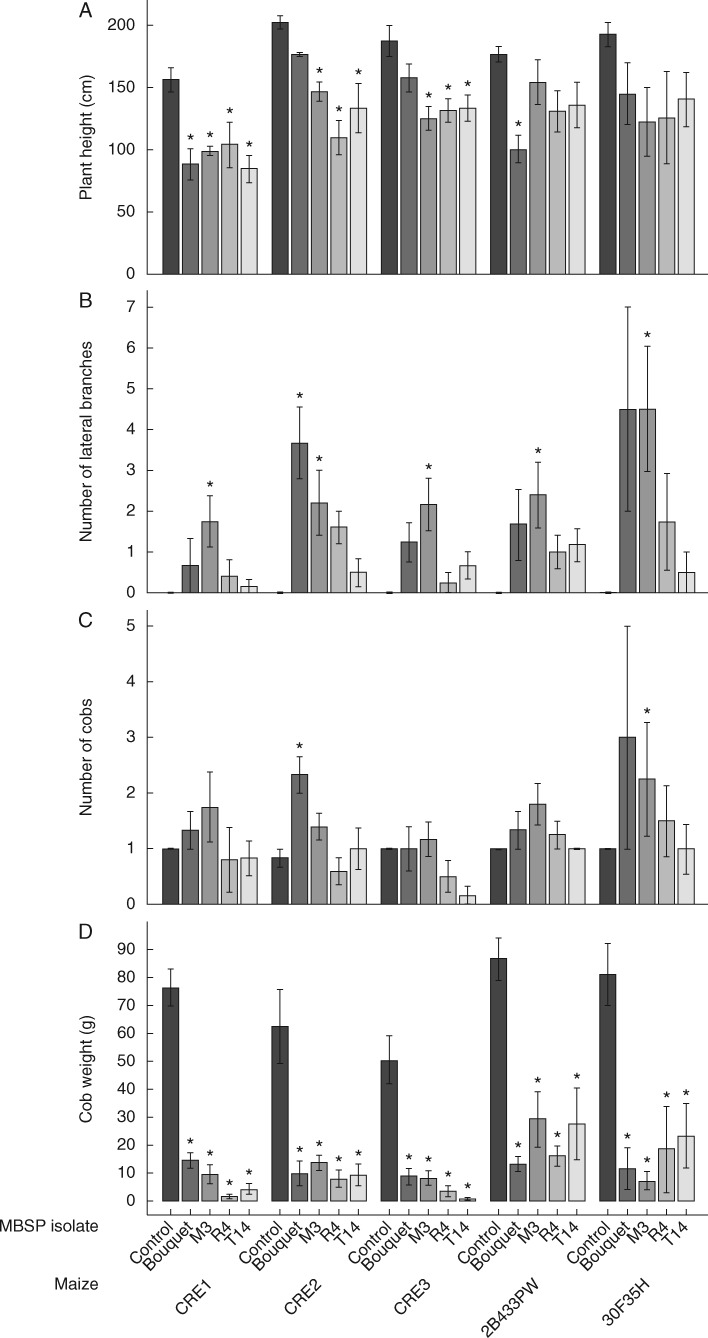
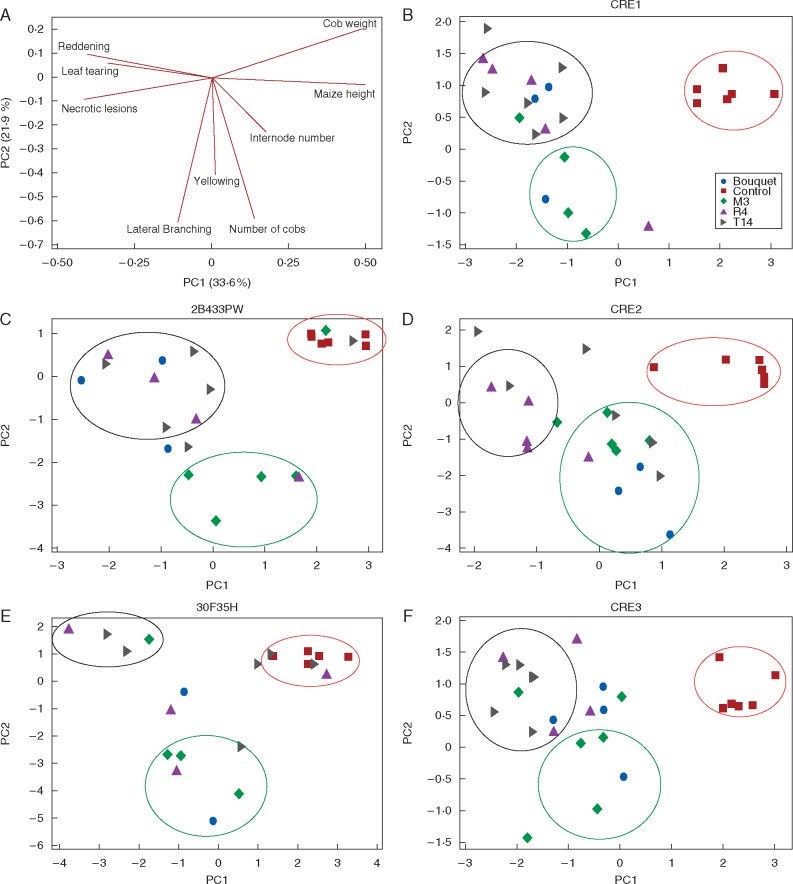
MBSP isolates contributed consistently to organ proliferation symptoms and maize genotype to leaf necrosis, reddening and yellowing of infected maize plants. The symptom differences are associated with polymorphisms in a phase-variable lipoprotein, which is a candidate effector, and an ATP-dependent lipoprotein ABC export protein, whereas no polymorphisms were observed in other candidate effector genes. Lipoproteins and ABC export proteins activate host defence responses, regulate pathogen attachment to host cells and activate effector secretion systems in other pathogens.
Polymorphisms in two putative virulence genes among MBSP isolates from maize-growing regions in South-east Brazil are associated with variations in organ proliferation symptoms of MBSP-infected maize plants.
玉米矮化丛生病原体(MBSP)是一种在拉丁美洲危害玉米(Zea mays L.)的细菌病原体。MBSP属于“候选植原体属”中的16SrI-B亚组。MBSP及其昆虫传播介体玉米叶蝉(Dalbulus maidis,半翅目:叶蝉科)仅寄生于玉米;人们认为它们在玉米从类大刍草祖先驯化而来的过程中与玉米共同进化。感染MBSP的玉米植株会表现出多种症状。在巴西广泛种植的玉米杂交品种上,MBSP很可能因毒力增强和昆虫传播能力提高而受到强烈选择。本研究调查了来自巴西东南部两个玉米种植区的MBSP分离株的基因组序列差异是否能解释这些分离株在不同玉米基因型上症状严重程度的差异。
从巴西东南部瓜伊拉和皮拉西卡巴的玉米生产田采集MBSP分离株用于感染试验。选择一个代表性分离株进行从头全基因组组装,并将其他植原体分离株基因组的序列读数进行比对以检测多态性。应用统计方法研究感染玉米植株的疾病症状变化与MBSP序列多态性之间的相关性。
MBSP分离株始终导致受感染玉米植株出现器官增生症状,而玉米基因型则导致叶片坏死、变红和变黄。症状差异与一个相位可变脂蛋白(一种候选效应蛋白)和一个ATP依赖性脂蛋白ABC输出蛋白中的多态性有关,而在其他候选效应基因中未观察到多态性。脂蛋白和ABC输出蛋白可激活宿主防御反应、调节病原体与宿主细胞的附着,并激活其他病原体中的效应蛋白分泌系统。
巴西东南部玉米种植区的MBSP分离株中两个假定的毒力基因的多态性与感染MBSP的玉米植株器官增生症状的变化有关。