Kuo Yi-Zih, Fang Wei-Yu, Huang Cheng-Chih, Tsai Sen-Tien, Wang Yi-Ching, Yang Chih-Li, Wu Li-Wha
Institute of Basic Medical Sciences, College of Medicine, National Cheng Kung University, Tainan 70101, Taiwan, R.O.C.
Department of Otolaryngology, National Cheng Kung University Hospital, Tainan 70428, Taiwan, R.O.C.
Oncotarget. 2017 Feb 28;8(9):15563-15583. doi: 10.18632/oncotarget.14697.
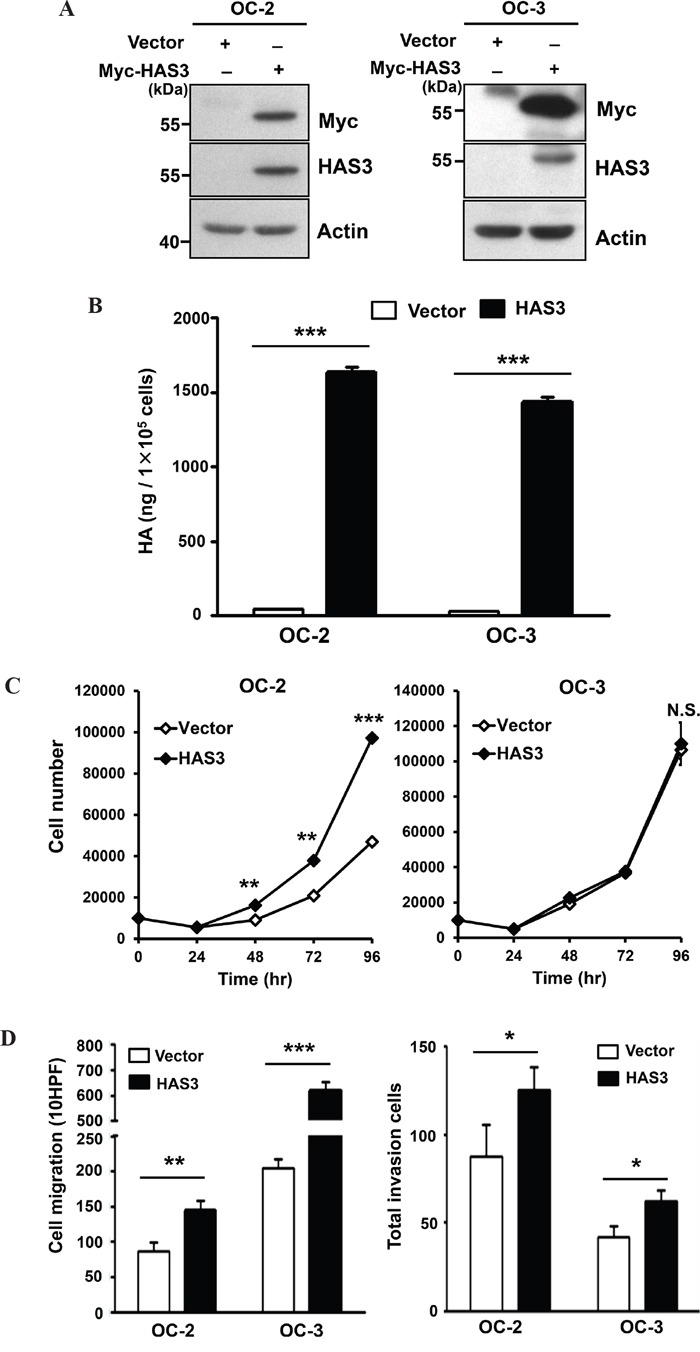
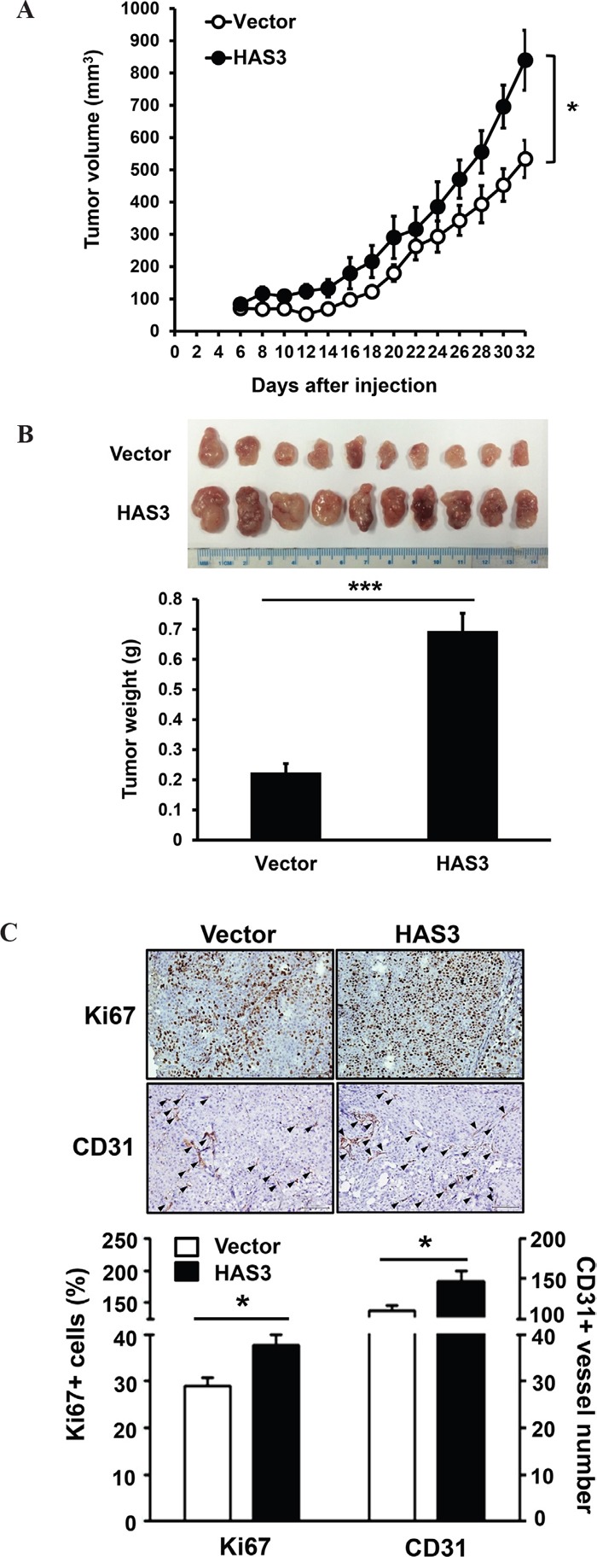
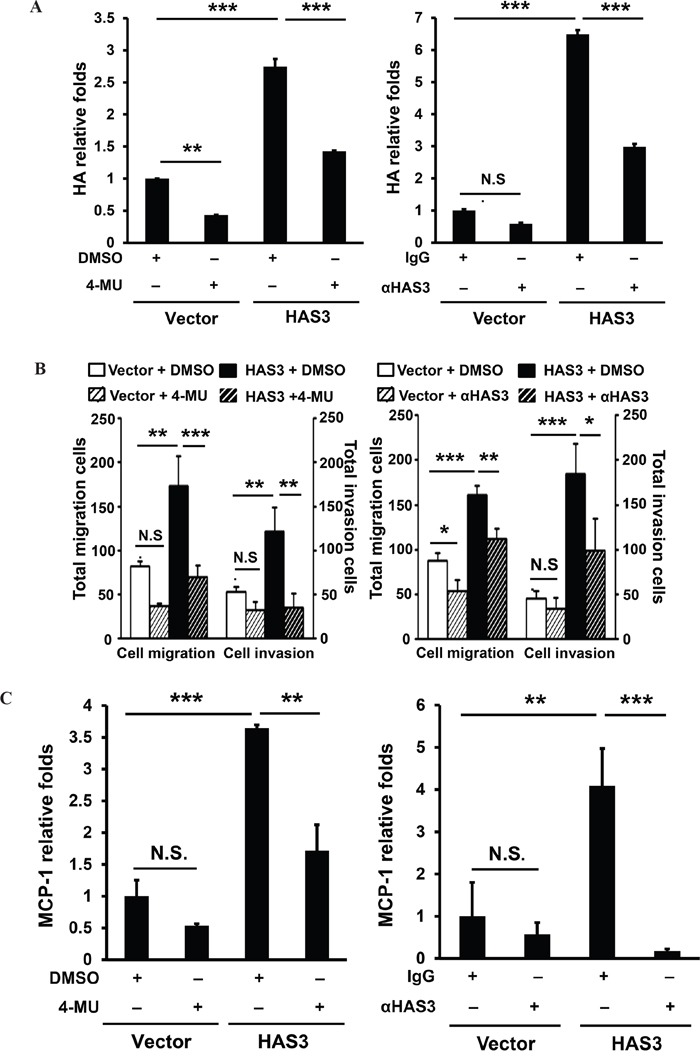
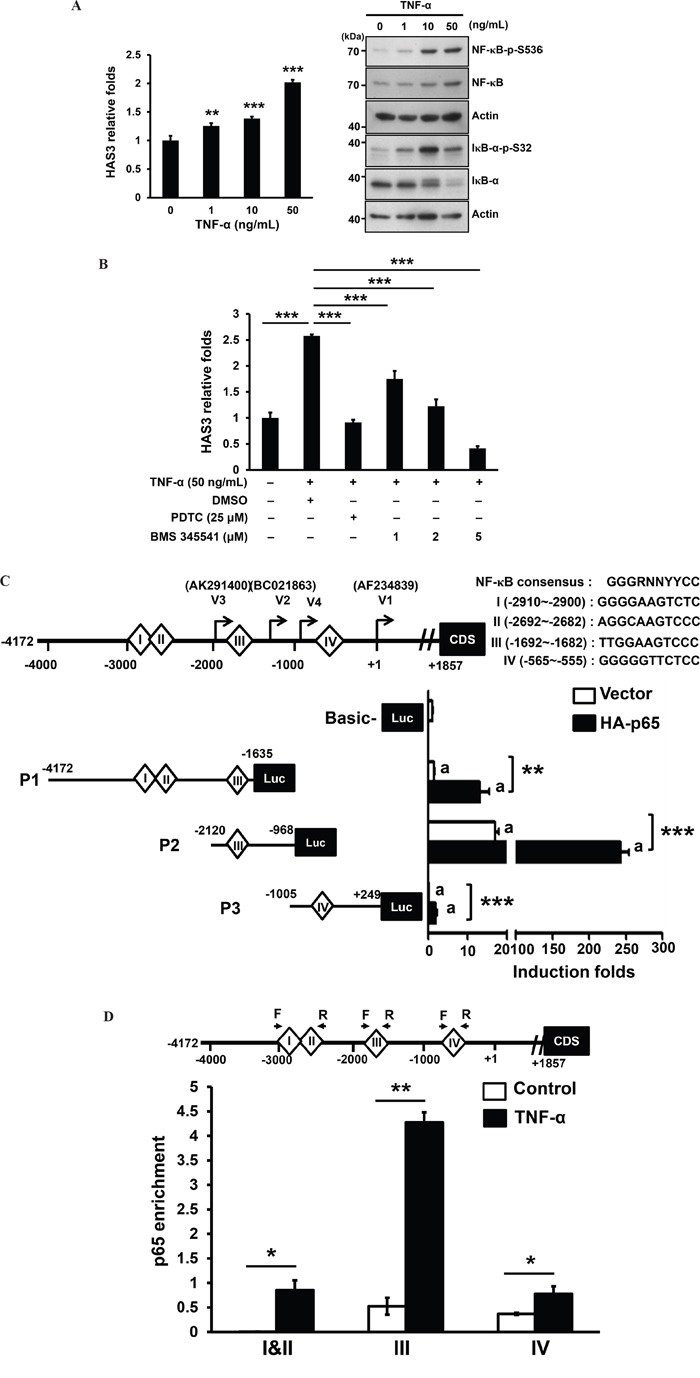
Hyaluronan (HA) is a major extracellular matrix component. However, its role and mediation in oral cancer remains elusive. Hyaluronan synthase 3 (HAS3), involved in pro-inflammatory short chain HA synthesis, was the predominant synthase in oral cancer cells and tissues. HAS3 overexpression significantly increased oral cancer cell migration, invasion and xenograft tumorigenesis accompanied with the increased expression of tumor necrosis factor alpha (TNF-α) and monocyte chemoattractant protein 1 (MCP-1). Conversely, HAS3 depletion abrogated HAS3-mediated stimulation. HAS3 induced oncogenic actions partly through activating EGFR-SRC signaling. HAS3-derived HA release into extracellular milieu enhanced transendothelial monocyte migration and MCP-1 expression, which was attenuated by anti-HAS3 antibodies or a HAS inhibitor, 4-Methylumbelliferone (4-MU). The NF-κB-binding site III at -1692 to -1682 bp upstream from the transcript 1 start site in HAS3 proximal promoter was the most responsive to TNF-α-stimulated transcription. ChIP-qPCR analysis confirmed the highest NF-κB-p65 enrichment on site III. Increased HAS3 mRNA expression was negatively correlated with the overall survival of oral cancer patients. A concomitant increase of TNF-α, a stimulus for HAS3 expression, with HAS3 expression was not only associated with lymph node metastasis but also negated clinical outcome. Together, HAS3 and TNF-α formed an inter-regulation loop to enhance tumorigenesis in oral cancer.
透明质酸(HA)是细胞外基质的主要成分。然而,其在口腔癌中的作用和介导机制仍不清楚。参与促炎性短链HA合成的透明质酸合酶3(HAS3)是口腔癌细胞和组织中的主要合酶。HAS3的过表达显著增加了口腔癌细胞的迁移、侵袭和异种移植瘤的形成,同时肿瘤坏死因子α(TNF-α)和单核细胞趋化蛋白1(MCP-1)的表达也增加。相反,HAS3的缺失消除了HAS3介导的刺激作用。HAS3部分通过激活EGFR-SRC信号传导诱导致癌作用。HAS3衍生的HA释放到细胞外环境中增强了跨内皮单核细胞迁移和MCP-1表达,抗HAS3抗体或HAS抑制剂4-甲基伞形酮(4-MU)可减弱这种作用。HAS3近端启动子转录本1起始位点上游-1692至-1682 bp处的NF-κB结合位点III对TNF-α刺激的转录反应最为敏感。染色质免疫沉淀定量PCR分析证实了位点III上NF-κB-p65的富集程度最高。HAS3 mRNA表达的增加与口腔癌患者的总生存期呈负相关。TNF-α(HAS3表达的刺激因子)与HAS3表达的同时增加不仅与淋巴结转移有关,而且否定了临床结果。总之,HAS3和TNF-α形成了一个相互调节的环,以增强口腔癌的肿瘤发生。