Mishall Priti L, Matakas Jason D, English Keara, Allyn Katherine, Algava Diane, Howe Ruth A, Downie Sherry A
Department of Anatomy and Structural Biology, Albert Einstein College of Medicine, Bronx, NY,10461, USA.
Department of Cell Biology, Albert Einstein College of Medicine, Bronx, NY 10461, USA.
Einstein J Biol Med. 2016;31(1-2):6-10. doi: 10.23861/ejbm201631744.
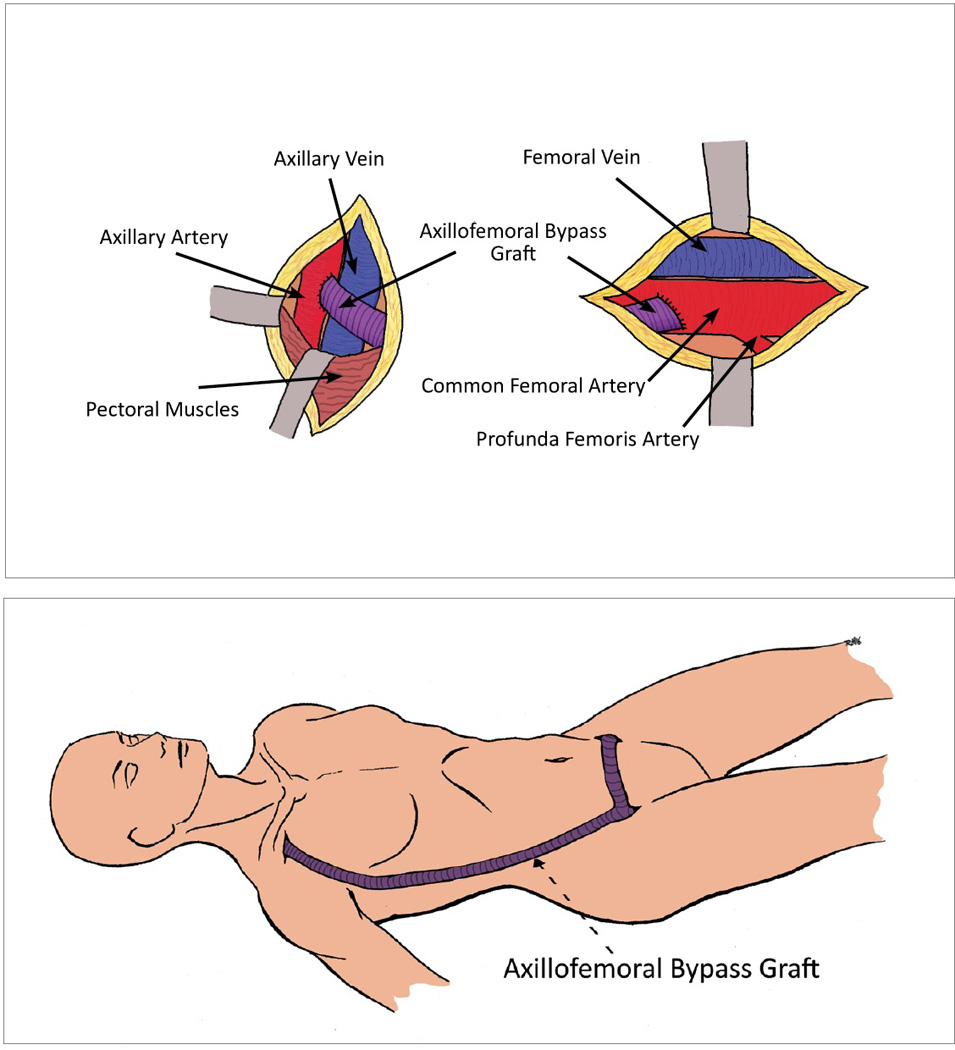
Peripheral artery disease (PAD) occurs when plaque accumulates in the arterial system and obstructs blood flow. Narrowing of the abdominal aorta and the common iliac arteries due to atherosclerotic plaques restricts blood supply to the lower limbs. Clinically, the lower limb symptoms of PAD are intermittent claudication, discoloration of the toes, and skin ulcers, all due to arterial insufficiency. Surgical revascularization is the primary mode of treatment for patients with severe limb ischemia. The objective of the surgical procedure is to bypass a blockage in an occluded major vessel by constructing an alternate route for blood flow using an artificial graft. This article presents information on aortoiliac reconstruction, with an emphasis on axillobifemoral bypass grafting.
外周动脉疾病(PAD)是由于动脉系统中斑块积聚并阻碍血流而发生的。动脉粥样硬化斑块导致腹主动脉和髂总动脉狭窄,限制了下肢的血液供应。临床上,PAD的下肢症状包括间歇性跛行、脚趾变色和皮肤溃疡,这些都是由于动脉供血不足所致。外科血管重建术是严重肢体缺血患者的主要治疗方式。手术的目的是通过使用人工移植物构建一条替代血流路径,绕过闭塞的主要血管中的阻塞部位。本文介绍了主髂动脉重建的相关信息,重点是腋双股旁路移植术。