Aguilar-Jimenez Wbeimar, Saulle Irma, Trabattoni Daria, Vichi Francesca, Lo Caputo Sergio, Mazzotta Francesco, Rugeles Maria T, Clerici Mario, Biasin Mara
Grupo Inmunovirología, Facultad de Medicina, Universidad de Antioquia UdeA, Medellín, Colombia; Dipartimento di Scienze Biomediche e Cliniche-Luigi Sacco, Università Degli Studi di Milano, Milan, Italy.
Dipartimento di Scienze Biomediche e Cliniche-Luigi Sacco, Università Degli Studi di Milano , Milan , Italy.
Front Immunol. 2017 Feb 13;8:136. doi: 10.3389/fimmu.2017.00136. eCollection 2017.
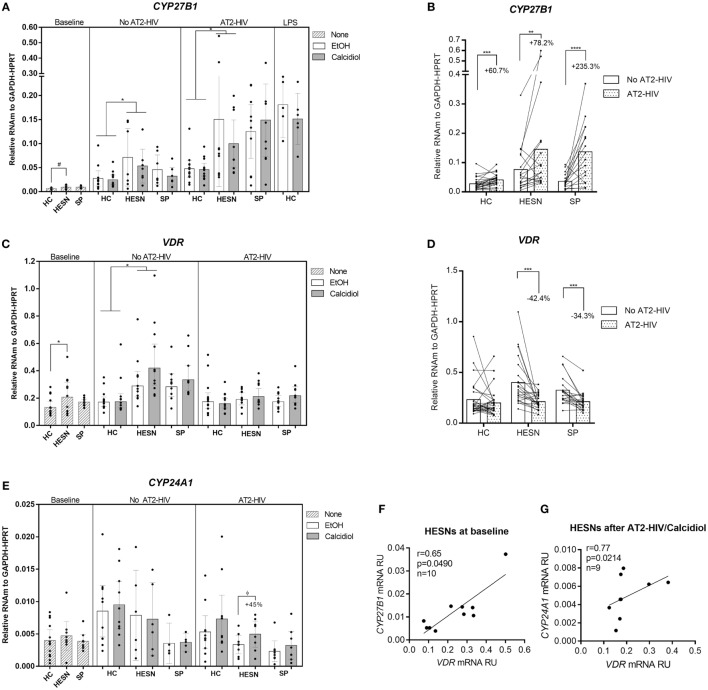
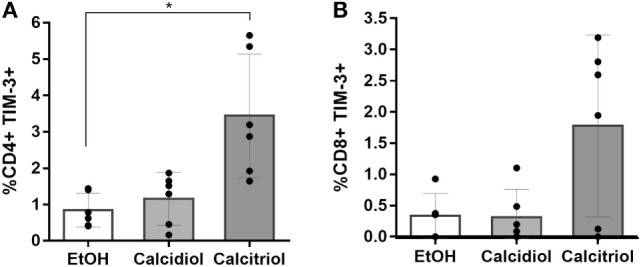
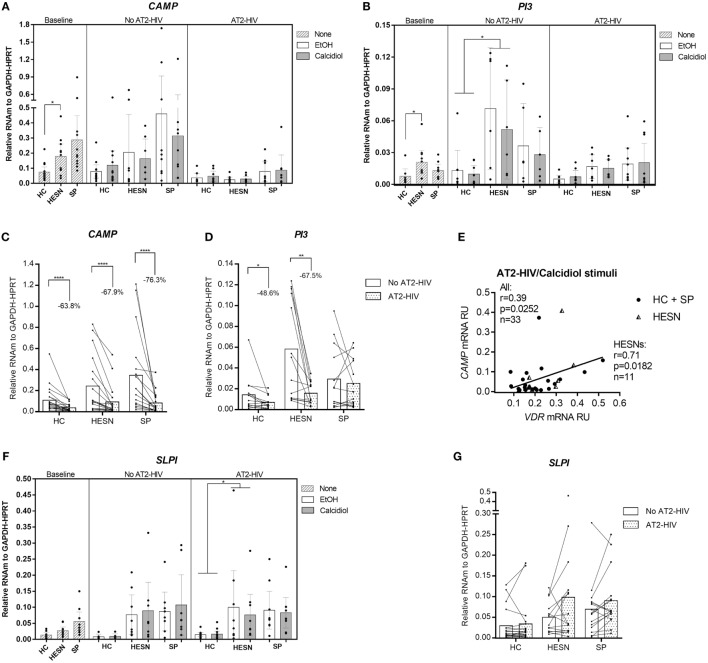
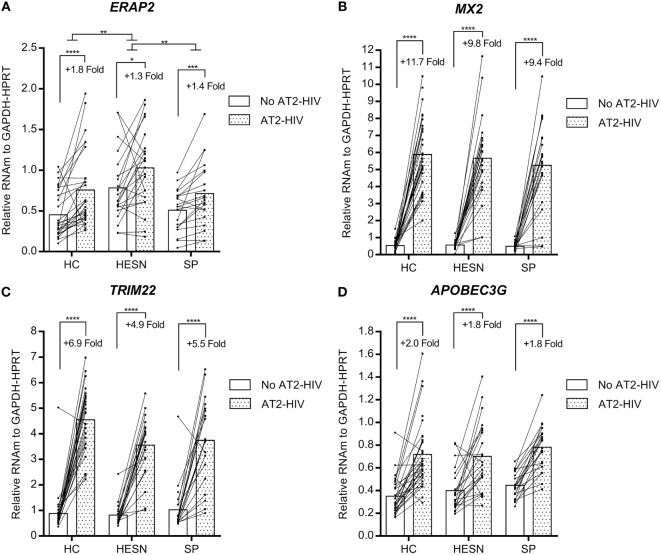
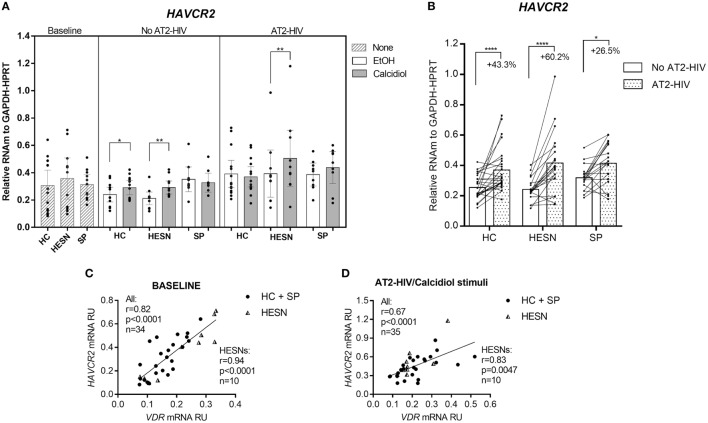
Natural resistance to HIV-1 infection is influenced by genetics, viral-exposure, and endogenous immunomodulators such as vitamin D (VitD), being a multifactorial phenomenon that characterizes HIV-1-exposed seronegative individuals (HESNs). We compared mRNA expression of 10 antivirals, 5 immunoregulators, and 3 VitD pathway genes by qRT-PCR in cells of a small cohort of 11 HESNs, 16 healthy-controls (HCs), and 11 seropositives (SPs) at baseline, in response to calcidiol (VitD precursor) and/or aldithriol-2-(AT2)-inactivated HIV-1. In addition, the expression of TIM-3 on T and NK cells of six HCs after calcidiol and calcitriol (active VitD) treatments was evaluated by flow cytometry. Calcidiol increased the mRNA expression of (TIM-3; Th1-cells inhibitor) in HCs and HESNs. AT2-HIV-1 increased the mRNA expression of the activating VitD enzyme , of the endogenous antiviral proteins , and of immunoregulators and , but reduced the mRNA expression of VitD receptor () and antiviral peptides and in all groups. Remarkably, higher mRNA levels of , and of were found in HESNs compared to HCs either at baseline or after stimuli. Furthermore, calcitriol increases the percentage of CD4+ T cells expressing TIM-3 protein compared to EtOH controls. These results suggest that high mRNA expression of antiviral and VitD pathway genes could be genetically determined in HESNs more than viral-induced at least in peripheral blood mononuclear cells. Moreover, the virus could potentiate bio-activation and use of VitD, maintaining the homeostasis of the immune system. Interestingly, VitD-induced TIM-3 on T cells, a T cell inhibitory and anti-HIV-1 molecule, requires further studies to analyze the functional outcomes during HIV-1 infection.
对HIV-1感染的天然抵抗力受遗传、病毒暴露以及内源性免疫调节剂(如维生素D(VitD))的影响,这是一种多因素现象,是HIV-1暴露血清阴性个体(HESN)的特征。我们通过qRT-PCR比较了一小群11名HESN、16名健康对照(HC)和11名血清阳性者(SP)在基线时、对骨化二醇(VitD前体)和/或阿地硫醇-2-(AT2)灭活的HIV-1反应时,10种抗病毒药物、5种免疫调节剂和3种VitD通路基因的mRNA表达。此外,通过流式细胞术评估了6名HC在骨化二醇和骨化三醇(活性VitD)治疗后T细胞和NK细胞上TIM-3的表达。骨化二醇增加了HC和HESN中(TIM-3;Th1细胞抑制剂)的mRNA表达。AT2-HIV-1增加了活性VitD酶、内源性抗病毒蛋白以及免疫调节剂和的mRNA表达,但降低了所有组中VitD受体()以及抗病毒肽和的mRNA表达。值得注意的是,在基线时或刺激后,与HC相比,HESN中、和的mRNA水平更高。此外,与乙醇对照相比,骨化三醇增加了表达TIM-3蛋白的CD4+T细胞百分比。这些结果表明,至少在外周血单个核细胞中,抗病毒和VitD通路基因的高mRNA表达在HESN中可能更多地由遗传决定而非病毒诱导。此外,病毒可能增强VitD的生物激活和利用,维持免疫系统的稳态。有趣的是,VitD在T细胞上诱导的TIM-3,一种T细胞抑制和抗HIV-1分子,需要进一步研究以分析HIV-1感染期间的功能结果。