Lee Chin-Cheng, Chen Peng-Hsu, Ho Kuo-Hao, Shih Chwen-Ming, Cheng Chia-Hsiung, Lin Cheng-Wei, Cheng Kur-Ta, Liu Ann-Jeng, Chen Ku-Chung
Department of Pathology and Laboratory Medicine, Shin Kong Wu Ho-Su Memorial Hospital, Taipei, Taiwan.
Graduate Institute of Medical Sciences, College of Medicine, Taipei Medical University, Taipei, Taiwan.
PLoS One. 2017 Mar 21;12(3):e0173890. doi: 10.1371/journal.pone.0173890. eCollection 2017.
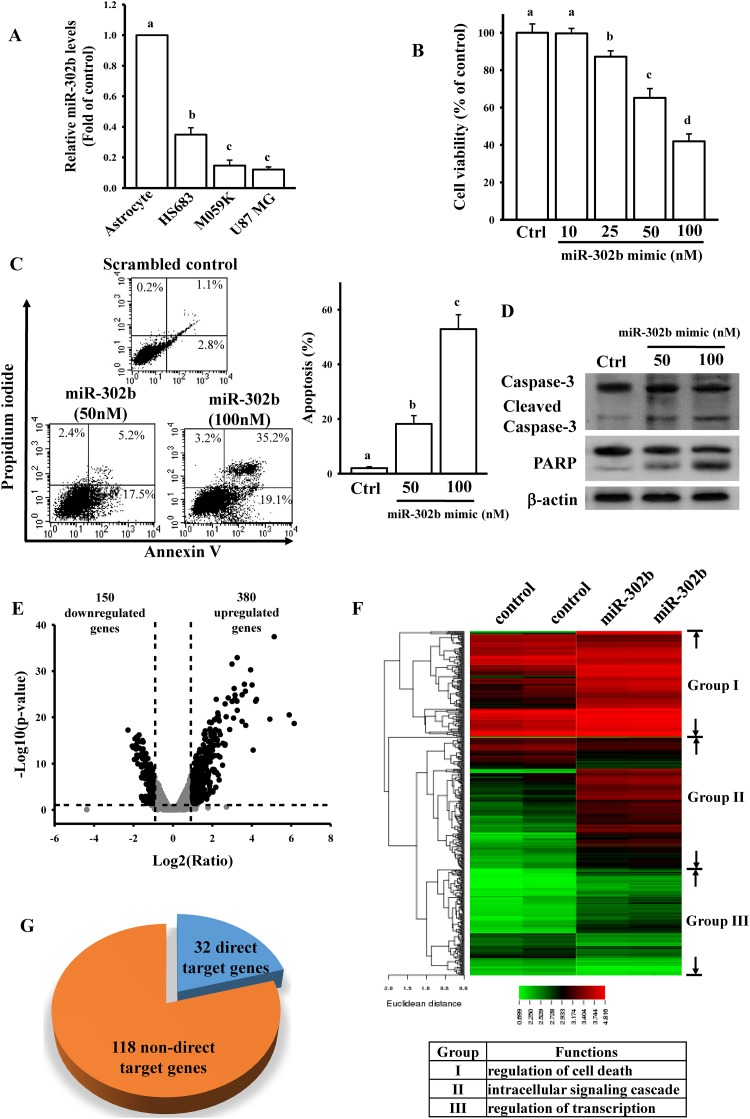
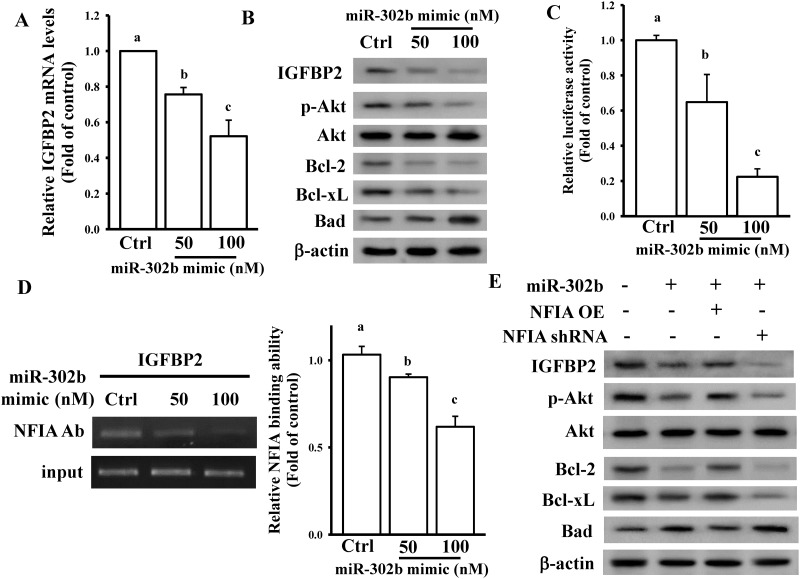
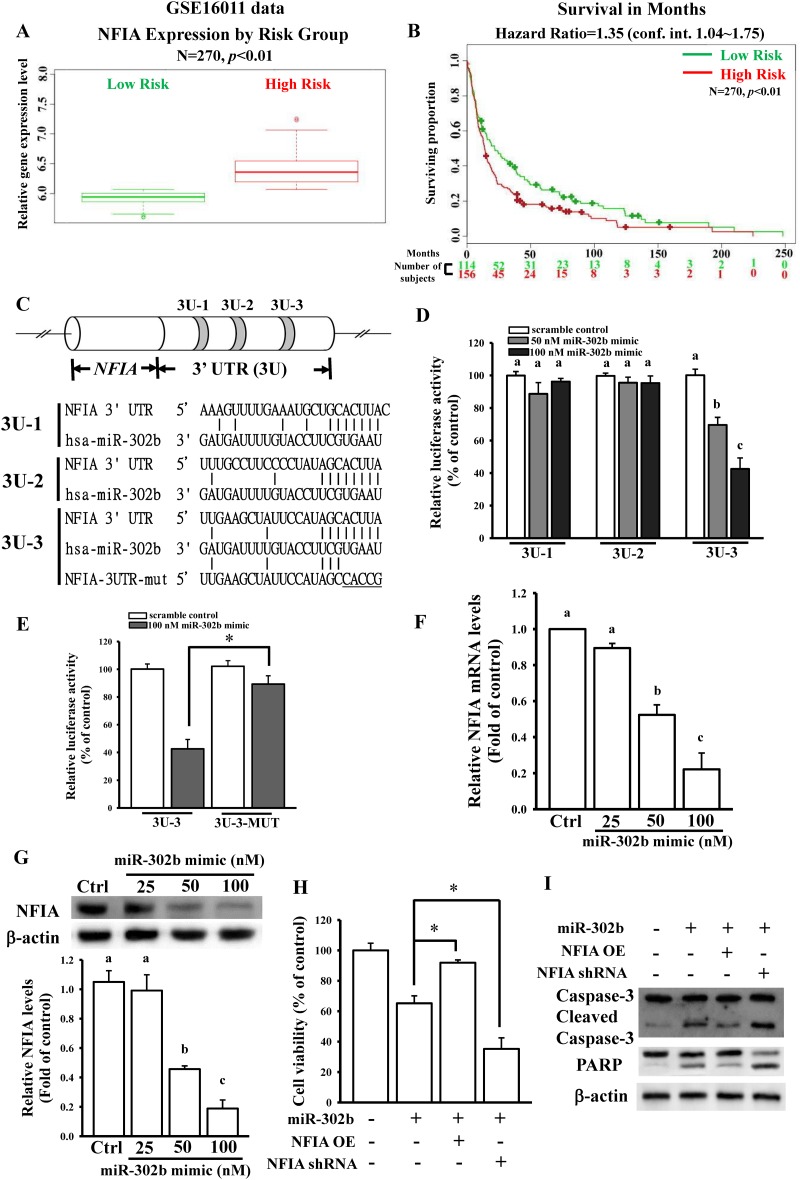
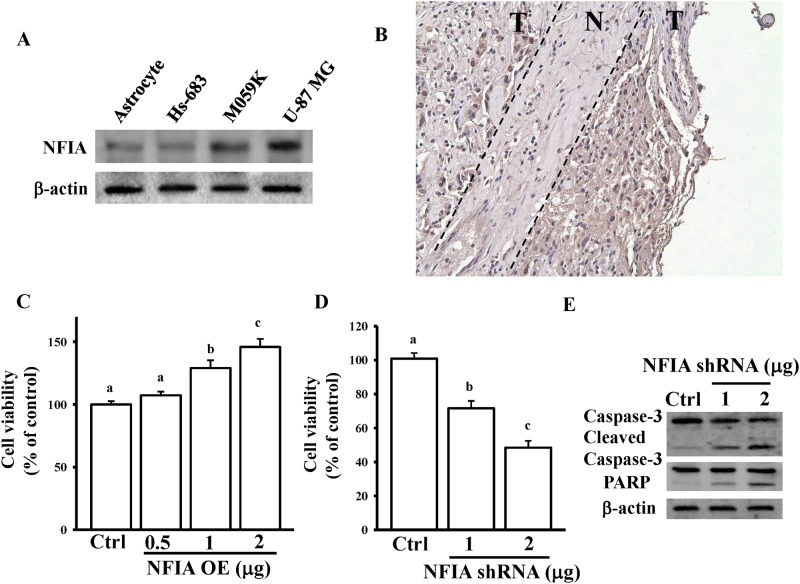
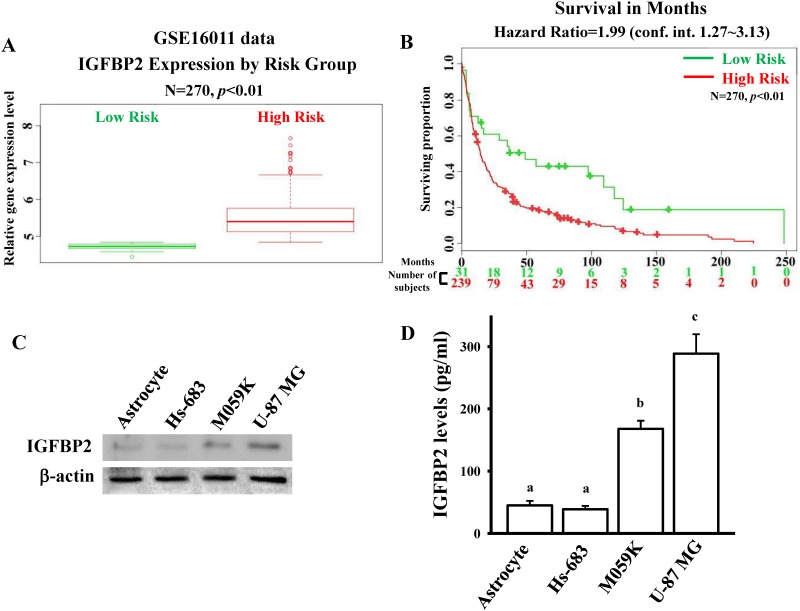
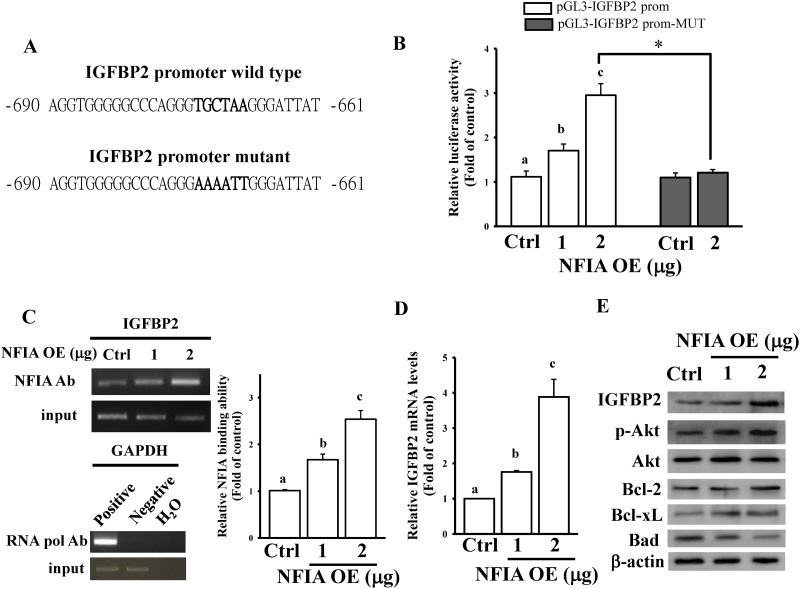
MicroRNAs are small noncoding RNAs that post-transcriptionally control the expression of genes involved in glioblastoma multiforme (GBM) development. Although miR-302b functions as a tumor suppressor, its role in GBM is still unclear. Therefore, this study comprehensively explored the roles of miR-302b-mediated gene networks in GBM cell death. We found that miR-302b levels were significantly higher in primary astrocytes than in GBM cell lines. miR-302b overexpression dose dependently reduced U87-MG cell viability and induced apoptosis through caspase-3 activation and poly(ADP ribose) polymerase degradation. A transcriptome microarray revealed 150 downregulated genes and 380 upregulated genes in miR-302b-overexpressing cells. Nuclear factor IA (NFIA), higher levels of which were significantly related to poor survival, was identified as a direct target gene of miR-302b and was involved in miR-302b-induced glioma cell death. Higher NFIA levels were observed in GBM cell lines and human tumor sections compared with astrocytes and non-tumor tissues, respectively. NFIA knockdown significantly enhanced apoptosis. We found high levels of insulin-like growth factor-binding protein 2 (IGFBP2), another miR-302b-downregulated gene, in patients with poor survival. We verified that NFIA binds to the IGFBP2 promoter and transcriptionally enhances IGFBP2 expression levels. We identified that NFIA-mediated IGFBP2 signaling pathways are involved in miR-302b-induced glioma cell death. The identification of a regulatory loop whereby miR-302b inhibits NFIA, leading to a decrease in expression of IGFBP-2, may provide novel directions for developing therapies to target glioblastoma tumorigenesis.
微小RNA是一类小的非编码RNA,可在转录后水平调控参与多形性胶质母细胞瘤(GBM)发生发展的基因的表达。尽管miR-302b发挥肿瘤抑制因子的作用,但其在GBM中的作用仍不清楚。因此,本研究全面探讨了miR-302b介导的基因网络在GBM细胞死亡中的作用。我们发现,原代星形胶质细胞中的miR-302b水平显著高于GBM细胞系。miR-302b的过表达呈剂量依赖性地降低U87-MG细胞活力,并通过激活半胱天冬酶-3和降解聚(ADP核糖)聚合酶诱导细胞凋亡。转录组微阵列显示,在过表达miR-302b的细胞中有150个基因下调,380个基因上调。核因子IA(NFIA)被确定为miR-302b的直接靶基因,其较高水平与较差的生存率显著相关,并参与miR-302b诱导的胶质瘤细胞死亡。与星形胶质细胞和非肿瘤组织相比,在GBM细胞系和人类肿瘤切片中分别观察到较高水平的NFIA。NFIA基因敲低显著增强了细胞凋亡。我们发现,在生存率较差的患者中,胰岛素样生长因子结合蛋白2(IGFBP2)水平较高——IGFBP2是另一个被miR-302b下调的基因。我们证实,NFIA与IGFBP2启动子结合,并在转录水平增强IGFBP2的表达。我们确定,NFIA介导的IGFBP2信号通路参与了miR-302b诱导的胶质瘤细胞死亡。对miR-302b抑制NFIA从而导致IGFBP-2表达降低的调控环的鉴定,可能为开发针对胶质母细胞瘤肿瘤发生的治疗方法提供新的方向。