Lau Esther T L, Johnson Stuart K, Williams Barbara A, Mikkelsen Deirdre, McCourt Elizabeth, Stanley Roger A, Mereddy Ram, Halley Peter J, Steadman Kathryn J
School of Pharmacy, University of Queensland, 4072 Brisbane, Australia.
School of Clinical Sciences, Queensland University of Technology, 4000 Brisbane, Australia.
Pharmaceutics. 2017 May 19;9(2):17. doi: 10.3390/pharmaceutics9020017.
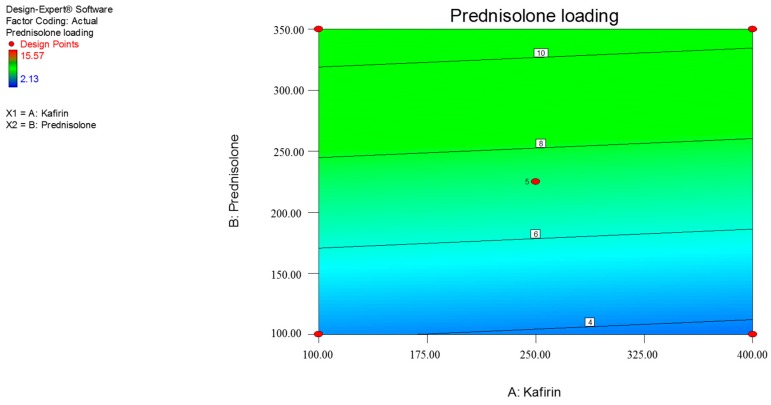
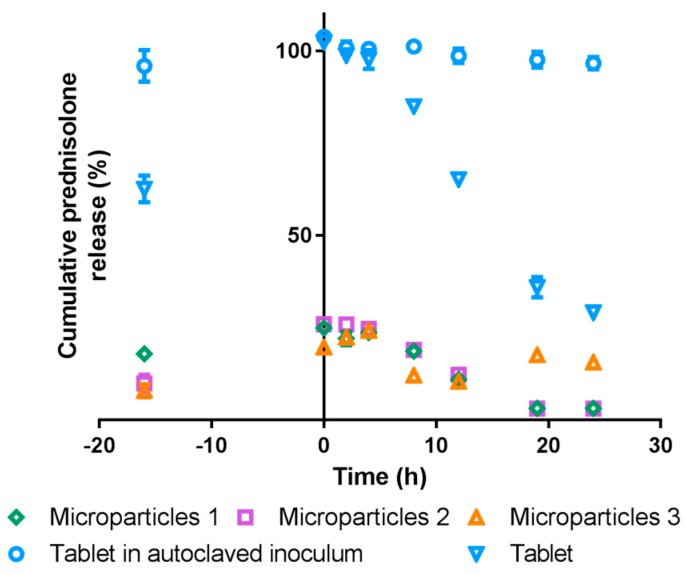
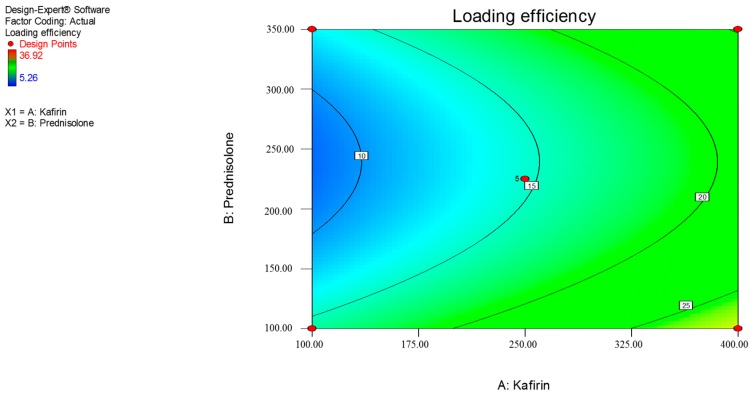
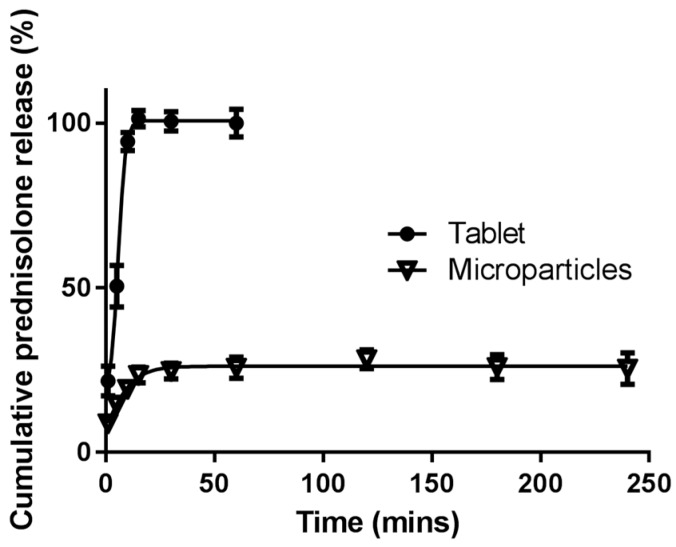
Kafirin microparticles have potential as colon-targeted delivery systems because of their ability to protect encapsulated material from digestive processes of the upper gastrointestinal tract (GIT). The aim was to optimize prednisolone loading into kafirin microparticles, and investigate their potential as an oral delivery system. Response surface methodology (RSM) was used to predict the optimal formulation of prednisolone loaded microparticles. Prednisolone release from the microparticles was measured in simulated conditions of the GIT. The RSM models were inadequate for predicting the relationship between starting quantities of kafirin and prednisolone, and prednisolone loading into microparticles. Compared to prednisolone released in the simulated gastric and small intestinal conditions, no additional drug release was observed in simulated colonic conditions. Hence, more insight into factors affecting drug loading into kafirin microparticles is required to improve the robustness of the RSM model. This present method of formulating prednisolone-loaded kafirin microparticles is unlikely to offer clinical benefits over commercially available dosage forms. Nevertheless, the overall amount of prednisolone released from the kafirin microparticles in conditions simulating the human GIT demonstrates their ability to prevent the release of entrapped core material. Further work developing the formulation methods may result in a delivery system that targets the lower GIT.
由于卡非醇微粒能够保护包裹的物质免受上消化道(GIT)消化过程的影响,因此它有潜力成为结肠靶向给药系统。目的是优化泼尼松龙在卡非醇微粒中的负载量,并研究其作为口服给药系统的潜力。采用响应面法(RSM)预测负载泼尼松龙微粒的最佳配方。在模拟GIT条件下测量微粒中泼尼松龙的释放情况。RSM模型不足以预测卡非醇和泼尼松龙起始量之间的关系以及泼尼松龙在微粒中的负载量。与在模拟胃和小肠条件下释放的泼尼松龙相比,在模拟结肠条件下未观察到额外的药物释放。因此,需要更深入了解影响药物负载到卡非醇微粒中的因素,以提高RSM模型的稳健性。目前这种制备负载泼尼松龙的卡非醇微粒的方法不太可能比市售剂型提供临床益处。尽管如此,在模拟人体GIT的条件下,从卡非醇微粒中释放的泼尼松龙总量证明了它们防止包裹的核心物质释放的能力。进一步开展配方方法的研究可能会产生一种靶向于下消化道的给药系统。