Center for Genomics and Systems Biology, Department of Biology, New York University, New York, NY, 10003, USA.
Wildlife Investigations Laboratory, California Department of Fish and Wildlife, Rancho Cordova, CA, 95670, USA.
Microb Ecol. 2017 Nov;74(4):923-936. doi: 10.1007/s00248-017-0996-9. Epub 2017 May 24.
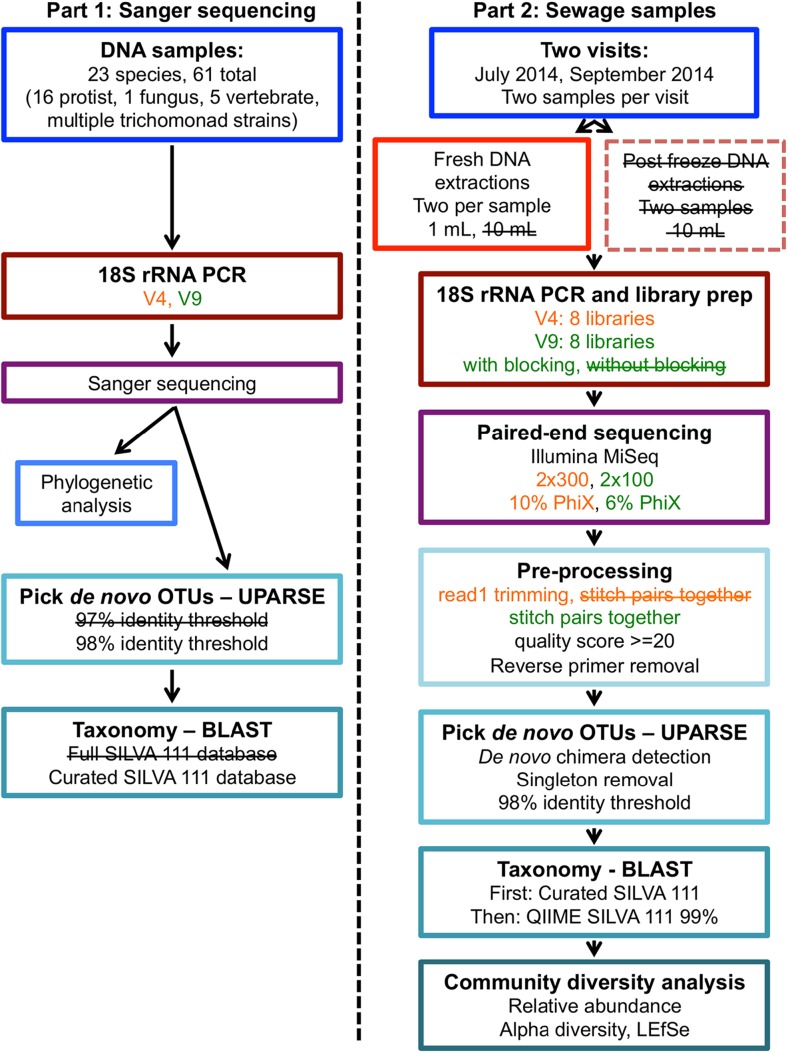
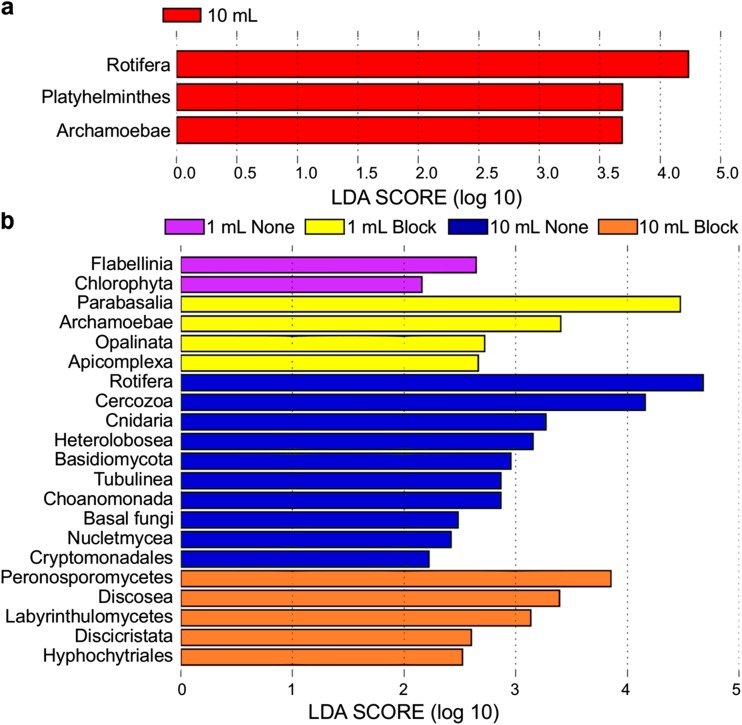
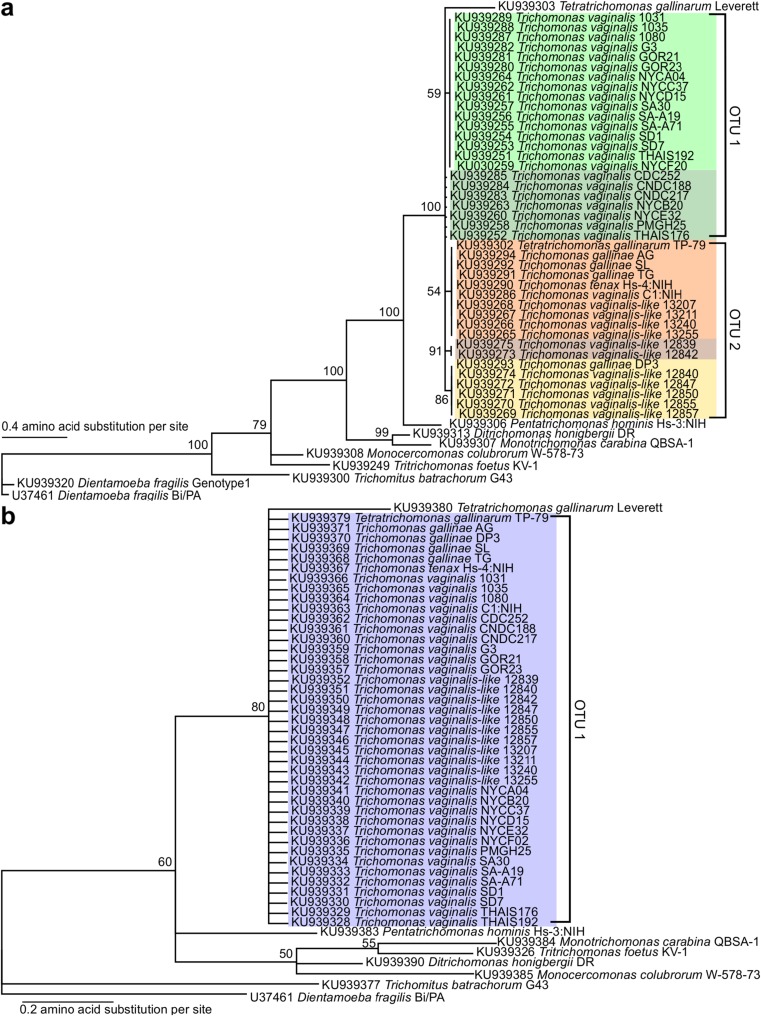
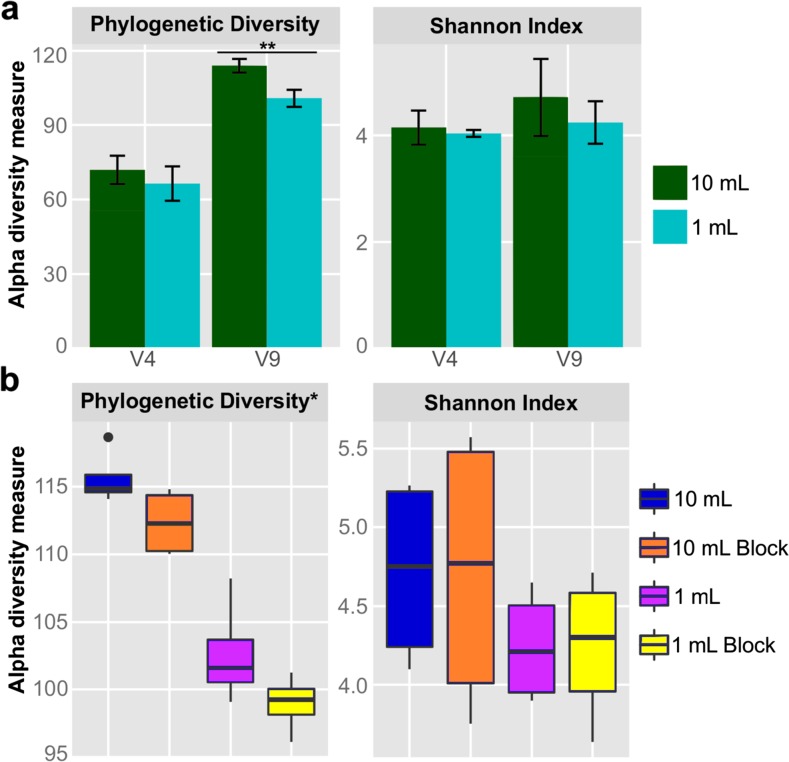
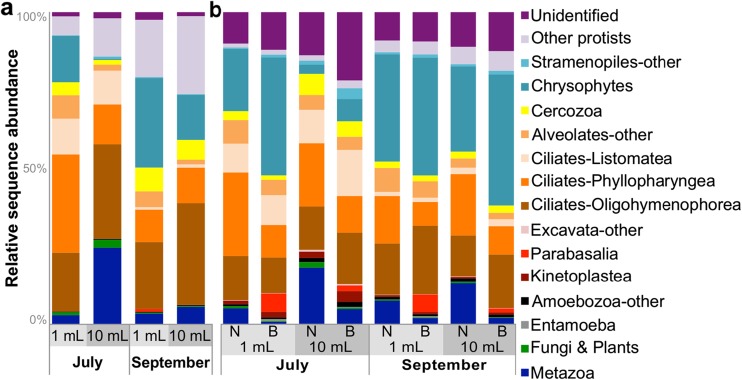
Microbial eukaryotes (protists) are important components of terrestrial and aquatic environments, as well as animal and human microbiomes. Their relationships with metazoa range from mutualistic to parasitic and zoonotic (i.e., transmissible between humans and animals). Despite their ecological importance, our knowledge of protists in urban environments lags behind that of bacteria, largely due to a lack of experimentally validated high-throughput protocols that produce accurate estimates of protist diversity while minimizing non-protist DNA representation. We optimized protocols for detecting zoonotic protists in raw sewage samples, with a focus on trichomonad taxa. First, we investigated the utility of two commonly used variable regions of the 18S rRNA marker gene, V4 and V9, by amplifying and Sanger sequencing 23 different eukaryotic species, including 16 protist species such as Cryptosporidium parvum, Giardia intestinalis, Toxoplasma gondii, and species of trichomonad. Next, we optimized wet-lab methods for sample processing and Illumina sequencing of both regions from raw sewage collected from a private apartment building in New York City. Our results show that both regions are effective at identifying several zoonotic protists that may be present in sewage. A combination of small extractions (1 mL volumes) performed on the same day as sample collection, and the incorporation of a vertebrate blocking primer, is ideal to detect protist taxa of interest and combat the effects of metazoan DNA. We expect that the robust, standardized methods presented in our workflow will be applicable to investigations of protists in other environmental samples, and will help facilitate large-scale investigations of protistan diversity.
微生物真核生物(原生动物)是陆地和水生环境以及动物和人类微生物组的重要组成部分。它们与后生动物的关系从共生到寄生和人畜共患病(即,在人类和动物之间传播)不等。尽管它们具有生态重要性,但我们对城市环境中原生动物的了解落后于细菌,这主要是由于缺乏经过实验验证的高通量方案,这些方案可以在最小化非原生动物 DNA 代表性的情况下准确估计原生动物多样性。我们优化了检测原生动物在原始污水样本中的方法,重点是研究滴虫类分类群。首先,我们通过扩增和 Sanger 测序 23 种不同的真核生物,包括 16 种原生动物,如微小隐孢子虫、贾第虫、刚地弓形虫和滴虫,研究了 18S rRNA 标记基因 V4 和 V9 两个常用可变区的效用。接下来,我们优化了从纽约市一栋私人公寓楼采集的原始污水中两个区域的湿实验室方法,用于 Illumina 测序。我们的结果表明,这两个区域都能有效地识别出几种可能存在于污水中的人畜共患病原生动物。同一天采集样本并进行小量提取(1 毫升体积),以及采用脊椎动物阻断引物,是检测感兴趣的原生动物类群并克服后生动物 DNA 影响的理想方法。我们预计,我们工作流程中提出的稳健、标准化方法将适用于其他环境样本中原生动物的研究,并有助于促进大规模的原生动物多样性研究。