Niu Ningkui, Wang Qian, Shi Jiandang, Zhang Xu, Geng Guangqi, Zhou Shufeng, Thach Chia, Cheng Feng, Wang Zili
Department of Spinal Surgery, General Hospital of Ningxia Medical University, Yinchuan, Ningxia 750004, P.R. China.
Department of Orthopedics, General Hospital of Tianjin Medical University, Tianjin 300070, P.R. China.
Exp Ther Med. 2017 May;13(5):1681-1688. doi: 10.3892/etm.2017.4170. Epub 2017 Mar 2.
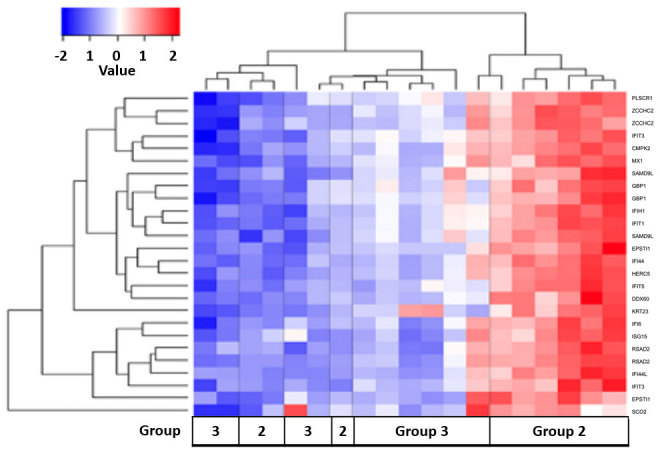
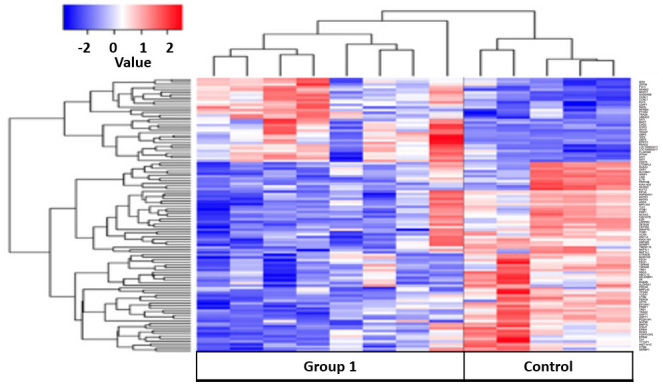
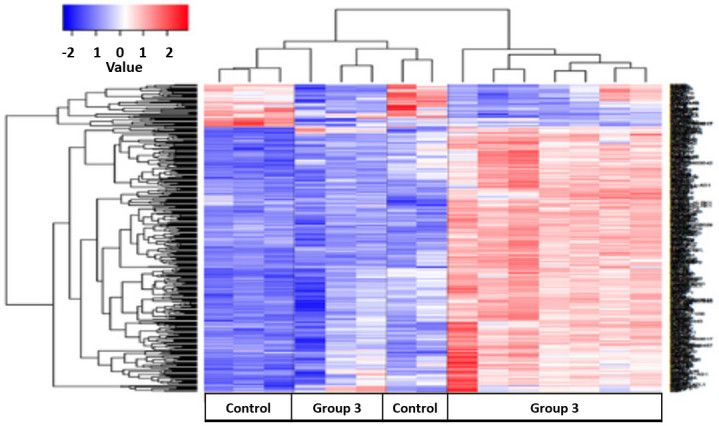
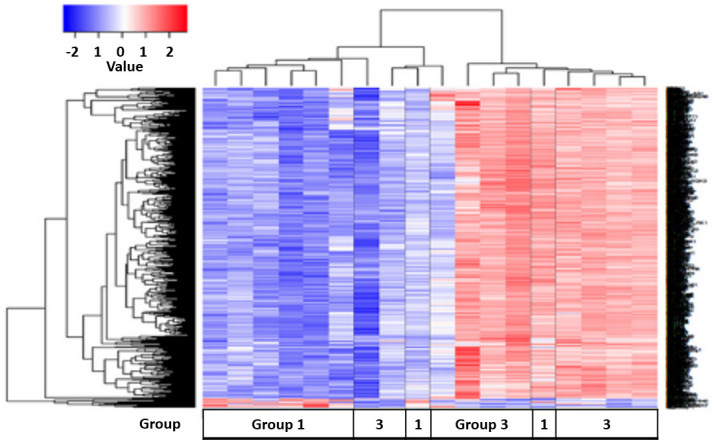
Traditional treatments for spinal tuberculosis (TB) involve chemotherapy and surgery. In the present study, it has been identified that chemotherapy lasting <6 months [ultra-short course chemotherapy (UCCT)], rather than the 6-18 months of the traditional regimen, is effective in sustaining TB clearance following complete surgical debridement. This current study aims to compare the changes in peripheral blood gene expression prior to and following UCCT, subsequent to complete debridement of spinal TB lesions. The study includes 5 patients without TB and 27 patients with spinal, divided into three groups: Group 1 (untreated group, n=8); group 2 (UCCT treatment group, n=9); and group 3 (UCCT treatment 1 year follow-up group, n=10). Gene changes were detected using DNA microarray analysis, confirmed through reverse transcription-quantitative polymerase chain reaction (RT-qPCR) and the results were examined using the DAVID Knowledgebase to identify the pathways and functions of differentially expressed genes. TB lesions were active in group 1, while groups 2 and 3 showed no signs of active TB, as indicated by clinical manifestations and imaging. Comparison of the transcription profiles of the control and study groups showed that treatment of spinal TB resulted in upregulation of genes that are associated with immune response pathways; RT-qPCR produced similar findings. In conclusion, these results indicate that UCCT is an effective treatment against TB following complete surgical debridement. Furthermore, DNA microarray analysis proved a useful tool to evaluate the effects of spinal TB treatment on the expression of genes associated with immune response pathways.
脊柱结核的传统治疗方法包括化疗和手术。在本研究中,已确定持续时间小于6个月的化疗[超短程化疗(UCCT)],而非传统方案的6 - 18个月,在脊柱结核病灶完全手术清创后能有效维持结核清除。本研究旨在比较脊柱结核病灶完全清创后UCCT前后外周血基因表达的变化。该研究包括5名非结核患者和27名脊柱结核患者,分为三组:第1组(未治疗组,n = 8);第2组(UCCT治疗组,n = 9);第3组(UCCT治疗1年随访组,n = 10)。使用DNA微阵列分析检测基因变化,通过逆转录定量聚合酶链反应(RT-qPCR)进行确认,并使用DAVID知识库检查结果以确定差异表达基因的途径和功能。根据临床表现和影像学检查,第1组结核病灶呈活动性,而第2组和第3组未显示活动性结核迹象。对照组和研究组转录谱的比较表明,脊柱结核治疗导致与免疫反应途径相关的基因上调;RT-qPCR得出了类似的结果。总之,这些结果表明UCCT是脊柱结核病灶完全手术清创后治疗结核病的有效方法。此外,DNA微阵列分析证明是评估脊柱结核治疗对与免疫反应途径相关基因表达影响的有用工具。