Coyne Daniel W, Ficociello Linda H, Parameswaran Vidhya, Anderson Ludmila, Vemula Sharanya, Ofsthun Norma J, Mullon Claudy, Maddux Franklin W, Kossmann Robert J, Sprague Stuart M
Clin Nephrol. 2017 Aug;88(8):59-67. doi: 10.5414/CN109021.
Hyperphosphatemia has been associated with an increased risk of mortality in patients with end-stage renal disease. We sought to assess the real-world effectiveness of sucroferric oxyhydroxide (SO), an iron-based phosphate binder (PB), in control of serum phosphorus levels, and to determine the associated pill burden in hemodialysis patients.
Adult, in-center hemodialysis patients first prescribed SO through a renal pharmacy service as part of routine clinical care between April 1, 2014 and March 31, 2015 were included in the analysis. The proportion of patients with phosphorus levels ≤ 5.5 mg/dL and the mean prescribed PB pills/day were compared between baseline (3 months prior to SO) and SO follow-up at 3 (SO 1 - 3) and 6 months (SO 4 - 6). Mineral bone disease markers, hemoglobin, iron indices, and erythropoiesis-stimulating agents and intravenous iron use were assessed.
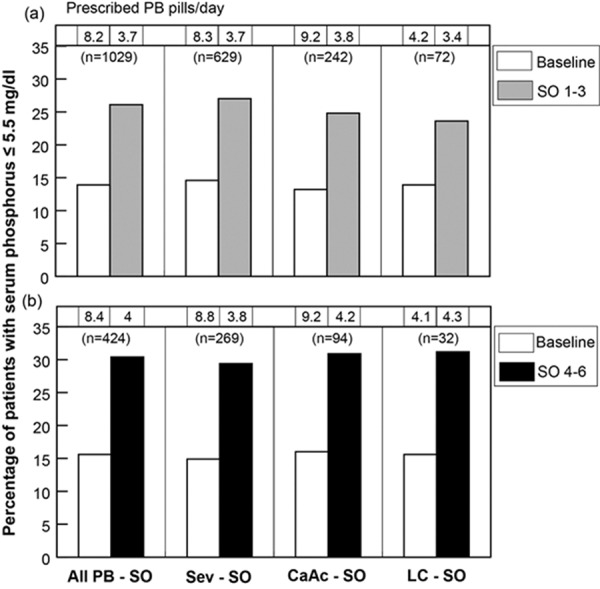
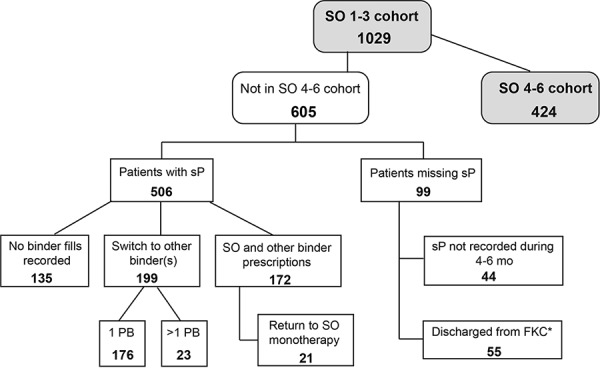
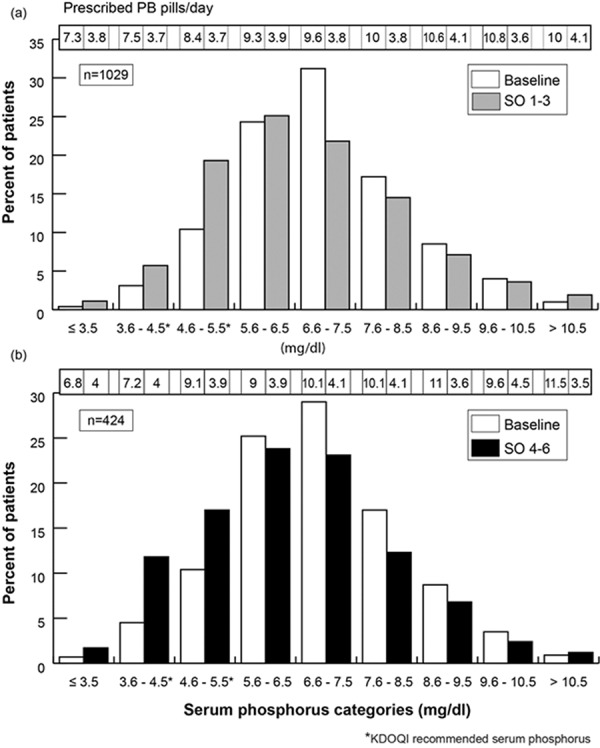
At baseline, all patients (n = 1,029) were prescribed PB, and 13.9% had mean serum phosphorus ≤ 5.5 mg/dL. Comparing baseline to SO 1 - 3, the mean prescribed PB pills/day declined from 9.6 to 3.8 pills/day (p < 0.001), and the proportion of patients with serum phosphorus ≤ 5.5 mg/dL increased from 13.9 to 26.1% (+88%). Comparing baseline to SO 4 - 6 (n = 424), the mean prescribed PB pills/day declined from 9.7 to 4.0 pills/day (p < 0.001), and the proportion of patients with serum phosphorus ≤ 5.5 mg/dL increased from 15.6 to 30.4% (+95%).
CONCLUSIONS: Prescription of SO was associated with an increase in the proportion of patients achieving serum phosphorus levels ≤ 5.5 mg/dL along with fewer prescribed PB pills/day. .
高磷血症与终末期肾病患者的死亡风险增加相关。我们旨在评估铁基磷酸盐结合剂(PB)——氢氧化氧铁蔗糖(SO)在控制血清磷水平方面的实际疗效,并确定血液透析患者的相关药丸负担。
分析纳入了2014年4月1日至2015年3月31日期间通过肾脏药房服务首次开具SO作为常规临床护理一部分的成年中心血液透析患者。比较了基线期(SO治疗前3个月)与SO治疗3个月(SO 1 - 3)和6个月(SO 4 - 6)随访时血磷水平≤5.5mg/dL的患者比例以及每日平均开具的PB药丸数。评估了矿物质骨病标志物、血红蛋白、铁指标、促红细胞生成素及静脉铁剂的使用情况。
基线期,所有患者(n = 1029)均开具了PB,13.9%的患者平均血清磷≤5.5mg/dL。将基线期与SO 1 - 3期比较,每日平均开具的PB药丸数从9.6颗降至3.8颗(p < 0.001),血清磷≤5.5mg/dL的患者比例从13.9%增至26.1%(增加88%)。将基线期与SO 4 - 6期(n = 424)比较,每日平均开具的PB药丸数从9.7颗降至4.0颗(p < 0.001),血清磷≤5.5mg/dL的患者比例从15.6%增至30.4%(增加95%)。
开具SO与血清磷水平≤5.5mg/dL的患者比例增加以及每日开具的PB药丸数减少相关。