Zhao Kai, Yang Tao, Sun Mimi, Zhang Wei, An Yong, Chen Gang, Jin Lei, Shang Qinghua, Song Wengang
Institute of Immunology, Taishan Medical University, Tai'an 271000, China.
Research Centre for Biological Therapy, Institute of Translational Hepatology, Beijing 302 Hospital, Beijing 100039, China.
Mol Cells. 2017 Jun 30;40(6):418-425. doi: 10.14348/molcells.2017.0051. Epub 2017 Jun 14.
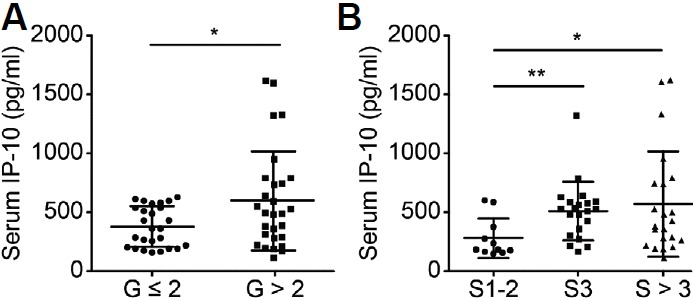
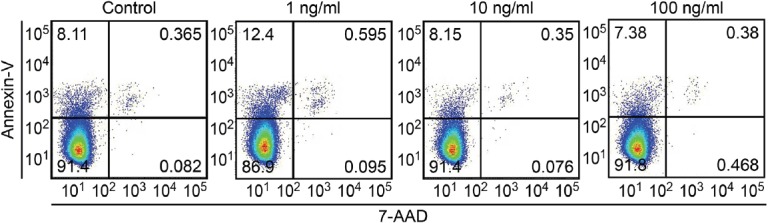
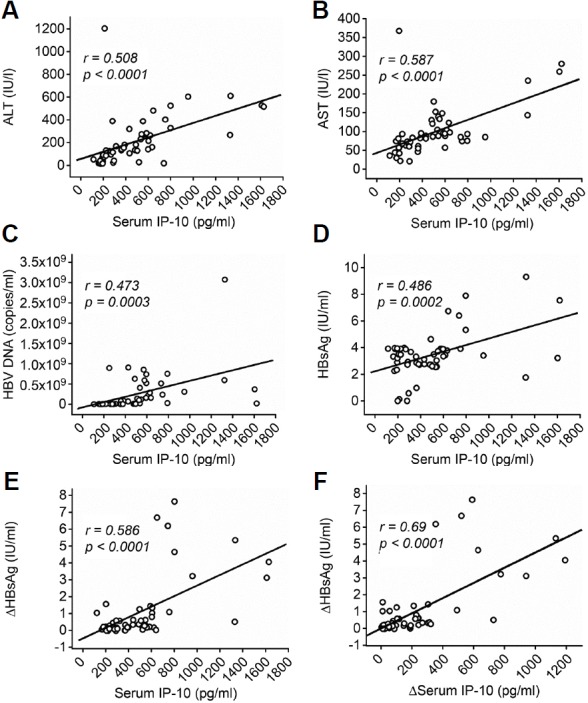
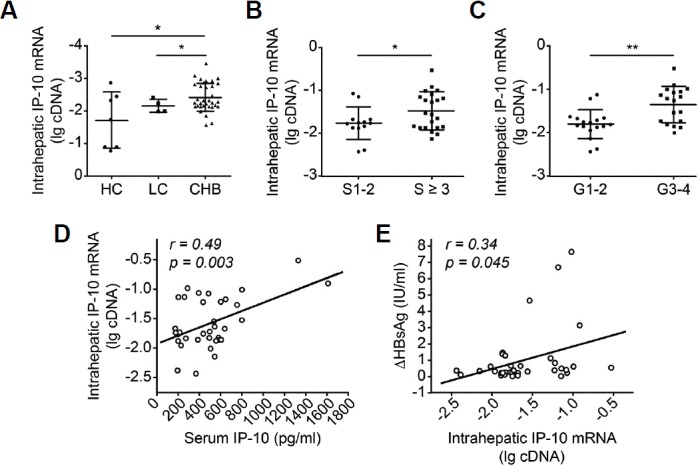
Interferon-γ-inducible protein 10 (IP-10), also known as chemokine C-X-C motif ligand (CXCL) 10, is closely associated with antiviral immunity and the progression of chronic hepatitis B (CHB). However, the value of baseline serological and histological IP-10 expression levels in predicting the efficacy of the antiviral response to nucleoside/nucleotide analogues (NAs) is still unknown. In our research, intrahepatic and peripheral IP-10 expression levels were systemically examined before and after treatment with entecavir (ETV). Baseline serological and histological IP-10 expression levels were significantly increased in patients with CHB, particularly in patients with higher degrees of liver inflammation and liver fibrosis. Moreover, higher baseline intrahepatic IP-10 levels indicated better prognoses in patients with CHB after entecavir therapy. The baseline IP-10 level was also positively associated with several clinical parameters, including baseline levels of alanine aminotransferase (ALT), aspartate aminotransferase (AST), hepatitis B virus (HBV) DNA, and hepatitis B surface antigen (HBsAg), and with the decrease in HBsAg levels after treatment. In addition, monocyte-derived IP-10 was expressed at higher levels in patients with CHB than in patients with liver cirrhosis (LC) and healthy controls (HC). According to the results of our in vitro experiments, IP-10 directly promoted hepatocyte apoptosis. Based on these findings, baseline serological and histological IP-10 levels might predict CHB severity and the decrease in HBsAg levels after entecavir therapy.
干扰素-γ诱导蛋白10(IP-10),也称为趋化因子C-X-C基序配体(CXCL)10,与抗病毒免疫和慢性乙型肝炎(CHB)的进展密切相关。然而,基线血清学和组织学IP-10表达水平在预测核苷/核苷酸类似物(NAs)抗病毒反应疗效方面的价值仍不清楚。在我们的研究中,在恩替卡韦(ETV)治疗前后系统检测了肝内和外周血IP-10表达水平。CHB患者的基线血清学和组织学IP-10表达水平显著升高,尤其是在肝脏炎症和肝纤维化程度较高的患者中。此外,较高的基线肝内IP-10水平表明恩替卡韦治疗后CHB患者预后较好。基线IP-10水平还与几个临床参数呈正相关,包括丙氨酸氨基转移酶(ALT)、天冬氨酸氨基转移酶(AST)、乙型肝炎病毒(HBV)DNA和乙型肝炎表面抗原(HBsAg)的基线水平,以及治疗后HBsAg水平的下降。此外,CHB患者单核细胞来源的IP-10表达水平高于肝硬化(LC)患者和健康对照(HC)。根据我们体外实验的结果,IP-10直接促进肝细胞凋亡。基于这些发现,基线血清学和组织学IP-10水平可能预测CHB的严重程度以及恩替卡韦治疗后HBsAg水平的下降。