Department of Leukemia, The University of Texas MD Anderson Cancer Center, Houston, TX, USA.
Department of Bioinformatics and Computational Biology, The University of Texas MD Anderson Cancer Center, Houston, TX, USA.
Haematologica. 2017 Sep;102(9):1537-1548. doi: 10.3324/haematol.2016.162230. Epub 2017 Jun 28.
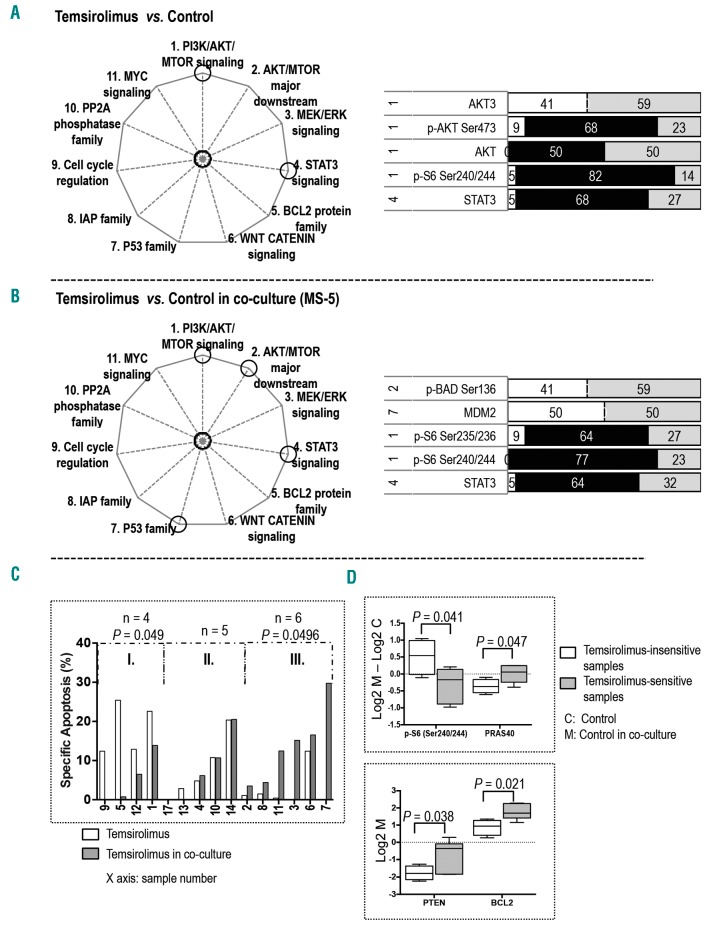
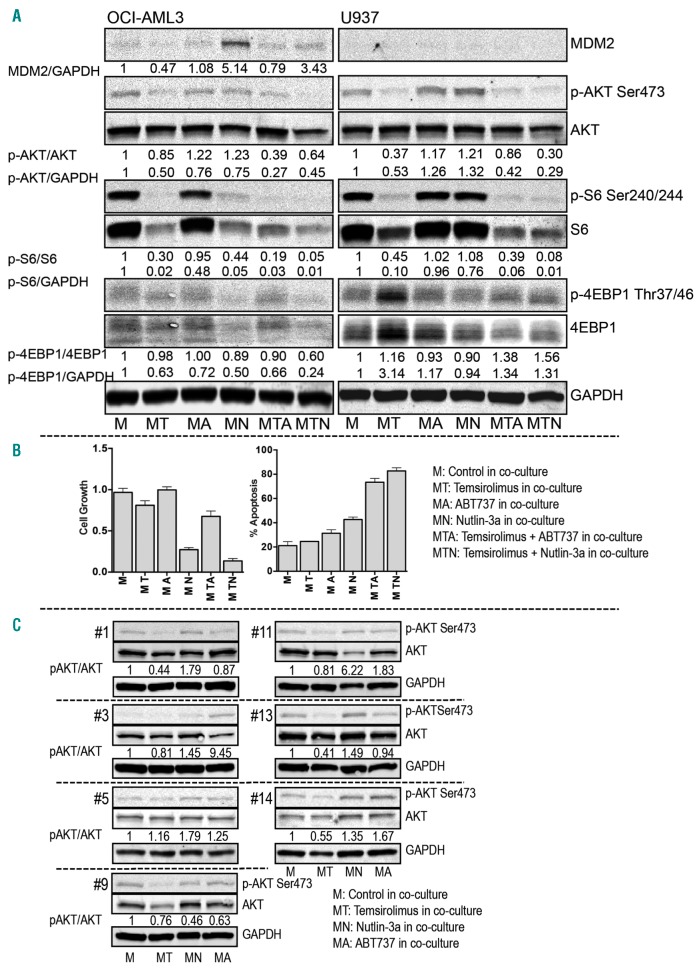
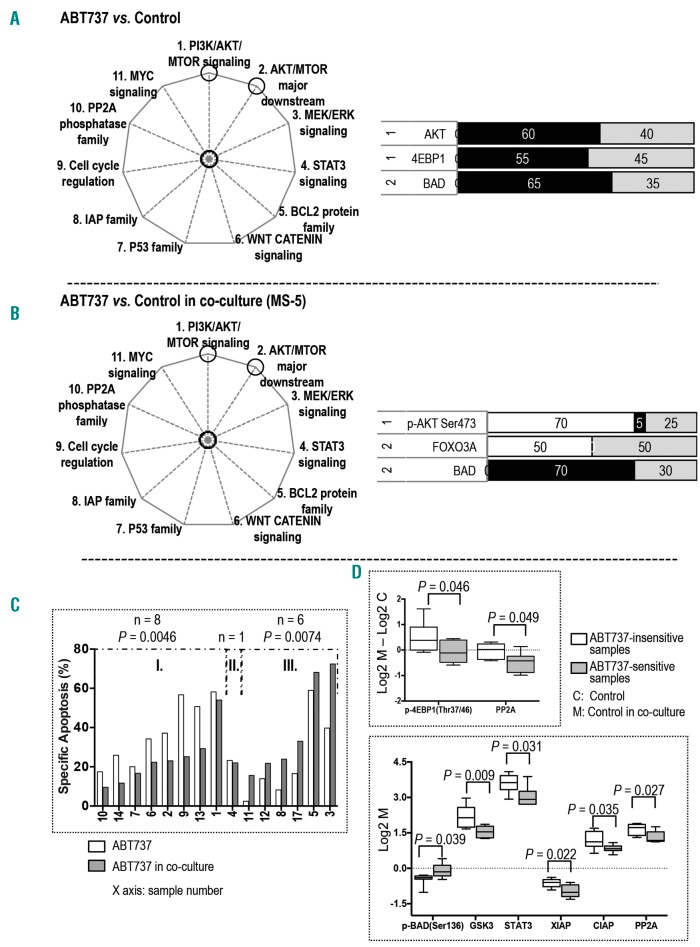
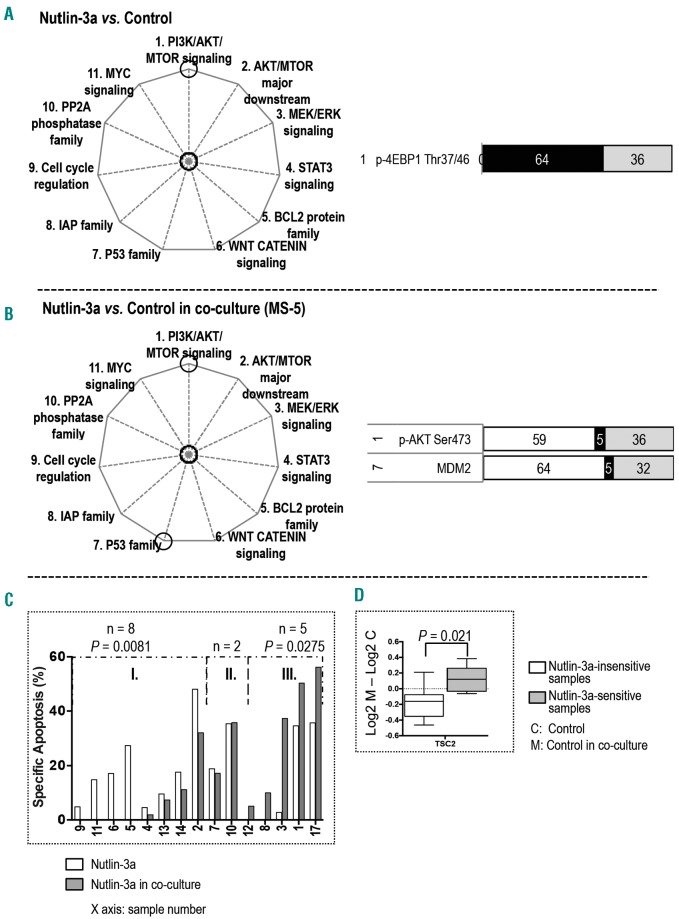
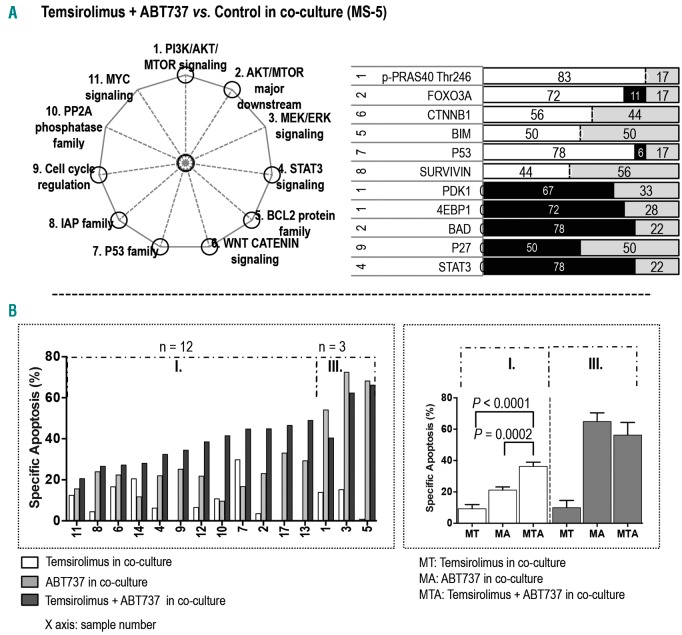
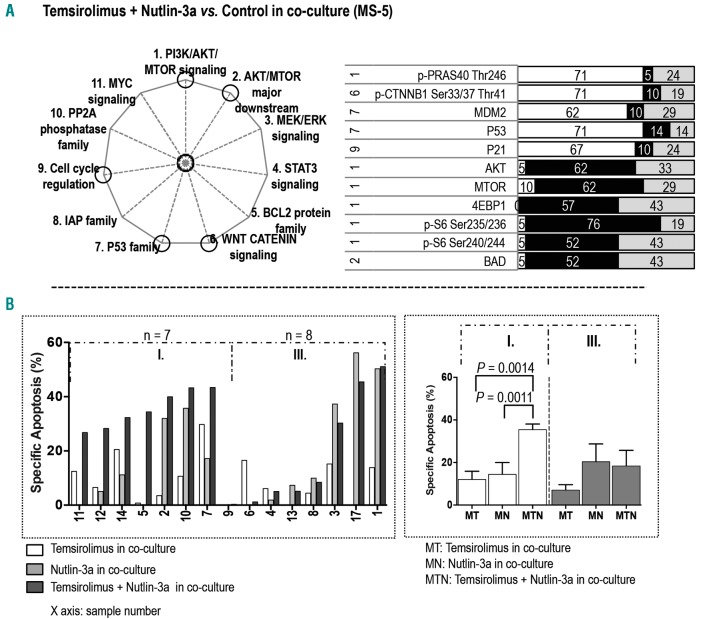
The bone marrow microenvironment is known to provide a survival advantage to residual acute myeloid leukemia cells, possibly contributing to disease recurrence. The mechanisms by which stroma in the microenvironment regulates leukemia survival remain largely unknown. Using reverse-phase protein array technology, we profiled 53 key protein molecules in 11 signaling pathways in 20 primary acute myeloid leukemia samples and two cell lines, aiming to understand stroma-mediated signaling modulation in response to the targeted agents temsirolimus (MTOR), ABT737 (BCL2/BCL-XL), and Nutlin-3a (MDM2), and to identify the effective combination therapy targeting acute myeloid leukemia in the context of the leukemia microenvironment. Stroma reprogrammed signaling networks and modified the sensitivity of acute myeloid leukemia samples to all three targeted inhibitors. Stroma activated AKT at Ser473 in the majority of samples treated with single-agent ABT737 or Nutlin-3a. This survival mechanism was partially abrogated by concomitant treatment with temsirolimus plus ABT737 or Nutlin-3a. Mapping the signaling networks revealed that combinations of two inhibitors increased the number of affected proteins in the targeted pathways and in multiple parallel signaling, translating into facilitated cell death. These results demonstrated that a mechanism-based selection of combined inhibitors can be used to guide clinical drug selection and tailor treatment regimens to eliminate microenvironment-mediated resistance in acute myeloid leukemia.
骨髓微环境被认为为残留的急性髓细胞白血病细胞提供了生存优势,可能导致疾病复发。微环境中基质调节白血病生存的机制在很大程度上尚不清楚。我们使用反相蛋白阵列技术对 20 个急性髓细胞白血病样本和两个细胞系中的 11 个信号通路中的 53 个关键蛋白分子进行了分析,旨在了解基质介导的信号调节对靶向药物替西罗莫司(MTOR)、ABT737(BCL2/BCL-XL)和 Nutlin-3a(MDM2)的反应,并确定针对白血病微环境中急性髓细胞白血病的有效联合治疗方法。基质重塑了信号网络,并改变了急性髓细胞白血病样本对所有三种靶向抑制剂的敏感性。在单独使用 ABT737 或 Nutlin-3a 治疗的大多数样本中,基质激活了 AKT 在 Ser473 的磷酸化。这种生存机制在同时使用替西罗莫司加 ABT737 或 Nutlin-3a 治疗时部分被阻断。信号网络的映射显示,两种抑制剂的组合增加了靶向通路和多个平行信号中的受影响蛋白数量,从而促进了细胞死亡。这些结果表明,基于机制的联合抑制剂选择可用于指导临床药物选择,并调整治疗方案以消除急性髓细胞白血病中微环境介导的耐药性。