Verma Sandhya, Gazara Rajesh K, Verma Praveen K
Plant Immunity Laboratory, National Institute of Plant Genome ResearchNew Delhi, India.
Front Plant Sci. 2017 Jun 14;8:1037. doi: 10.3389/fpls.2017.01037. eCollection 2017.
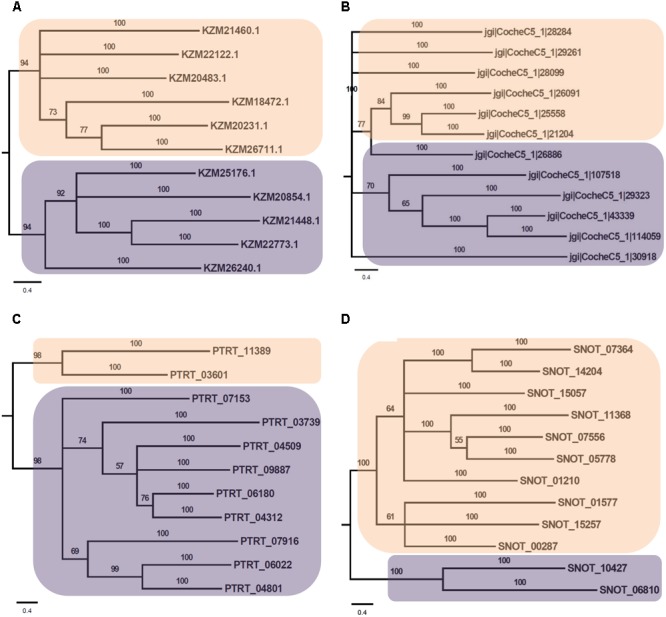
Transcription factors (TFs) are the key players in gene expression and their study is highly significant for shedding light on the molecular mechanisms and evolutionary history of organisms. During host-pathogen interaction, extensive reprogramming of gene expression facilitated by TFs is likely to occur in both host and pathogen. To date, the knowledge about TF repertoire in filamentous fungi is in infancy. The necrotrophic fungus , that causes destructive Ascochyta blight (AB) disease of chickpea (), demands more comprehensive study for better understanding of -legume pathosystem. In the present study, we performed the genome-wide identification and analysis of TFs in . Taking advantage of genome sequence, we used a bioinformatic approach to predict the TF repertoire of . For identification and classification of TFs, we designed a comprehensive pipeline using a combination of BLAST and InterProScan software. A total of 381 TFs were predicted and divided into 32 fungal specific families of TFs. The gene structure, domain organization and phylogenetic analysis of abundant families of TFs were also carried out. Comparative study of TFs with that of other necrotrophic, biotrophic, hemibiotrophic, symbiotic, and saprotrophic fungi was performed. It suggested presence of both conserved as well as unique features among them. Moreover, -acting elements on promoter sequences of earlier predicted secretome were also identified. With the help of published transcriptome data, the differential expression of TF and secretory protein coding genes was analyzed. Furthermore, comprehensive expression analysis of few selected TFs using quantitative real-time polymerase chain reaction revealed variety of expression patterns during host colonization. These genes were expressed in at least one of the time points tested post infection. Overall, this study illustrates the first genome-wide identification and analysis of TF repertoire of . This work would provide the basis for further studies to dissect role of TFs in the molecular mechanisms during -chickpea interactions.
转录因子(TFs)是基因表达的关键参与者,对其进行研究对于阐明生物体的分子机制和进化历史具有重要意义。在宿主与病原体相互作用的过程中,由转录因子促成的基因表达广泛重编程可能在宿主和病原体中均会发生。迄今为止,关于丝状真菌中转录因子库的了解尚处于起步阶段。这种坏死营养型真菌会引发鹰嘴豆毁灭性的壳二孢叶枯病(AB),需要进行更全面的研究,以更好地理解鹰嘴豆与该真菌的病理系统。在本研究中,我们对该真菌中的转录因子进行了全基因组鉴定和分析。利用该真菌的基因组序列,我们采用生物信息学方法预测了其转录因子库。为了鉴定和分类该真菌的转录因子,我们设计了一个综合流程,结合使用BLAST和InterProScan软件。总共预测出381个该真菌的转录因子,并将其分为32个真菌特有的转录因子家族。我们还对该真菌丰富转录因子家族的基因结构、结构域组织和系统发育分析进行了研究。对该真菌的转录因子与其他坏死营养型、生物营养型、半活体营养型、共生型和腐生型真菌的转录因子进行了比较研究。结果表明它们之间既有保守特征也有独特特征。此外,还鉴定了先前预测的该真菌分泌组启动子序列上的顺式作用元件。借助已发表的该真菌转录组数据,分析了转录因子和分泌蛋白编码基因的差异表达。此外,使用定量实时聚合酶链反应对少数选定的该真菌转录因子进行的综合表达分析揭示了宿主定殖过程中的多种表达模式。这些基因在感染后测试的至少一个时间点表达。总体而言,本研究阐述了对该真菌转录因子库的首次全基因组鉴定和分析。这项工作将为进一步研究剖析转录因子在该真菌与鹰嘴豆相互作用的分子机制中的作用提供基础。