
钛夹和塑料夹植入颅盖骨后血细胞的形态学变化——犬实验研究
Morphological Changes in Blood Cells After Implantation of Titanium and Plastic Clips in the Neurocranium - Experimental Study on Dogs.
作者信息
Katica Muhamed, Celebicic Mirza, Gradascevic Nedzad, Obhodzas Muamer, Suljić Enra, Ocuz Muhamed, Delibegovic Samir
机构信息
Department of Pathological Physiology of Domestic Animals, Veterinary Faculty, University of Sarajevo, Bosnia and Herzegovina.
PhD candidate, Faculty of Science, University of Sarajevo, Bosnia and Herzegovina.
出版信息
Med Arch. 2017 Apr;71(2):84-88. doi: 10.5455/medarh.2017.71.84-88.
INTRODUCTION
Various studies confirm the biocompatibility and efficacy of clips for certain target tissues, but without any comparative analysis of hematological parameters. Therefore, we conducted a study to assess the possible association of the implantation of titanium and plastic clips in the neurocranium with possible morphological changes in the blood cells of experimental animals.
MATERIALS AND METHODS
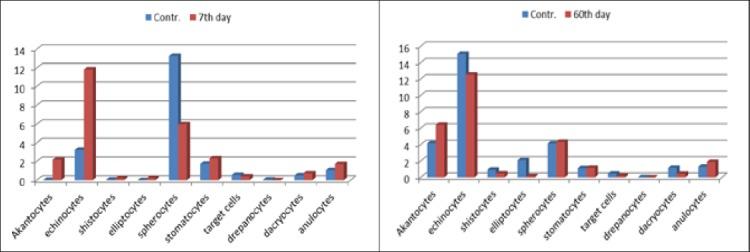
As a control, the peripheral blood smears were taken before surgery from 12 adult dogs that were divided into two experimental groups. After placing titanium and plastic clips in the neurocranium, the peripheral blood of the first group was analyzed on the seventh postoperative day, while the peripheral blood of the second group was analyzed on the sixtieth day. By microscopy of the blood smears, the following parameters were analyzed: the presence of poikilocytosis of the red blood cells, degenerative changes in the leukocytes and leukogram.
RESULTS
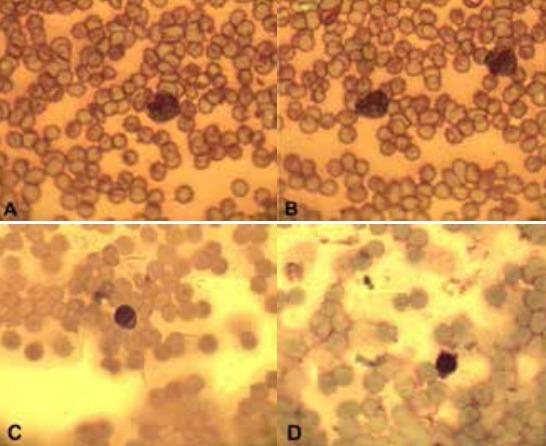
There were no statistically significant differences between the mean values of the groups. Monocytosis was detected (first group 22.83 % and second 16.30 %), as well as neutropenia (46.80 %, in the second group). Degenerative changes to neutrophils and the occurrence of atypical lymphocytes were observed in the second experimental group (60 postoperative day).
CONCLUSION
A mild adverse effect from the biomaterials present in the neurocranium of dogs was detected, affecting the majority of leukocytic cells. A chronic recurrent inflammatory process was caused by the presence of the plastic and titanium clips in the brain tissue. No adverse effect of biomaterials on erythrocytes in the neurocranium was detected in the dogs studied. Further studies are necessary to explain the occurrence of degenerative changes in the neutrophils and lymphocytes.
引言
多项研究证实了夹子对某些靶组织的生物相容性和有效性,但未对血液学参数进行任何比较分析。因此,我们开展了一项研究,以评估在实验动物的神经颅骨中植入钛夹和塑料夹与血细胞可能的形态变化之间的潜在关联。
材料与方法
作为对照,在手术前从12只成年犬采集外周血涂片,这些犬被分为两个实验组。在神经颅骨中放置钛夹和塑料夹后,第一组在术后第7天分析外周血,而第二组在术后第60天分析外周血。通过对血涂片进行显微镜检查,分析以下参数:红细胞异形红细胞增多症的存在、白细胞的退行性变化和白细胞计数。
结果
各组平均值之间无统计学显著差异。检测到单核细胞增多(第一组为22.83%,第二组为16.30%),以及第二组出现中性粒细胞减少(46.80%)。在第二实验组(术后60天)观察到中性粒细胞的退行性变化和非典型淋巴细胞的出现。
结论
在犬的神经颅骨中检测到存在于生物材料中的轻度不良反应,影响了大多数白细胞。脑组织中塑料夹和钛夹的存在引发了慢性复发性炎症过程。在所研究的犬中未检测到生物材料对神经颅骨中红细胞的不良反应。有必要进行进一步研究以解释中性粒细胞和淋巴细胞退行性变化的发生情况。

 Zotero 插件