Department of Integrative Biology, University of California Berkeley, Berkeley, CA, 94720, USA.
Helen Wills Neuroscience Institute, University of California Berkeley, Berkeley, CA, 94720, USA.
Sci Rep. 2017 Aug 9;7(1):7711. doi: 10.1038/s41598-017-07394-3.
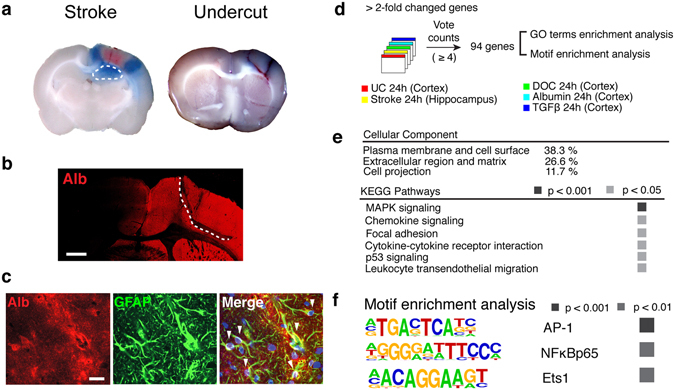
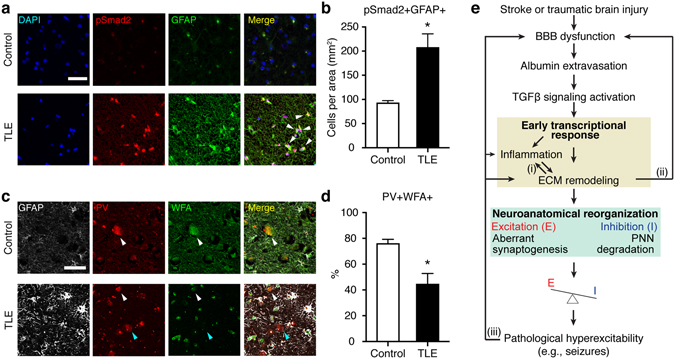
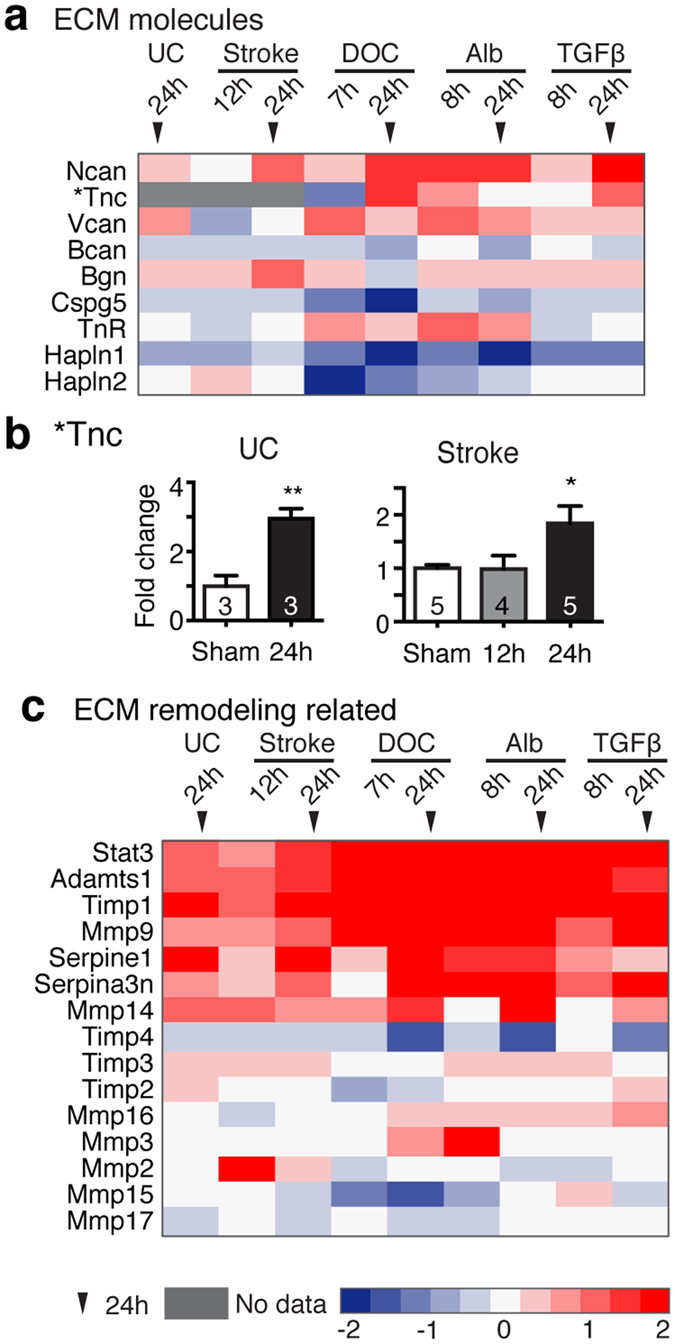
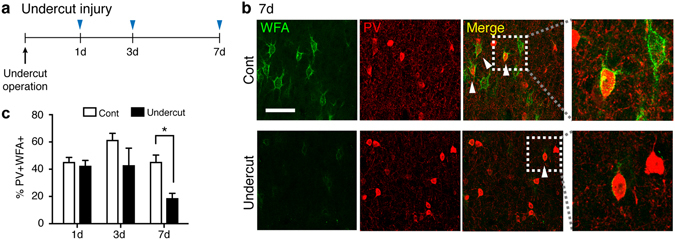
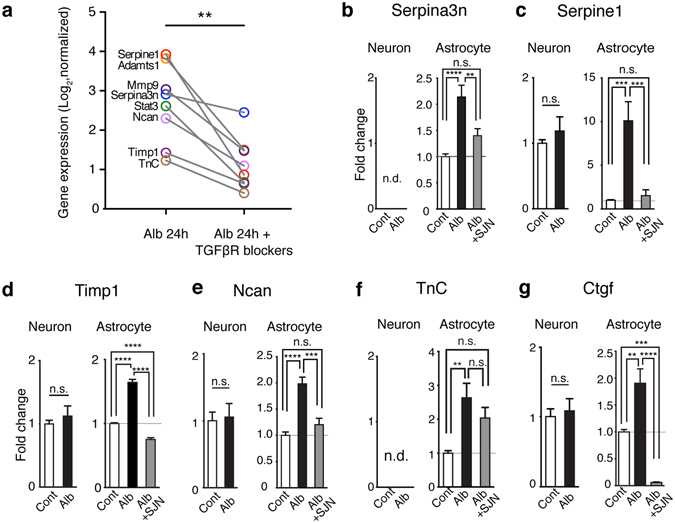
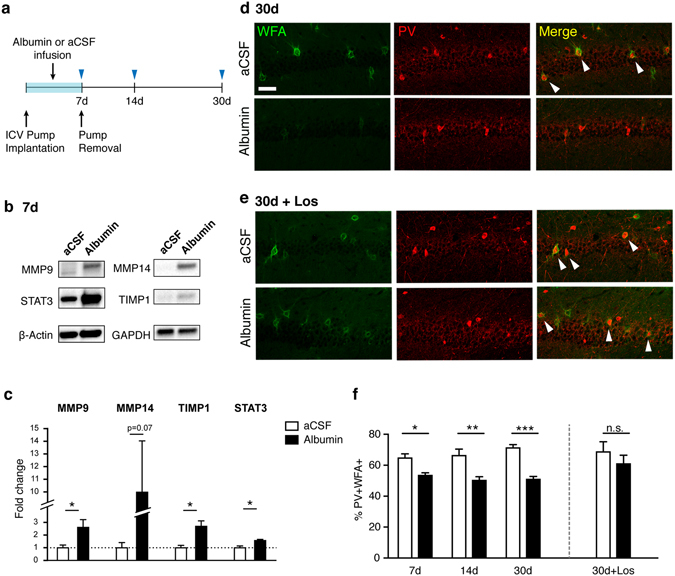
Brain damage due to stroke or traumatic brain injury (TBI), both leading causes of serious long-term disability, often leads to the development of epilepsy. Patients who develop post-injury epilepsy tend to have poor functional outcomes. Emerging evidence highlights a potential role for blood-brain barrier (BBB) dysfunction in the development of post-injury epilepsy. However, common mechanisms underlying the pathological hyperexcitability are largely unknown. Here, we show that comparative transcriptome analyses predict remodeling of extracellular matrix (ECM) as a common response to different types of injuries. ECM-related transcriptional changes were induced by the serum protein albumin via TGFβ signaling in primary astrocytes. In accordance with transcriptional responses, we found persistent degradation of protective ECM structures called perineuronal nets (PNNs) around fast-spiking inhibitory interneurons, in a rat model of TBI as well as in brains of human epileptic patients. Exposure of a naïve brain to albumin was sufficient to induce the transcriptional and translational upregulation of molecules related to ECM remodeling and the persistent breakdown of PNNs around fast-spiking inhibitory interneurons, which was contingent on TGFβ signaling activation. Our findings provide insights on how albumin extravasation that occurs upon BBB dysfunction in various brain injuries can predispose neural circuitry to the development of chronic inhibition deficits.
脑损伤由中风或创伤性脑损伤(TBI)引起,这两种损伤都是导致严重长期残疾的主要原因,通常会导致癫痫的发生。发生创伤后癫痫的患者往往预后不良。新出现的证据强调了血脑屏障(BBB)功能障碍在创伤后癫痫发生中的潜在作用。然而,导致病理性过度兴奋的常见机制在很大程度上仍不清楚。在这里,我们表明,比较转录组分析预测细胞外基质(ECM)重塑是对不同类型损伤的共同反应。ECM 相关的转录变化是由原代星形胶质细胞中的血清蛋白白蛋白通过 TGFβ 信号诱导的。与转录反应一致,我们发现,在 TBI 大鼠模型以及人类癫痫患者的大脑中,快速放电抑制性中间神经元周围的保护性 ECM 结构称为周围神经网(PNNs)持续降解。未成熟大脑暴露于白蛋白足以诱导与 ECM 重塑相关的分子的转录和翻译上调,以及快速放电抑制性中间神经元周围 PNNs 的持续破坏,这取决于 TGFβ 信号的激活。我们的研究结果提供了一些见解,即各种脑损伤中发生的 BBB 功能障碍时的白蛋白外渗如何使神经回路容易发生慢性抑制缺陷。