Torres Joana, Cravo Marília, Colombel Jean-Frédéric
Surgical Department, Gastroenterology Division, Hospital Beatriz Ângelo, Loures, Portugal.
The Henry D. Janowitz Division of Gastroenterology, Icahn School of Medicine at Mount Sinai, New York, USA.
GE Port J Gastroenterol. 2016 Jan 15;23(3):153-161. doi: 10.1016/j.jpge.2015.11.004. eCollection 2016 May-Jun.
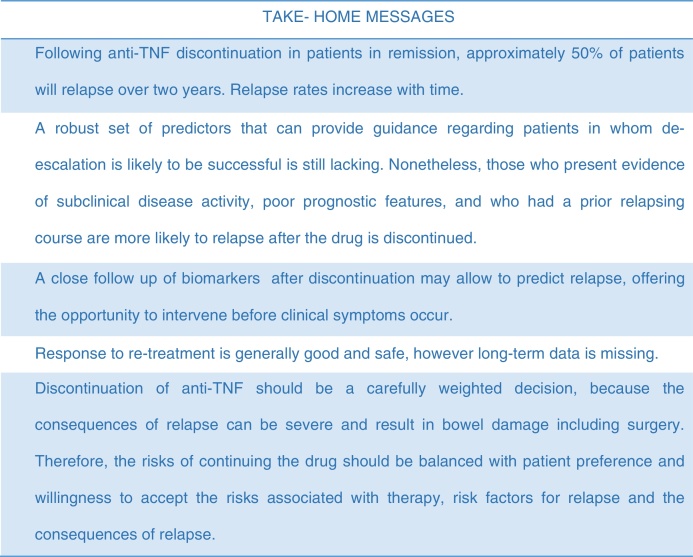
The introduction of the anti-tumor necrosis factorα agents (anti-TNFα) in clinical practice has greatly advanced the treatment of inflammatory bowel disease. The use of these medications results in durable remission in a subset of patients, preventing surgery and hospitalizations. However, there are some concerns about safety and costs associated with their long-term use. Therefore, anti-TNF withdrawal has emerged as an important consideration in clinical practice. Herein our goal was to discuss the available evidence about anti-TNFα discontinuation in IBD that could inform the clinician on the expected rates of relapse, the potential predictors of relapse, as well the response to re-treatment.
抗肿瘤坏死因子α制剂(抗TNFα)在临床实践中的引入极大地推动了炎症性肠病的治疗。使用这些药物可使一部分患者实现持久缓解,避免手术和住院。然而,对于其长期使用的安全性和成本存在一些担忧。因此,停用抗TNF已成为临床实践中的一个重要考量因素。在此,我们的目标是讨论关于炎症性肠病中停用抗TNFα的现有证据,这些证据可为临床医生提供有关复发预期率、复发潜在预测因素以及再治疗反应的信息。