Lin Louis, Wong Harvey
Faculty of Pharmaceutical Sciences, University of British Columbia, Vancouver, BC V6T 1Z3, Canada.
Pharmaceutics. 2017 Sep 26;9(4):41. doi: 10.3390/pharmaceutics9040041.
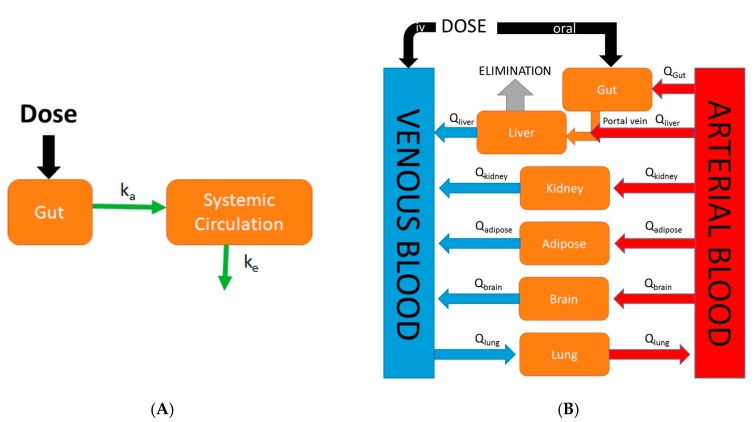
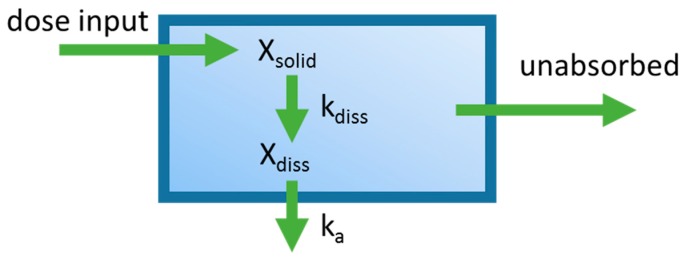
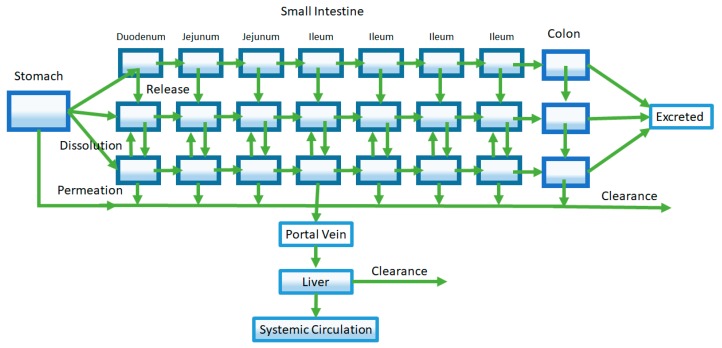
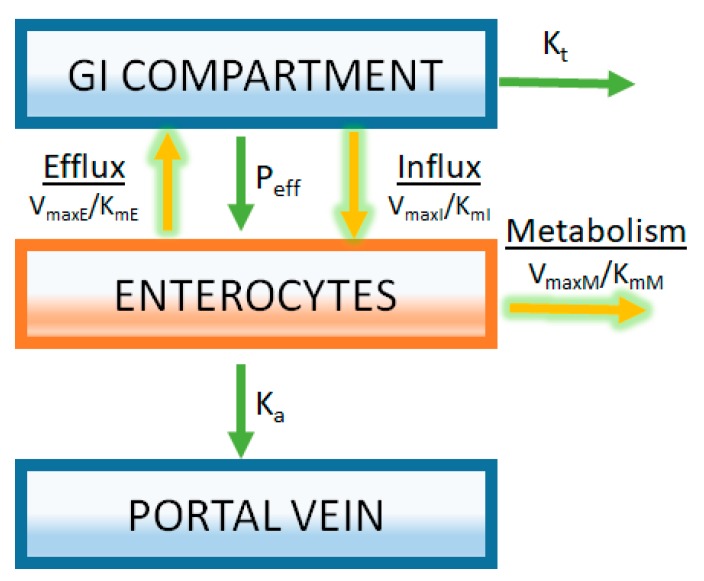
Most marketed drugs are administered orally, despite the complex process of oral absorption that is difficult to predict. Oral bioavailability is dependent on the interplay between many processes that are dependent on both compound and physiological properties. Because of this complexity, computational oral physiologically-based pharmacokinetic (PBPK) models have emerged as a tool to integrate these factors in an attempt to mechanistically capture the process of oral absorption. These models use inputs from in vitro assays to predict the pharmacokinetic behavior of drugs in the human body. The most common oral PBPK models are compartmental approaches, in which the gastrointestinal tract is characterized as a series of compartments through which the drug transits. The focus of this review is on the development of oral absorption PBPK models, followed by a brief discussion of the major applications of oral PBPK models in the pharmaceutical industry.
尽管口服吸收过程复杂且难以预测,但大多数已上市药物都是通过口服给药的。口服生物利用度取决于许多依赖于化合物和生理特性的过程之间的相互作用。由于这种复杂性,基于生理学的计算口服药代动力学(PBPK)模型已成为一种工具,用于整合这些因素,试图从机制上捕捉口服吸收过程。这些模型利用体外试验的输入数据来预测药物在人体内的药代动力学行为。最常见的口服PBPK模型是房室模型,其中胃肠道被描述为药物通过的一系列房室。本综述的重点是口服吸收PBPK模型的发展,随后简要讨论口服PBPK模型在制药行业的主要应用。