Vanderveken Olivier M, Beyers Jolien, Op de Beeck Sara, Dieltjens Marijke, Willemen Marc, Verbraecken Johan A, De Backer Wilfried A, Van de Heyning Paul H
Faculty of Medicine and Health Sciences, University of AntwerpAntwerp, Belgium.
Department ENT, Head and Neck Surgery, Antwerp University HospitalAntwerp, Belgium.
Front Neurosci. 2017 Sep 21;11:523. doi: 10.3389/fnins.2017.00523. eCollection 2017.
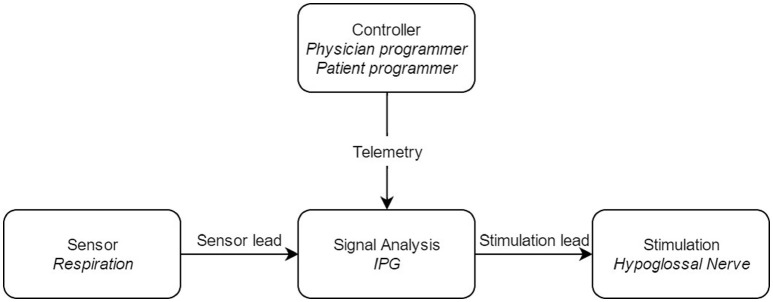
Obstructive sleep apnea (OSA) is a common disease with high morbidity and related mortality. Narrowing and collapse of the pharyngeal airway during sleep characterize the disease, resulting in a decrease (hypopnea) or a complete cessation (apnea) of oronasal airflow. Upper airway stimulation (UAS), using electrical neurostimulation of the hypoglossal nerve (n. XII) synchronized with ventilation, is a novel, evolving treatment option. UAS was found to be an effective treatment in CPAP-intolerant patients. The treatment success is partly due to the strict selection of the patients, based on previous findings. Furthermore, post-operative follow-up is needed in order to maintain or improve treatment outcome. Therefore, a clinical pathway, which provides structure and standardization, is crucial. In this paper, the aim is to discuss the technical aspects of UAS therapy and to describe a clinical pathway to organize the care process of UAS for OSA in a structured and standardized way.
阻塞性睡眠呼吸暂停(OSA)是一种发病率和相关死亡率都很高的常见疾病。睡眠期间咽部气道变窄和塌陷是该疾病的特征,导致口鼻气流减少(呼吸浅慢)或完全停止(呼吸暂停)。上气道刺激(UAS),即使用与通气同步的舌下神经(第十二对脑神经)电神经刺激,是一种新兴的治疗选择。UAS被发现是治疗不耐受持续气道正压通气(CPAP)患者的有效方法。治疗成功部分归功于基于先前研究结果对患者的严格筛选。此外,需要进行术后随访以维持或改善治疗效果。因此,提供结构和标准化的临床路径至关重要。本文旨在讨论UAS治疗的技术方面,并描述一种临床路径,以结构化和标准化的方式组织OSA患者UAS治疗的护理过程。