Bi Huiping, Fan Weijuan, Zhang Peng
National Key Laboratory of Plant Molecular Genetics, CAS Center for Excellence in Molecular Plant Sciences, Institute of Plant Physiology and Ecology, Shanghai Institutes for Biological Sciences, Chinese Academy of Sciences, Shanghai, China.
Key Laboratory of Systems Microbial Biotechnology, Tianjin Institute of Industrial Biotechnology, Chinese Academy of Sciences, Tianjin, China.
Front Plant Sci. 2017 Sep 27;8:1689. doi: 10.3389/fpls.2017.01689. eCollection 2017.
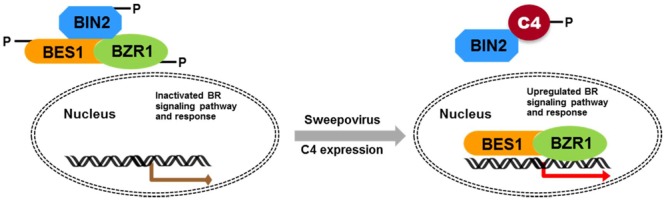
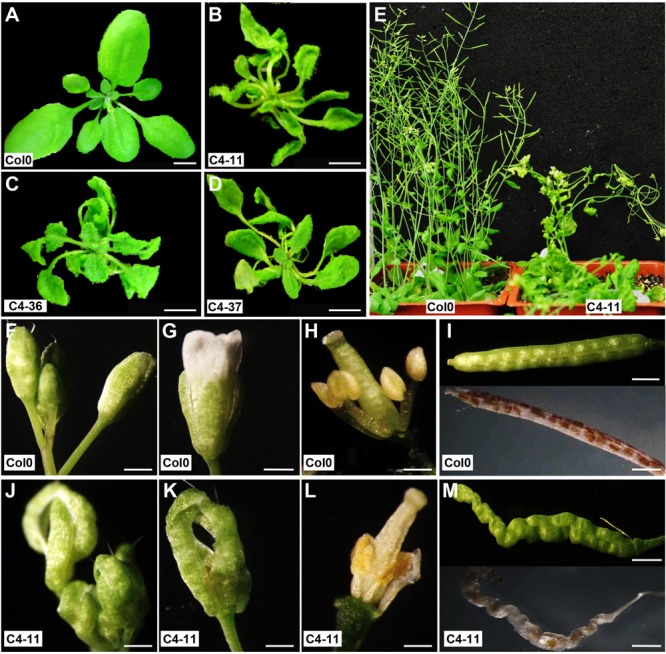
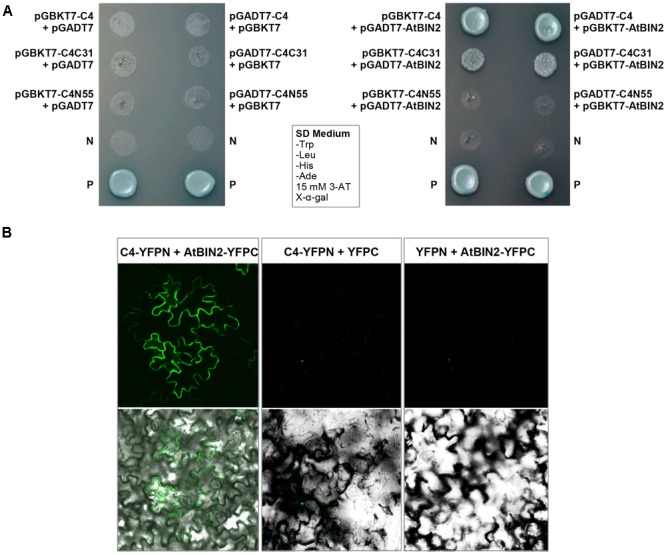
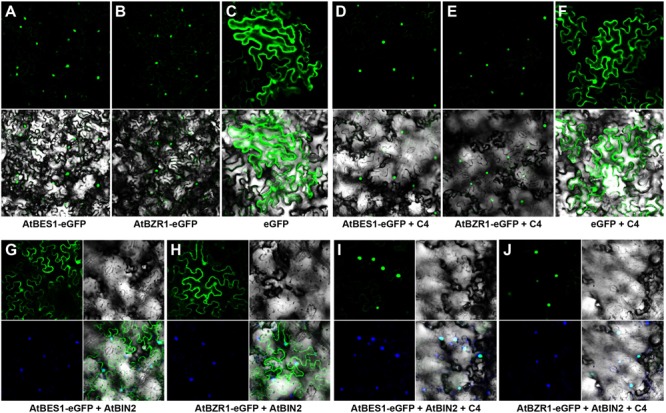
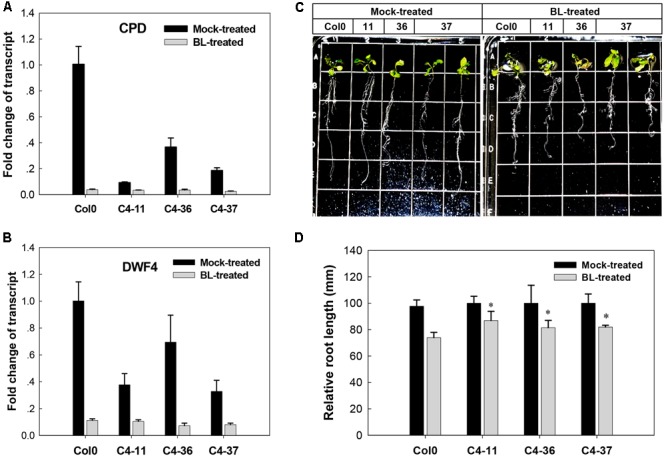
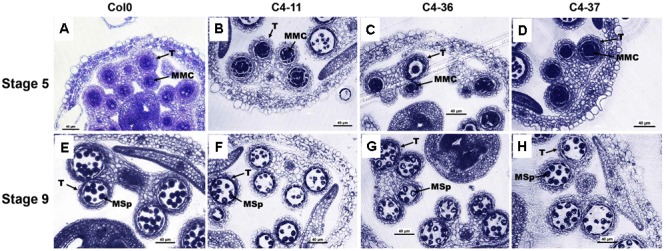
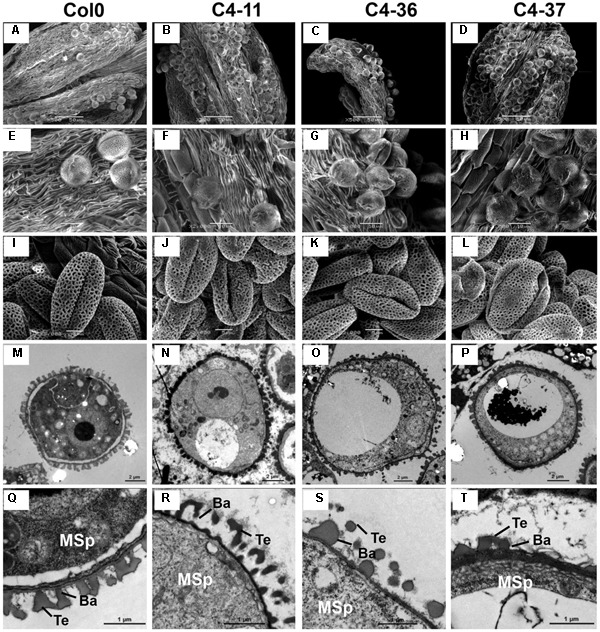
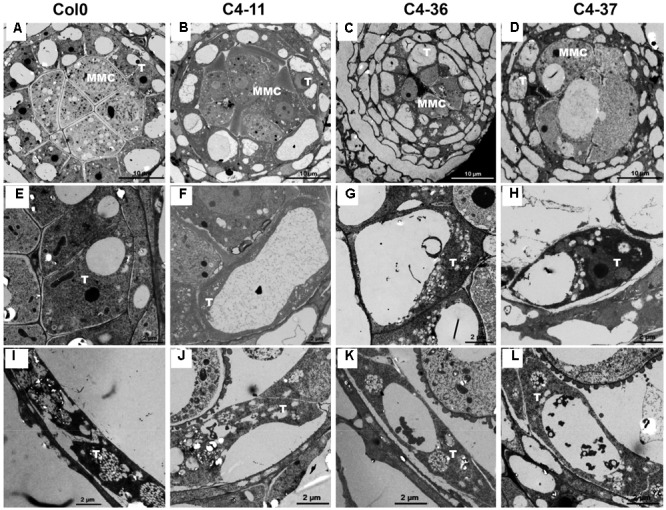
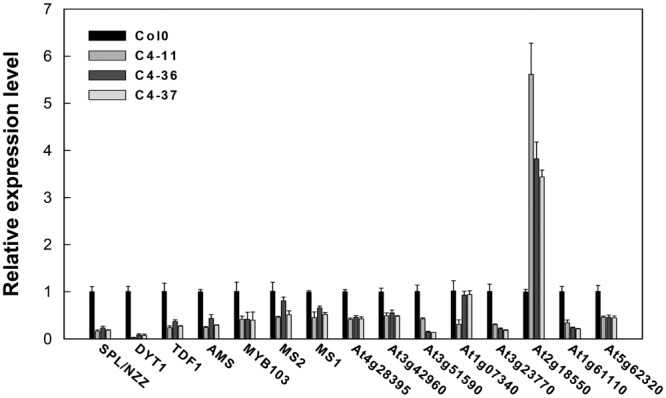
Sweepoviruses have been identified globally and cause substantial yield losses and cultivar decline in sweet potato. This study aimed to investigate the interaction between sweepovirus and plant host by analyzing the function of the viral protein C4 of -Jiangsu (SPLCV-JS), a sweepovirus cloned from diseased sweet potato plants in East China. Ectopic expression of the C4 in altered plant development drastically with phenotypic changes including leaf curling, seedling twisting, deformation of floral tissues and reduction of pollen fertility, and seed number. Using bimolecular fluorescence complementation analysis, this study demonstrated that the SPLCV-JS C4 protein interacted with brassinosteroid-insensitive 2 (AtBIN2) in the plasma membrane of cells. The C4 AtBIN2 interaction was further confirmed by yeast two-hybrid assays. This interaction led to the re-localization of AtBIN2-interacting proteins AtBES1/AtBZR1 into the nucleus which altered the expression of brassinosteroid (BR)-response genes, resulting in the activation of BR-signaling pathway. The interaction of SPLCV-JS C4 and AtBIN2 also led to the down-regulated expression of key genes involved in anther and pollen development, including , and , which caused abnormal tapetal development, followed by defective exine pattern formation of microspores and pollen release. Consequently, male fertility in the transgenic was reduced. The present study illustrated how the sweepovirus C4 protein functioned in host cells and affected male fertility by interacting with the key components of BR-signaling pathway.
甘薯病毒已在全球范围内被发现,可导致甘薯大幅减产和品种退化。本研究旨在通过分析从中国东部患病甘薯植株中克隆的一种甘薯病毒——江苏甘薯潜隐病毒(SPLCV-JS)的病毒蛋白C4的功能,来研究甘薯病毒与植物宿主之间的相互作用。C4在拟南芥中的异位表达极大地改变了植物发育,出现叶片卷曲、幼苗扭曲、花组织变形以及花粉育性和种子数量减少等表型变化。利用双分子荧光互补分析,本研究证明SPLCV-JS C4蛋白在拟南芥细胞的质膜中与油菜素内酯不敏感2(AtBIN2)相互作用。酵母双杂交试验进一步证实了C4与AtBIN2的相互作用。这种相互作用导致与AtBIN2相互作用的蛋白AtBES1/AtBZR1重新定位到细胞核中,从而改变了油菜素内酯(BR)响应基因的表达,导致BR信号通路的激活。SPLCV-JS C4与AtBIN2的相互作用还导致参与花药和花粉发育的关键基因(包括[此处原文缺失相关基因名称])的表达下调,这导致绒毡层发育异常,随后小孢子的外壁模式形成缺陷以及花粉释放受阻。因此,拟南芥转基因植株中的雄性育性降低。本研究阐明了甘薯病毒C4蛋白在宿主细胞中的作用机制以及如何通过与BR信号通路的关键成分相互作用来影响雄性育性。