Zhang Qian, Xiao Xinhua, Li Ming, Yu Miao, Ping Fan, Zheng Jia, Wang Tong, Wang Xiaojing
Key Laboratory of Endocrinology, Translational Medicine Center, Ministry of Health, Department of Endocrinology, Peking Union Medical College Hospital, Peking Union Medical College, Chinese Academy of Medical Sciences, Beijing, China.
PLoS One. 2017 Oct 16;12(10):e0184735. doi: 10.1371/journal.pone.0184735. eCollection 2017.
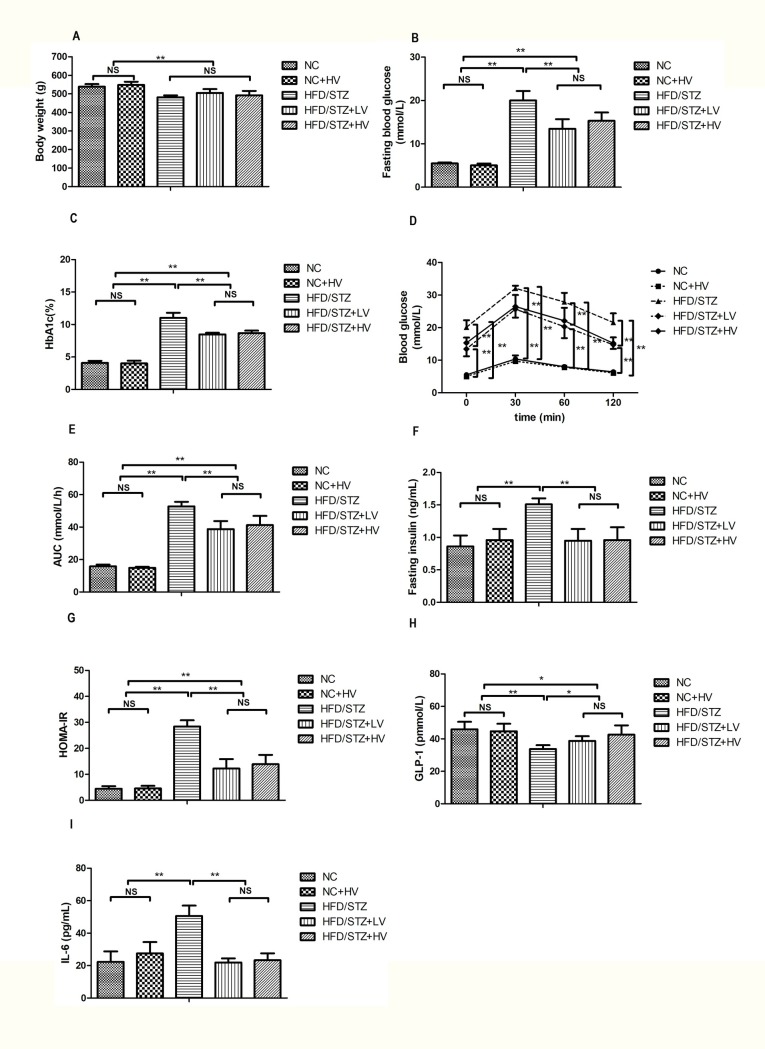
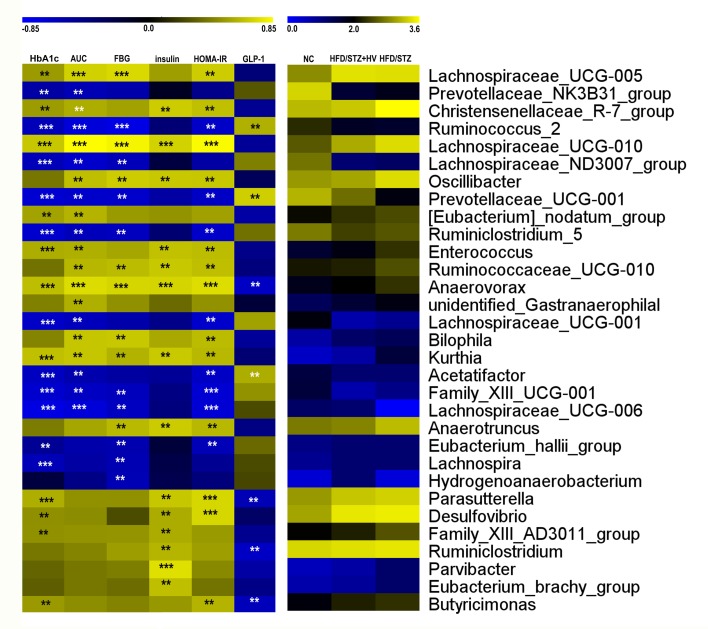
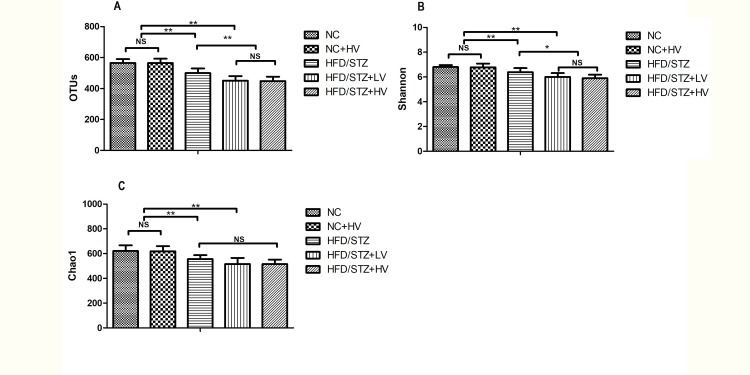
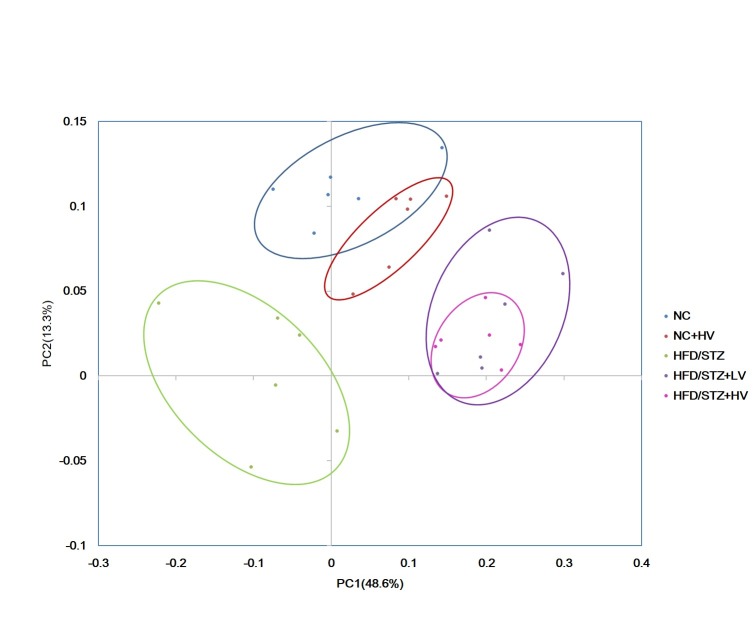
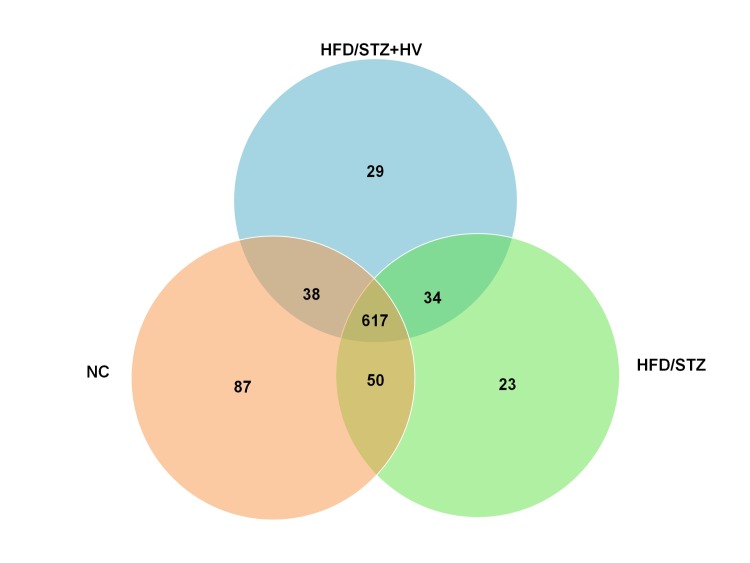
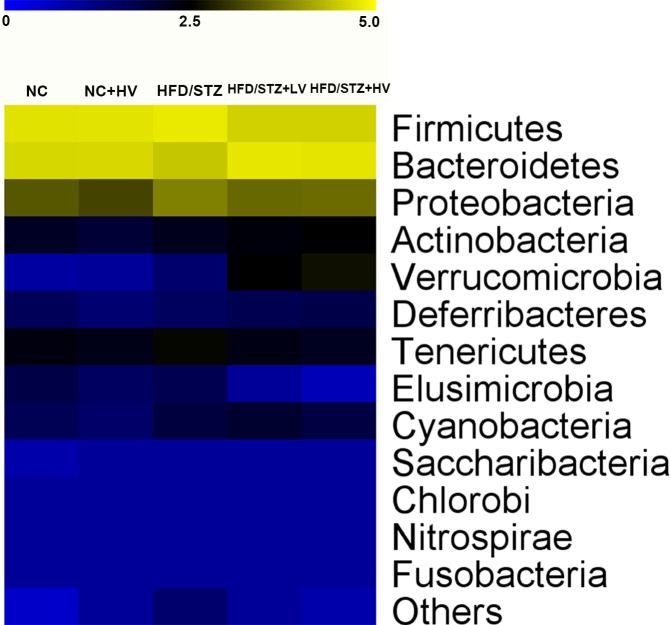
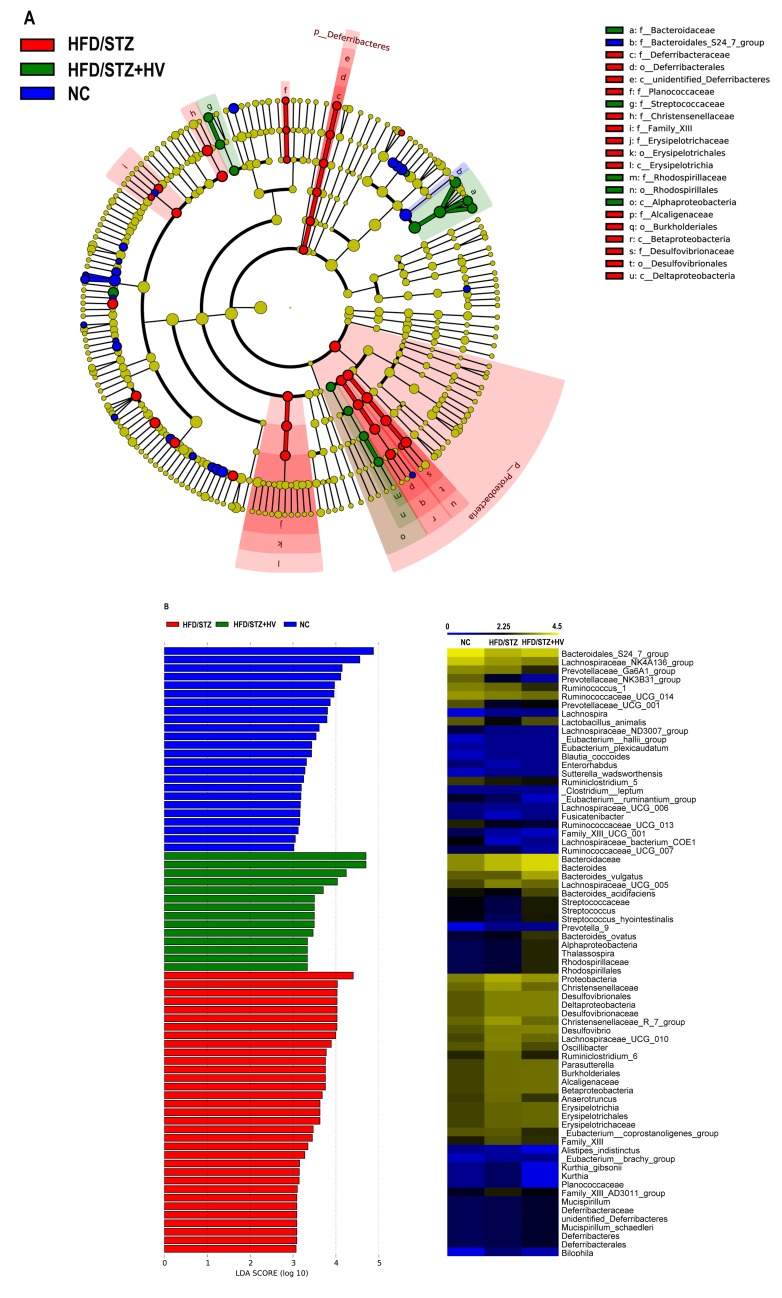
Emerging evidence supports a key role for the gut microbiota in metabolic diseases, including type 2 diabetes (T2D) and obesity. The dipeptidyl peptidase-4 inhibitor vildagliptin is highly efficacious in treating T2D. However, whether vildagliptin can alter the gut microbiome is still unclear. This study aimed to identify whether vildagliptin modifies the gut microbiota structure during T2D treatment. Diabetic Sprague-Dawley (SD) rats were induced by a high-fat diet and streptozotocin injection (HFD/STZ). Diabetic rats were orally administered a low dose of vildagliptin (LV, 0.01 g/kg/d vildagliptin), high dose of vildagliptin (HV, 0.02 g/kg/d vildagliptin), or normal saline for 12 weeks. Fasting blood glucose, blood glucose after glucose loading, and serum insulin levels were significantly reduced in the LV and HV groups compared with those in the T2D group. The serum GLP-1 level increased more in the vildagliptin-treated group than in the T2D group. Pyrosequencing of the V3-V4 regions of 16S rRNA genes revealed that vildagliptin significantly altered the gut microbiota. The operational taxonomic units (OTUs) and community richness (Chao1) index were significantly reduced in the vildagliptin and diabetic groups compared with those in the control group. At the phylum level, a higher relative abundance of Bacteroidetes, lower abundance of Firmicutes, and reduced ratio of Fimicutes/Bacteroidetes were observed in the vildagliptin-treated group. Moreover, vildagliptin treatment increased butyrate-producing bacteria, including Baceroides and Erysipelotrichaeae, in the diabetic rats. Moreover, Lachnospira abundance was significantly negatively correlated with fasting blood glucose levels. In conclusion, vildagliptin treatment could benefit the communities of the gut microbiota.
新出现的证据支持肠道微生物群在包括2型糖尿病(T2D)和肥胖症在内的代谢性疾病中起关键作用。二肽基肽酶-4抑制剂维格列汀在治疗T2D方面非常有效。然而,维格列汀是否能改变肠道微生物群仍不清楚。本研究旨在确定维格列汀在T2D治疗期间是否会改变肠道微生物群结构。通过高脂饮食和链脲佐菌素注射(HFD/STZ)诱导糖尿病斯普拉格-道利(SD)大鼠。糖尿病大鼠口服低剂量维格列汀(LV,0.01 g/kg/d维格列汀)、高剂量维格列汀(HV,0.02 g/kg/d维格列汀)或生理盐水,持续12周。与T2D组相比,LV组和HV组的空腹血糖、葡萄糖负荷后血糖和血清胰岛素水平显著降低。维格列汀治疗组的血清GLP-1水平比T2D组升高得更多。对16S rRNA基因的V3-V4区域进行焦磷酸测序显示,维格列汀显著改变了肠道微生物群。与对照组相比,维格列汀组和糖尿病组的操作分类单元(OTUs)和群落丰富度(Chao1)指数显著降低。在门水平上,维格列汀治疗组中拟杆菌门的相对丰度较高,厚壁菌门的丰度较低,厚壁菌门/拟杆菌门的比例降低。此外,维格列汀治疗增加了糖尿病大鼠中产生丁酸盐的细菌,包括拟杆菌属和丹毒丝菌科。此外,毛螺菌属的丰度与空腹血糖水平显著负相关。总之,维格列汀治疗对肠道微生物群有益。