
通过钴和锌催化剂对典型褐煤进行催化解聚以提高焦油产率
Catalytic depolymerization of a typical lignite for improving tar yield by Co and Zn catalyst.
作者信息
Liang Litong, Huai Juntian, Zhang Qian, Liu Jianwei, Huang Wei, Zhang Zhonglin, Hao Xiaogang, Guan Guoqing
机构信息
Key Laboratory of Coal Science and Technology of Ministry of Education and Shanxi Province, Taiyuan University of Technology, Taiyuan, 030024, Shanxi, China.
State Key Laboratory of Coal-based Low carbon Energy, ENN Group Co., Ltd, Langfang, 065001, China.
出版信息
Sci Rep. 2017 Oct 31;7(1):14433. doi: 10.1038/s41598-017-14869-w.
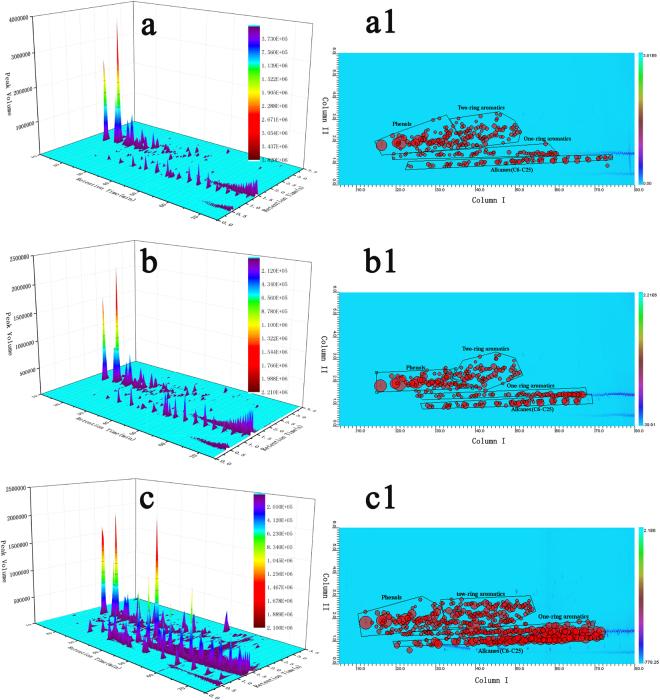
A novel process for improving tar yield through catalytic depolymerization of a typical lignite was put forward. The catalytic depolymerization of the lignite over CoCl and ZnCl catalyst in different concentrations were investigated by a Gray-King apparatus. The optimal catalyst concentrations of CoCl and ZnCl catalyst that could obtain the highest tar yield was achieved, by which the tar yield increased about 20.3% and 6.6% compared with that of the raw coal, respectively. Different with the traditional catalytic pyrolysis process for which the tar yield decreased, more tar was produced by the catalytic depolymerization method. The GC × GC-MS analysis showed that the components of alkanes and two-ring aromatics in tar increased dramatically with the addition of the optimal CoCl and ZnCl catalyst. The Raman measurement revealed that more large aromatic ring systems ( > 6 rings) were formed in the char from depolymerization with catalyst and the elemental analysis showed that the hydrogen content decreased slightly. The gas products analysis reflected the contents of methane showed an obvious decrease. All of this reflects that more fragments and small free radicals cracked were enhanced by catalysis in the catalytic depolymerization process, thereby leading to an enhancement of the tar formation possibilities.
提出了一种通过典型褐煤的催化解聚提高焦油产率的新方法。利用格金干馏仪研究了不同浓度的CoCl和ZnCl催化剂对褐煤的催化解聚作用。得出了能获得最高焦油产率的CoCl和ZnCl催化剂的最佳浓度,与原煤相比,焦油产率分别提高了约20.3%和6.6%。与传统催化热解过程中焦油产率降低不同,催化解聚法产生了更多的焦油。GC×GC-MS分析表明,添加最佳CoCl和ZnCl催化剂后,焦油中烷烃和二环芳烃的成分显著增加。拉曼测量表明,在催化剂解聚产生的焦炭中形成了更多的大芳香环系统(>6个环),元素分析表明氢含量略有下降。气体产物分析表明甲烷含量明显降低。所有这些都表明,在催化解聚过程中,催化作用增强了更多碎片和小自由基的裂解,从而提高了焦油生成的可能性。




 Zotero 插件