Tanimukai Hitoshi, Kudo Takashi
Department of Clinical Oncology, Pharmacogenomics, and Palliative Medicine, Graduate School of Medicine and Faculty of Medicine, Kyoto University, Japan.
Palliative Care Center, Department of Palliative Medicine, Kyoto University Hospital, 54 Kawaharacho, Syogoin, Sakyou-ku, Kyoto City, Kyoto 606-8507, Japan.
Biochem Biophys Rep. 2015 Sep 25;4:202-206. doi: 10.1016/j.bbrep.2015.09.014. eCollection 2015 Dec.
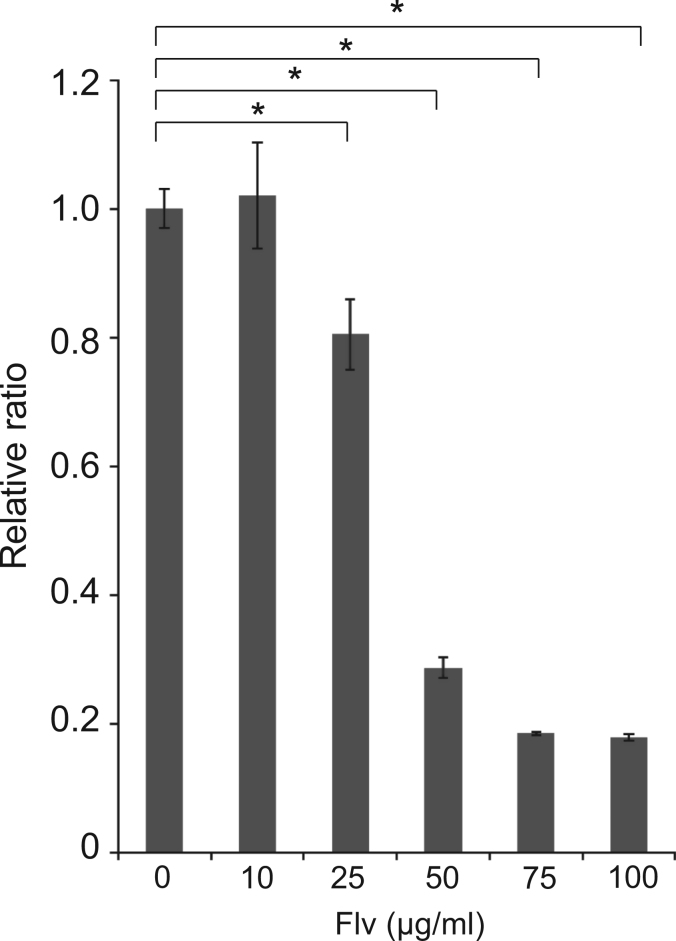
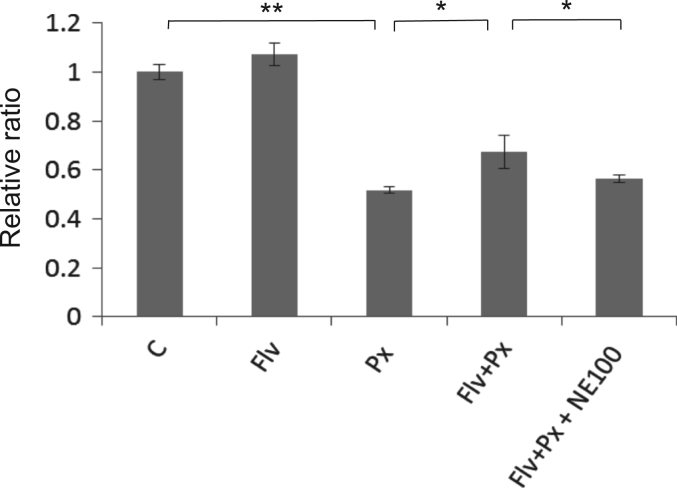
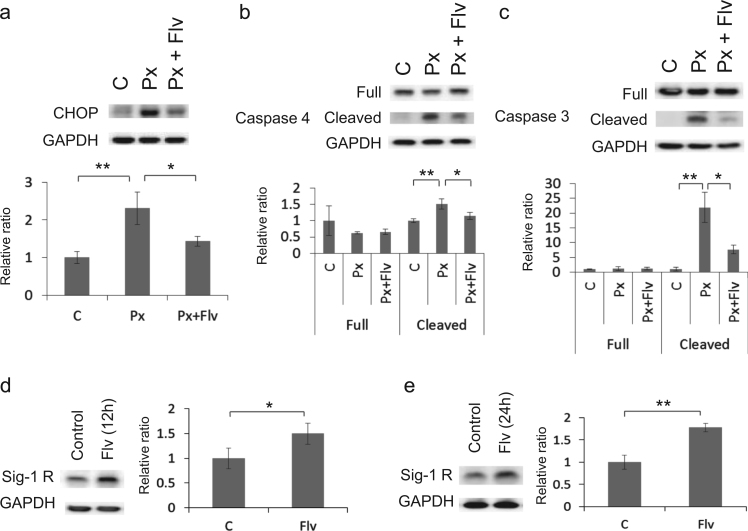
Paclitaxel (Px) is an effective chemotherapeutic agent for the treatment of various cancers. However, it is often associated with neurological side effects, including chemotherapy-associated cognitive impairment (CACI), such as "chemobrain". Previously, we reported that endoplasmic reticulum (ER) stress is involved in Px-induced neurotoxicity, and immunoglobulin heavy chain binding protein (BiP) inducer X (BIX) alleviates Px-induced neurotoxicity. However, BIX has not been used in clinical practice yet. We recently reported that fluvoxamine (Flv) alleviates ER stress via induction of sigma-1 receptor (Sig-1R). The purpose of this study was to investigate whether Flv could alleviate Px-induced neurotoxicity . SK-N-SH cells were pre-treated for 12 h with or without 10 μg/ml Flv followed by treatment with 1 μM Px with or without co-existence of 10 μg/ml Flv for 24 h. To investigate the involvement of Sig-1R in alleviation effect on Px-induced neurotoxicity,1 μM NE100, an antagonist of Sig-1R, was added for 24 h. Neurotoxicity was assessed using the MTS viability assay and ER stress-mediated neurotoxicity was assessed by evaluating the expression of C/EBP homologous protein (CHOP), cleaved caspase 4, and cleaved caspase 3. Pre-treatment with Flv significantly alleviated the induction of CHOP, cleaved caspase 4, and cleaved caspase 3 in SK-N-SH cells. At the same time, pre-treatment with Flv significantly induced Sig-1R in SK-N-SH cells. In addition, viability was significantly higher in Flv-treated cells than in untreated cells, which was reversed by treatment with NE100. Our results suggest that Flv alleviates Px-induced neurotoxicity in part through the induction of Sig-1R. Our findings should contribute to one of the novel approaches for the alleviation of Px-induced neurotoxicity, including chemobrain.
紫杉醇(Px)是一种用于治疗多种癌症的有效化疗药物。然而,它常常伴有神经副作用,包括化疗相关的认知障碍(CACI),如“化疗脑”。此前,我们报道了内质网(ER)应激参与了Px诱导的神经毒性,而免疫球蛋白重链结合蛋白(BiP)诱导剂X(BIX)可减轻Px诱导的神经毒性。然而,BIX尚未应用于临床实践。我们最近报道,氟伏沙明(Flv)通过诱导σ-1受体(Sig-1R)减轻内质网应激。本研究的目的是调查Flv是否能减轻Px诱导的神经毒性。SK-N-SH细胞在有或无10μg/ml Flv的情况下预处理12小时,然后在有或无10μg/ml Flv共存的情况下用1μM Px处理24小时。为了研究Sig-1R在减轻Px诱导的神经毒性中的作用,加入1μM Sig-1R拮抗剂NE100处理24小时。使用MTS活力测定法评估神经毒性,通过评估C/EBP同源蛋白(CHOP)、裂解的半胱天冬酶4和裂解的半胱天冬酶3的表达来评估内质网应激介导的神经毒性。用Flv预处理可显著减轻SK-N-SH细胞中CHOP、裂解的半胱天冬酶4和裂解的半胱天冬酶3的诱导。同时,用Flv预处理可显著诱导SK-N-SH细胞中的Sig-1R。此外,Flv处理的细胞活力明显高于未处理的细胞,而NE100处理可逆转这一现象。我们的结果表明,Flv部分通过诱导Sig-1R减轻Px诱导的神经毒性。我们的发现应为减轻Px诱导的神经毒性(包括化疗脑)的新方法之一做出贡献。