Department of Anatomy and Neurobiology, University of California, Irvine, USA, CA.
Department of Pharmacology, University of California, Irvine, USA, CA.
Mol Psychiatry. 2018 Aug;23(8):1798-1806. doi: 10.1038/mp.2017.221. Epub 2017 Nov 14.
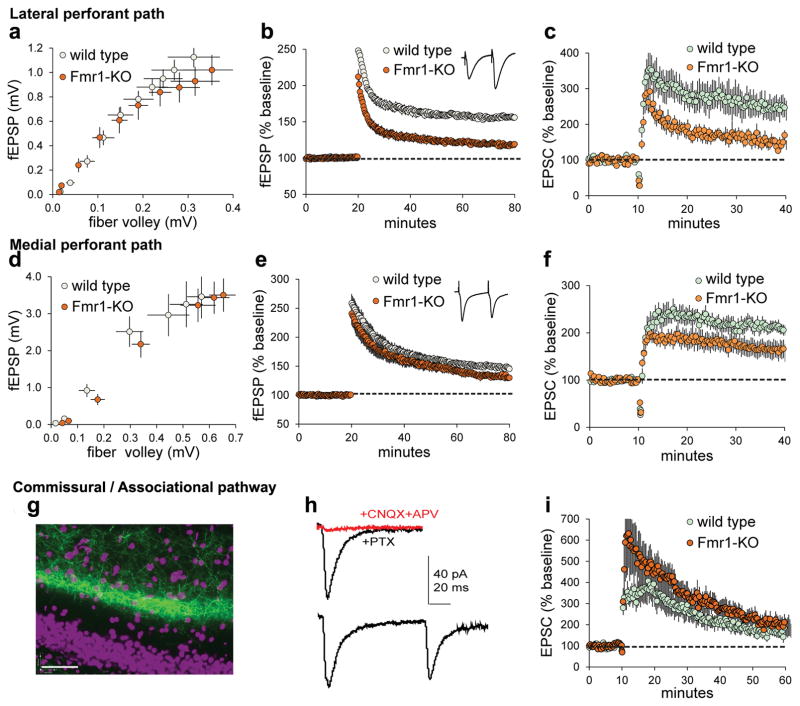
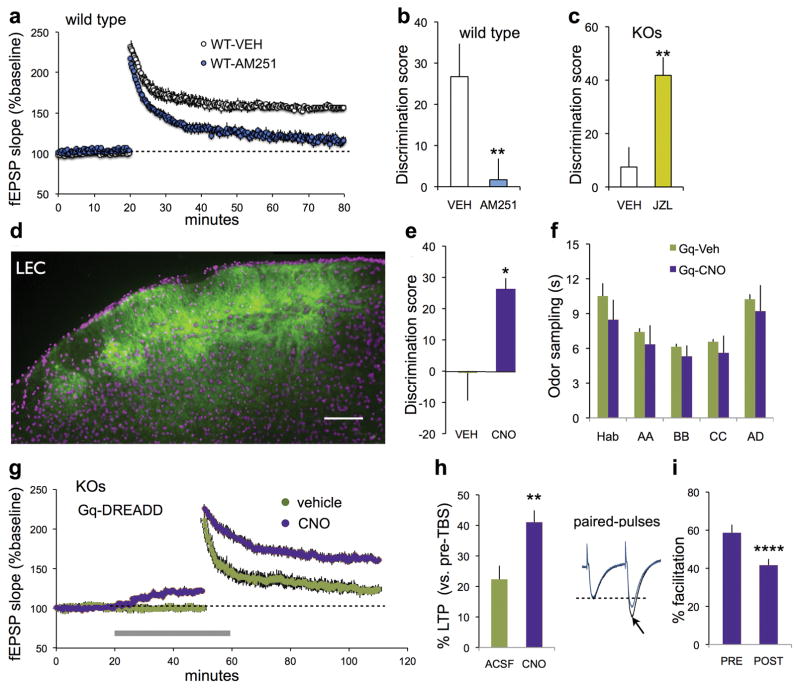
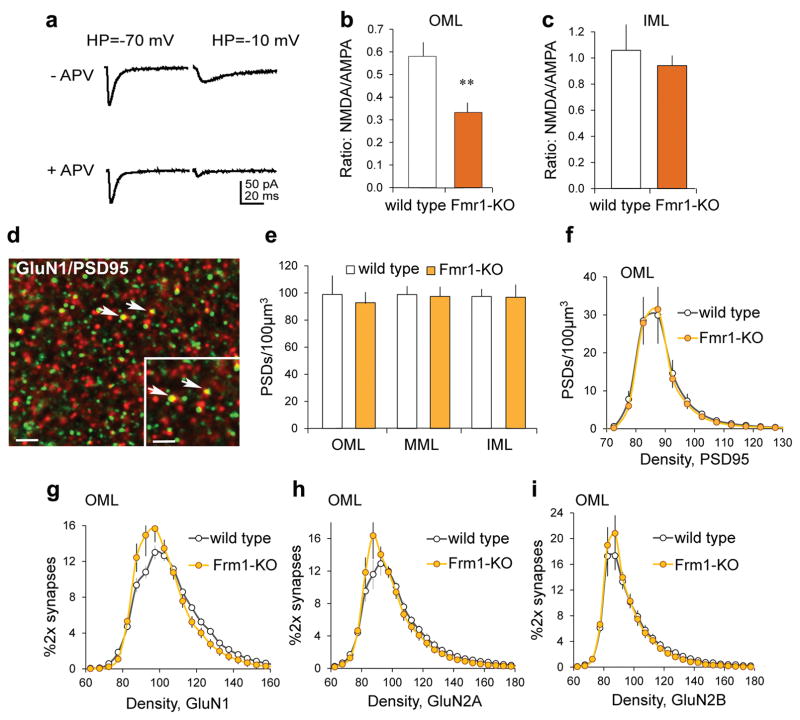
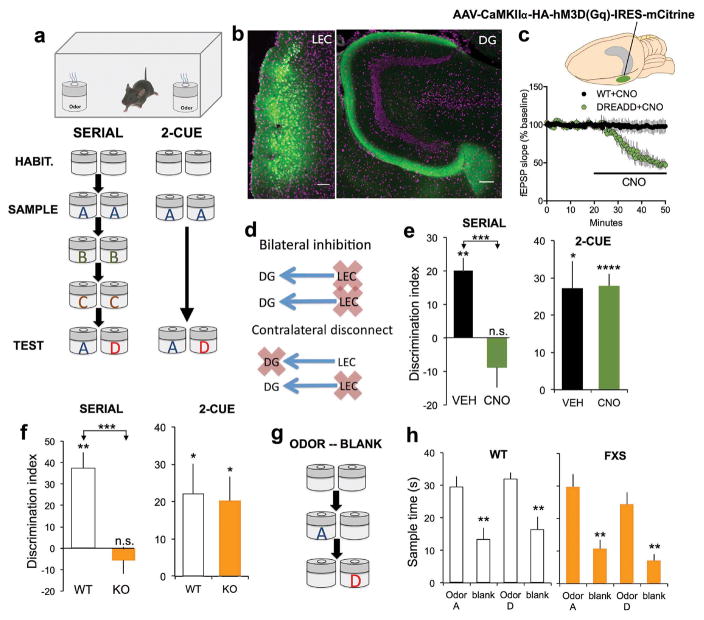
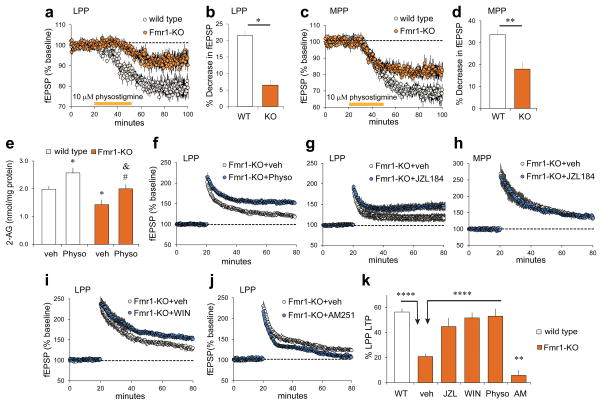
Episodic memory, a fundamental component of human cognition, is significantly impaired in autism. We believe we report the first evidence for this problem in the Fmr1-knockout (KO) mouse model of Fragile X syndrome and describe potentially treatable underlying causes. The hippocampus is critical for the formation and use of episodes, with semantic (cue identity) information relayed to the structure via the lateral perforant path (LPP). The unusual form of synaptic plasticity expressed by the LPP (lppLTP) was profoundly impaired in Fmr1-KOs relative to wild-type mice. Two factors contributed to this defect: (i) reduced GluN1 subunit levels in synaptic NMDA receptors and related currents, and (ii) impaired retrograde synaptic signaling by the endocannabinoid 2-arachidonoylglycerol (2-AG). Studies using a novel serial cue paradigm showed that episodic encoding is dependent on both the LPP and the endocannabinoid receptor CB, and is strikingly impaired in Fmr1-KOs. Enhancing 2-AG signaling rescued both lppLTP and learning in the mutants. Thus, two consequences of the Fragile-X mutation converge on plasticity at one site in hippocampus to prevent encoding of a basic element of cognitive memory. Collectively, the results suggest a clinically plausible approach to treatment.
情景记忆是人类认知的一个基本组成部分,在自闭症中会受到严重损害。我们认为,我们报告了在脆性 X 综合征的 Fmr1 敲除 (KO) 小鼠模型中首次出现这种问题的证据,并描述了潜在的可治疗的根本原因。海马体对于情景的形成和使用至关重要,语义(提示身份)信息通过外侧穿通路径 (LPP) 传递到结构中。LPP 表达的不寻常形式的突触可塑性(lppLTP)在 Fmr1-KO 小鼠中相对于野生型小鼠严重受损。两个因素导致了这一缺陷:(i) 突触 NMDA 受体和相关电流中的 GluN1 亚基水平降低,以及 (ii) 内源性大麻素 2-花生四烯酰甘油 (2-AG) 的逆行突触信号转导受损。使用新型串行提示范式的研究表明,情景编码依赖于 LPP 和内源性大麻素受体 CB,并且在 Fmr1-KO 中显著受损。增强 2-AG 信号转导可挽救突变体中的 lppLTP 和学习。因此,脆性 X 突变的两个后果集中在海马体的一个部位的可塑性上,以防止认知记忆的基本元素的编码。总的来说,这些结果表明了一种临床上可行的治疗方法。