
利用热弹性应力分析和同步加速器X射线衍射实验研究疲劳裂纹与残余应力场的相互作用。
The interaction of fatigue cracks with a residual stress field using thermoelastic stress analysis and synchrotron X-ray diffraction experiments.
作者信息
Amjad Khurram, Asquith David, Patterson Eann A, Sebastian Christopher M, Wang Wei-Chung
机构信息
School of Engineering, University of Liverpool, Liverpool L69 3GH, UK.
Department of Power Mechanical Engineering, National Tsing Hua University, Taiwan, ROC.
出版信息
R Soc Open Sci. 2017 Nov 8;4(11):171100. doi: 10.1098/rsos.171100. eCollection 2017 Nov.
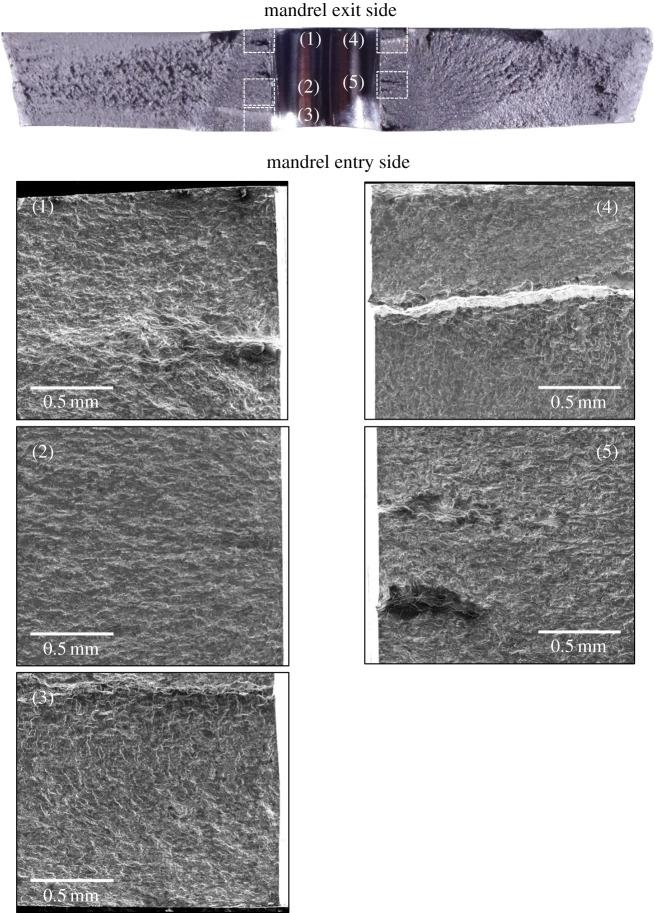
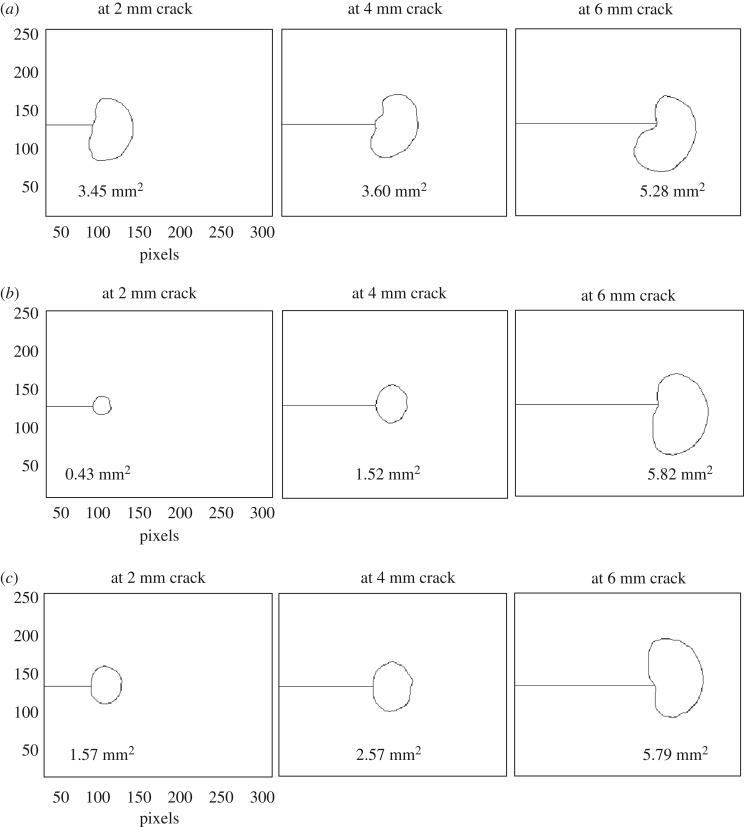
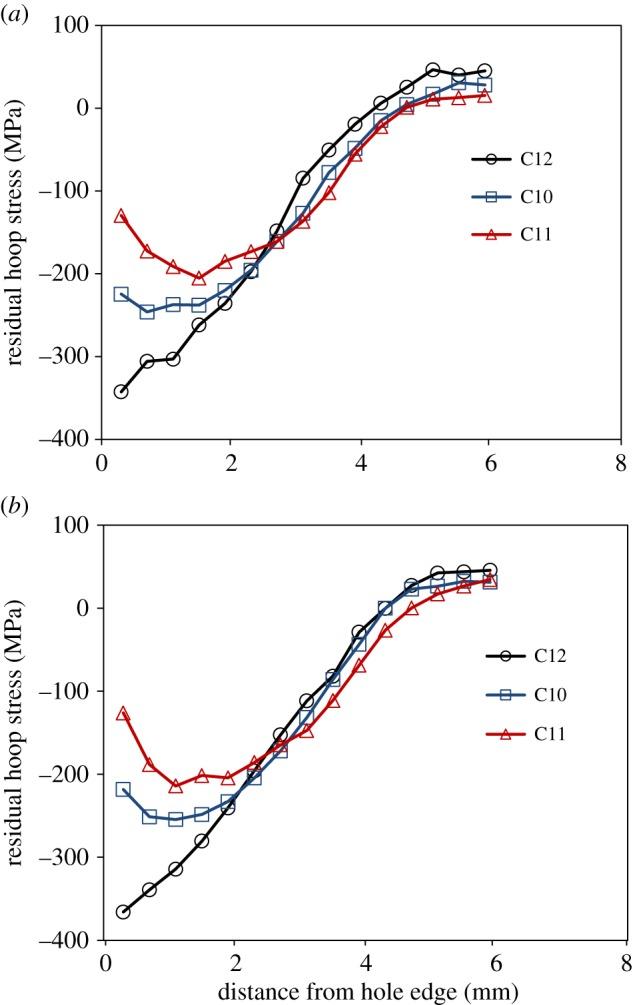
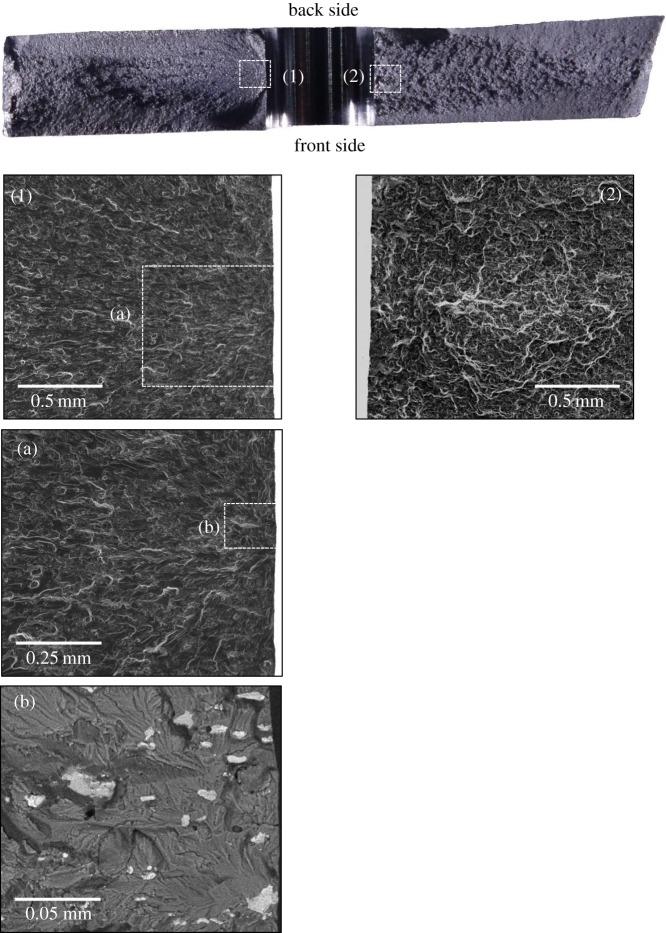
This article presents an experimental study on the fatigue behaviour of cracks emanating from cold-expanded holes utilizing thermoelastic stress analysis (TSA) and synchrotron X-ray diffraction (SXRD) techniques with the aim of resolving the long-standing ambiguity in the literature regarding potential relaxation, or modification, of beneficial compressive residual stresses as a result of fatigue crack propagation. The crack growth rates are found to be substantially lower as the crack tip moved through the residual stress zone induced by cold expansion. The TSA results demonstrated that the crack tip plastic zones were reduced in size by the presence of the residual compressive stresses induced by cold expansion. The crack tip plastic zones were found to be insignificant in size in comparison to the residual stress zone resulting from cold expansion, which implied that they were unlikely to have had a notable impact on the surrounding residual stresses induced by cold expansion. The residual stress distributions measured along the direction of crack growth, using SXRD, showed no signs of any significant stress relaxation or redistribution, which validates the conclusions drawn from the TSA data. Fractographic analysis qualitatively confirmed the influence on crack initiation of the residual stresses induced by the cold expansion. It was found that the application of single compressive overload caused a relaxation, or reduction in the residual stresses, which has wider implications for improving the fatigue life.
本文介绍了一项利用热弹性应力分析(TSA)和同步加速器X射线衍射(SXRD)技术对冷扩孔产生的裂纹疲劳行为进行的实验研究,目的是解决文献中长期存在的关于疲劳裂纹扩展导致有益压缩残余应力可能松弛或改变的模糊问题。研究发现,当裂纹尖端穿过冷扩引起的残余应力区时,裂纹扩展速率显著降低。TSA结果表明,冷扩引起的残余压缩应力使裂纹尖端塑性区尺寸减小。与冷扩产生的残余应力区相比,裂纹尖端塑性区尺寸较小,这意味着它们不太可能对冷扩引起的周围残余应力产生显著影响。使用SXRD沿裂纹扩展方向测量的残余应力分布没有显示出任何显著应力松弛或重新分布的迹象,这验证了从TSA数据得出的结论。断口分析定性地证实了冷扩引起的残余应力对裂纹萌生的影响。研究发现,单次压缩过载的应用会导致残余应力的松弛或降低,这对提高疲劳寿命具有更广泛的意义。





 Zotero 插件