Gruber Staci A, Sagar Kelly A, Dahlgren Mary K, Gonenc Atilla, Smith Rosemary T, Lambros Ashley M, Cabrera Korine B, Lukas Scott E
Cognitive and Clinical Neuroimaging Core, McLean Imaging Center, McLean Hospital, Belmont, MA, United States.
Marijuana Investigations for Neuroscientific Discovery Program, McLean Imaging Center, McLean Hospital, Belmont, MA, United States.
Front Pharmacol. 2018 Jan 17;8:983. doi: 10.3389/fphar.2017.00983. eCollection 2017.
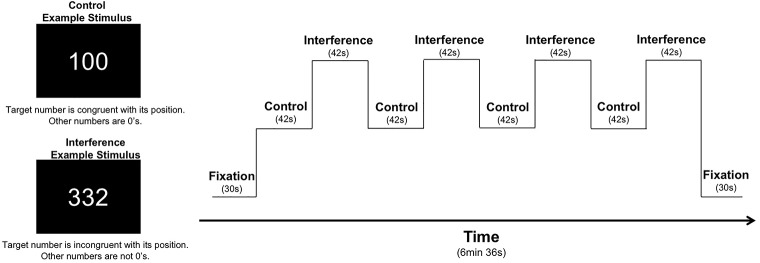
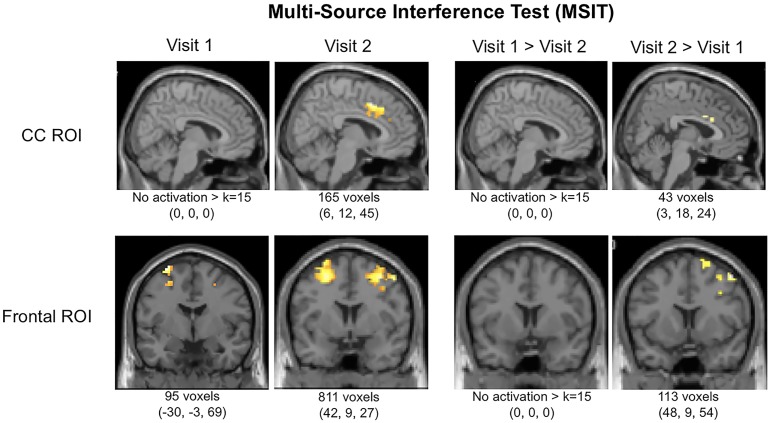
The vast majority of states have enacted full or partial medical marijuana (MMJ) programs, causing the number of patients seeking certification for MMJ use to increase dramatically in recent years. Despite increased use of MMJ across the nation, no studies thus far have examined the specific impact of MMJ on cognitive function and related brain activation. In the present study, MMJ patients seeking treatment for a variety of documented medical conditions were assessed prior to initiating MMJ treatment and after 3 months of treatment as part of a larger longitudinal study. In order to examine the effect of MMJ treatment on task-related brain activation, MMJ patients completed the Multi-Source Interference Test (MSIT) while undergoing functional magnetic resonance imaging (fMRI). We also collected data regarding conventional medication use, clinical state, and health-related measures at each visit. Following 3 months of treatment, MMJ patients demonstrated improved task performance accompanied by changes in brain activation patterns within the cingulate cortex and frontal regions. Interestingly, after MMJ treatment, brain activation patterns appeared more similar to those exhibited by healthy controls from previous studies than at pre-treatment, suggestive of a potential normalization of brain function relative to baseline. These findings suggest that MMJ use may result in different effects relative to recreational marijuana (MJ) use, as recreational consumers have been shown to exhibit decrements in task performance accompanied by altered brain activation. Moreover, patients in the current study also reported improvements in clinical state and health-related measures as well as notable decreases in prescription medication use, particularly opioids and benzodiapezines after 3 months of treatment. Further research is needed to clarify the specific neurobiologic impact, clinical efficacy, and unique effects of MMJ for a range of indications and how it compares to recreational MJ use.
绝大多数州已颁布了全面或部分医用大麻(MMJ)计划,导致近年来寻求MMJ使用认证的患者数量急剧增加。尽管全国范围内MMJ的使用有所增加,但迄今为止尚无研究考察MMJ对认知功能和相关脑激活的具体影响。在本研究中,作为一项更大规模纵向研究的一部分,对因各种已记录的医疗状况而寻求治疗的MMJ患者在开始MMJ治疗前和治疗3个月后进行了评估。为了考察MMJ治疗对与任务相关的脑激活的影响,MMJ患者在接受功能磁共振成像(fMRI)时完成了多源干扰测试(MSIT)。我们还在每次就诊时收集了有关常规药物使用、临床状态和健康相关指标的数据。经过3个月的治疗,MMJ患者的任务表现有所改善,同时扣带回皮质和额叶区域的脑激活模式也发生了变化。有趣的是,MMJ治疗后,脑激活模式比治疗前更类似于先前研究中健康对照者的模式,这表明相对于基线,脑功能可能趋于正常化。这些发现表明,与娱乐性大麻(MJ)的使用相比,MMJ的使用可能会产生不同的效果,因为娱乐性大麻使用者已被证明在任务表现上有所下降,同时脑激活也发生了改变。此外,本研究中的患者还报告说,治疗3个月后临床状态和健康相关指标有所改善,处方药使用量显著减少,尤其是阿片类药物和苯二氮卓类药物。需要进一步的研究来阐明MMJ对一系列适应症的具体神经生物学影响、临床疗效和独特效果,以及它与娱乐性MJ使用的比较情况。