Han Chi-Jui, Chiang Hsuan-Ping, Cheng Yun-Chien
Department of Mechanical Engineering, National Chiao Tung University, Hsinchu 300, Taiwan.
Sensors (Basel). 2018 Feb 18;18(2):618. doi: 10.3390/s18020618.
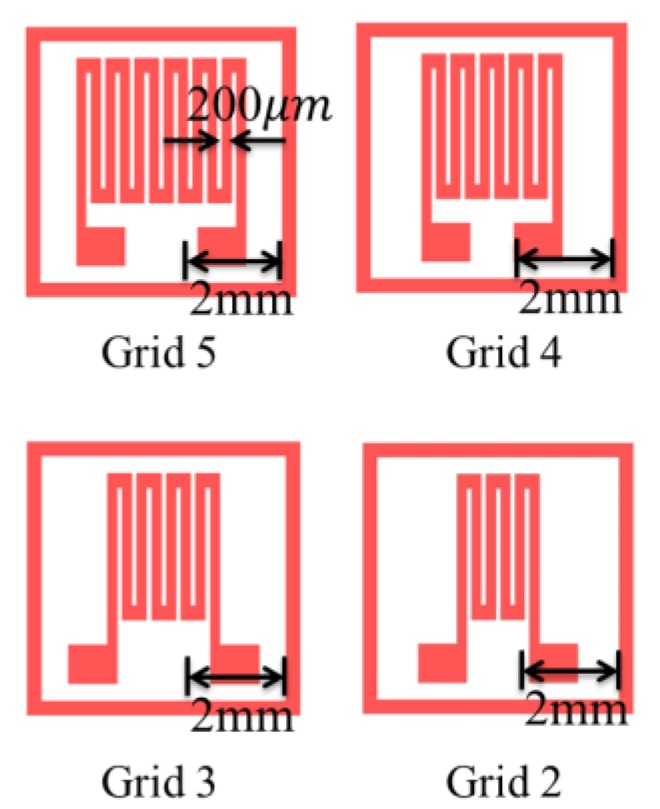
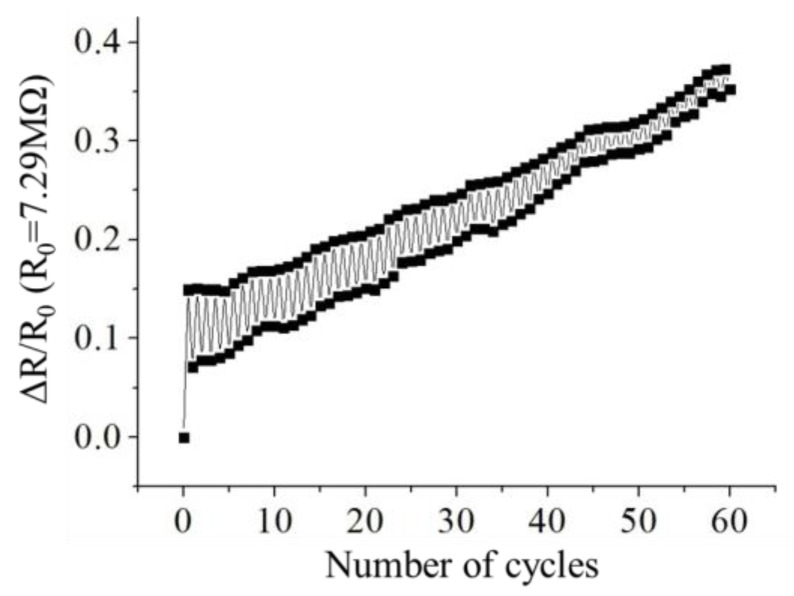
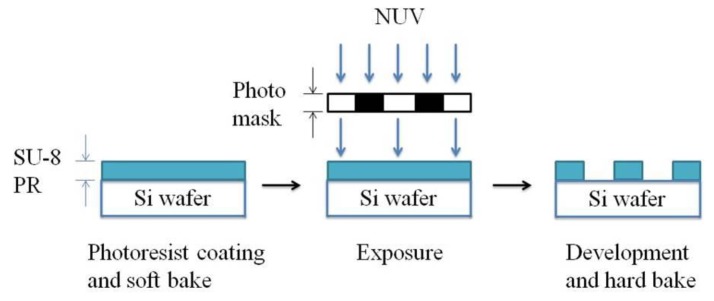
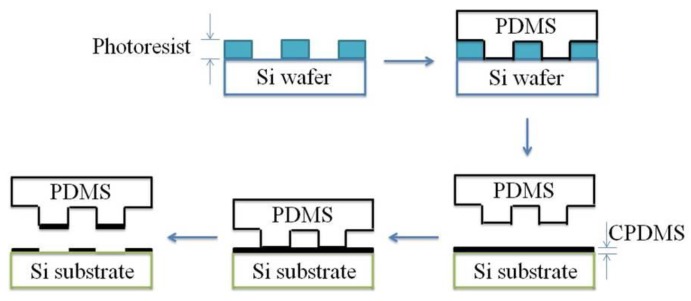
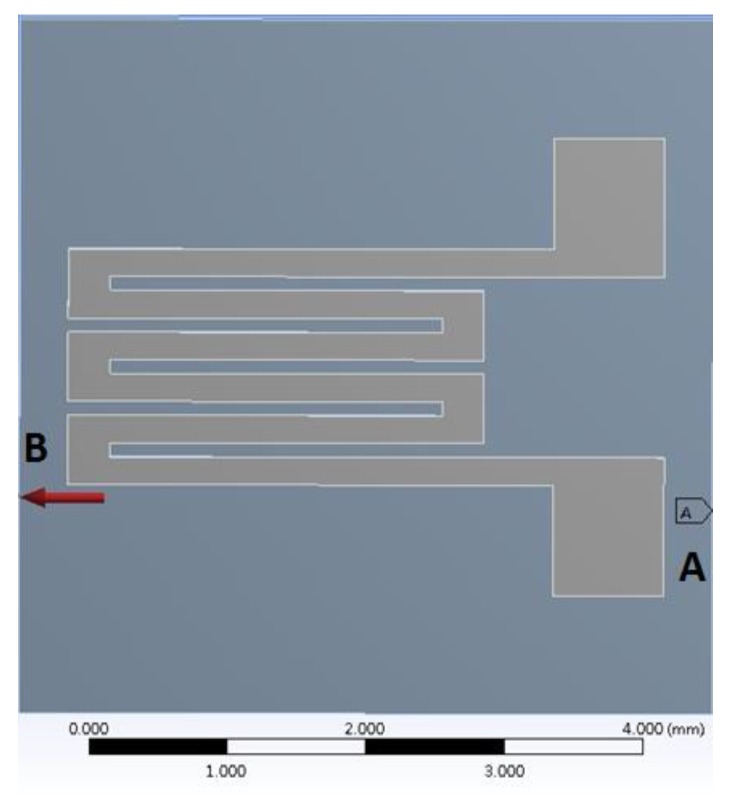
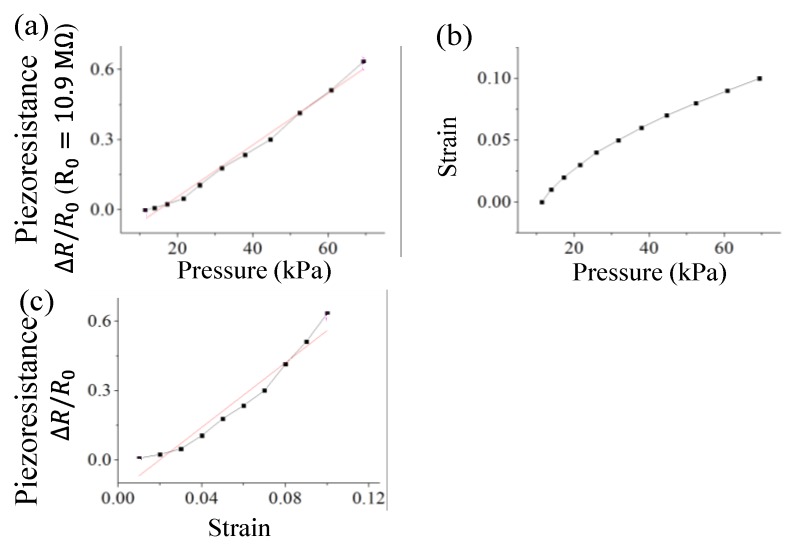
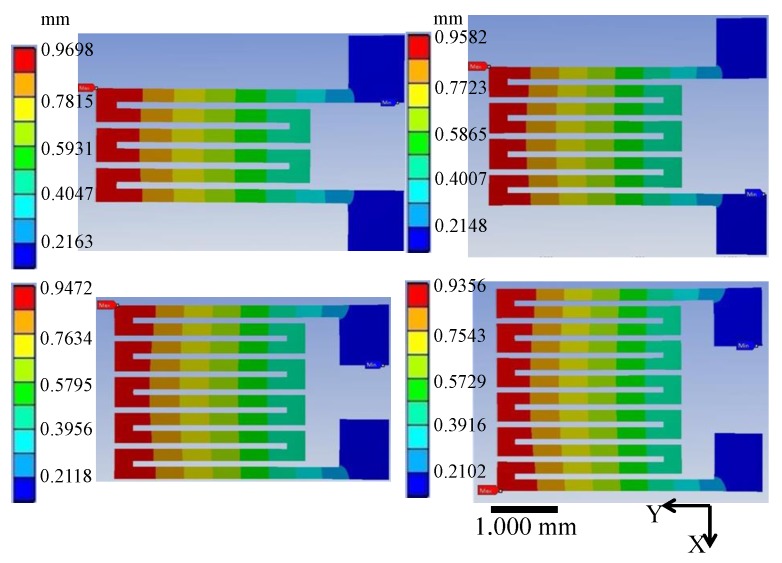
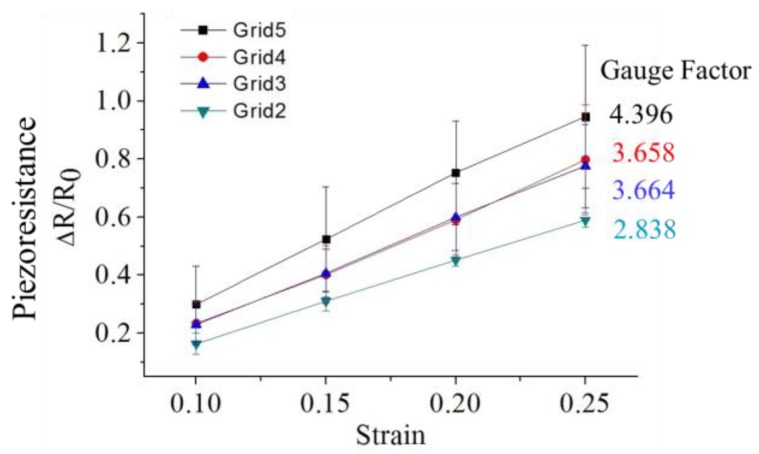
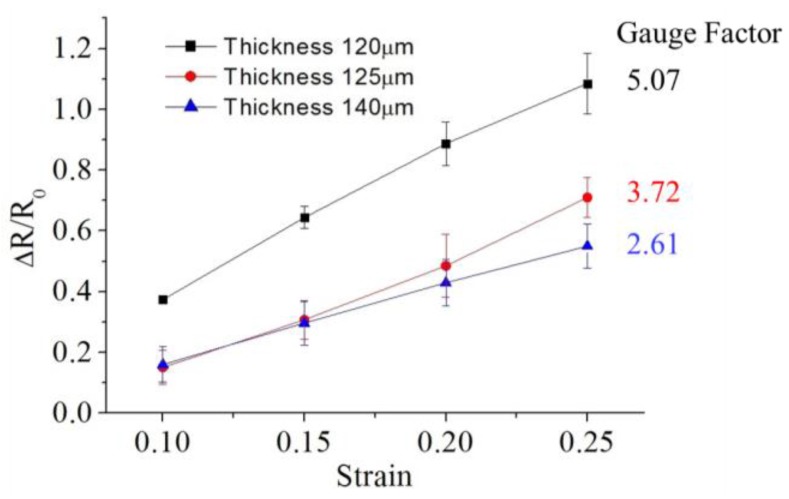
In this study, polydimethylsiloxane (PDMS) and conductive carbon nanoparticles were combined to fabricate a conductive elastomer PDMS (CPDMS). A high sensitive and flexible CPDMS strain sensor is fabricated by using stamping-process based micro patterning. Compared with conventional sensors, flexible strain sensors are more suitable for medical applications but are usually fabricated by photolithography, which suffers from a large number of steps and difficult mass production. Hence, we fabricated flexible strain sensors using a stamping-process with fewer processes than photolithography. The piezoresistive coefficient and sensitivity of the flexible strain sensor were improved by sensor pattern design and thickness change. Micro-patterning is used to fabricate various CPDMS microstructure patterns. The effect of gauge pattern was evaluated with ANSYS simulations. The piezoresistance of the strain gauges was measured and the gauge factor determined. Experimental results show that the piezoresistive coefficient of CPDMS is approximately linear. Gauge factor measurement results show that the gauge factor of a 140.0 μm thick strain gauge with five grids is the highest.
在本研究中,将聚二甲基硅氧烷(PDMS)与导电碳纳米颗粒相结合,制备了一种导电弹性体PDMS(CPDMS)。通过基于压印工艺的微图案化制备了一种高灵敏度且柔性的CPDMS应变传感器。与传统传感器相比,柔性应变传感器更适合医疗应用,但通常通过光刻法制造,该方法步骤繁多且难以大规模生产。因此,我们采用比光刻法工艺更少的压印工艺制造了柔性应变传感器。通过传感器图案设计和厚度变化提高了柔性应变传感器的压阻系数和灵敏度。微图案化用于制造各种CPDMS微观结构图案。利用ANSYS模拟评估了应变片图案的效果。测量了应变片的压阻,并确定了应变片系数。实验结果表明,CPDMS的压阻系数近似呈线性。应变片系数测量结果表明,具有五个栅格的140.0μm厚应变片的应变片系数最高。