Department of Parasitology and Tropical Medicine, and Institute of Health Sciences, Gyeongsang National University College of Medicine, Jinju, 52727, Republic of Korea.
Present address: Department of Tropical Medicine, and Inha Research Institute for Medical Sciences, Inha University College of Medicine, Incheon, 22212, Republic of Korea.
BMC Infect Dis. 2018 Mar 16;18(1):131. doi: 10.1186/s12879-018-3031-y.
Glucose-6-phosphate dehydrogenase (G6PD; EC 1.1.1.49) deficiency is one of the most common X-linked recessive hereditary disorders in the world. Primaquine (PQ) has been used for radical cure of P. vivax to prevent relapse. Recently, it is also used to reduce P. falciparum gametocyte carriage to block transmission. However, PQ metabolites oxidize hemoglobin and generate excessive reactive oxygen species which can trigger acute hemolytic anemia in malaria patients with inherited G6PD deficiency.
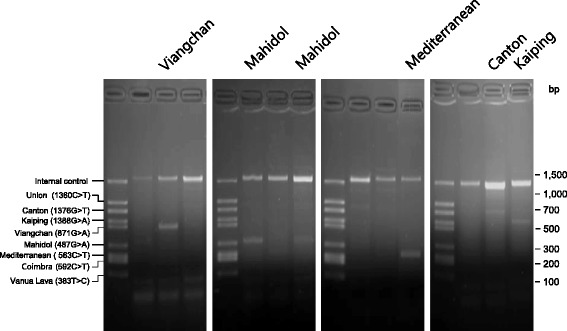
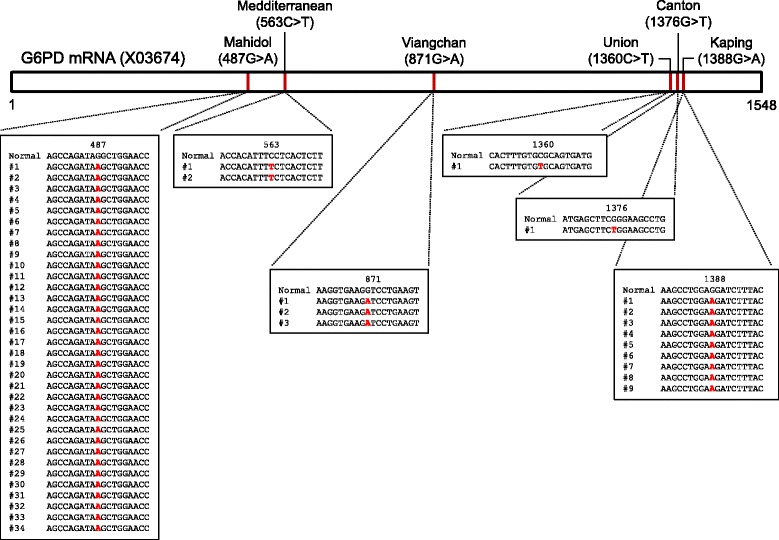
A total of 252 blood samples collected from malaria patients in Myanmar were used in this study. G6PD variant was analysed by a multiplex allele specific PCR kit, DiaPlexC™ G6PD Genotyping Kit [Asian type]. The accuracy of the multiplex allele specific PCR was confirmed by sequencing analysis.
Prevalence and distribution of G6PD variants in 252 malaria patients in Myanmar were analysed. Six different types of G6PD allelic variants were identified in 50 (7 females and 43 males) malaria patients. The predominant variant was Mahidol (68%, 34/50), of which 91.2% (31/34) and 8.8% (3/34) were males and females, respectively. Other G6PD variants including Kaiping (18%, 9/50), Viangchan (6%, 3/50), Mediterranean (4%, 2/50), Union (2%, 1/50) and Canton (2%, 1/50) were also observed.
Results of this study suggest that more concern for proper and safe use of PQ as a radical cure of malaria in Myanmar is needed by combining G6PD deficiency test before PQ prescription. Establishment of a follow-up system to monitor potential PQ toxicity in malaria patients who are given PQ is also required.
葡萄糖-6-磷酸脱氢酶(G6PD;EC 1.1.1.49)缺乏症是世界上最常见的 X 连锁隐性遗传疾病之一。伯氨喹(PQ)已被用于根治间日疟以防止复发。最近,它也被用于减少恶性疟原虫配子体携带量以阻断传播。然而,PQ 代谢物氧化血红蛋白并产生过多的活性氧,这可能导致遗传性 G6PD 缺乏症的疟疾患者发生急性溶血性贫血。
本研究共使用了来自缅甸疟疾患者的 252 份血样。通过多重等位基因特异性 PCR 试剂盒(DiaPlexC™ G6PD 基因分型试剂盒[亚洲型])分析 G6PD 变异。通过测序分析证实了多重等位基因特异性 PCR 的准确性。
分析了缅甸 252 例疟疾患者的 G6PD 变异的流行率和分布。在 50 例(7 名女性和 43 名男性)疟疾患者中鉴定出 6 种不同类型的 G6PD 等位基因变异。主要变异型为 Mahidol(68%,34/50),其中 91.2%(31/34)和 8.8%(3/34)为男性和女性。还观察到其他 G6PD 变异型,包括 Kaiping(18%,9/50)、Viangchan(6%,3/50)、地中海(4%,2/50)、Union(2%,1/50)和 Canton(2%,1/50)。
本研究结果表明,在缅甸使用 PQ 进行根治疟疾之前,需要结合 G6PD 缺乏症检测,更加关注 PQ 的合理和安全使用。还需要建立一个监测接受 PQ 治疗的疟疾患者潜在 PQ 毒性的随访系统。