
IRE1α-XBP1抑制剂在尤因肉瘤中发挥抗肿瘤活性。
IRE1α-XBP1 inhibitors exerted anti-tumor activities in Ewing's sarcoma.
作者信息
Tanabe Yu, Suehara Yoshiyuki, Kohsaka Shinji, Hayashi Takuo, Akaike Keisuke, Mukaihara Kenta, Kurihara Taisei, Kim Youngji, Okubo Taketo, Ishii Midori, Kazuno Saiko, Kaneko Kazuo, Saito Tsuyoshi
机构信息
Department of Orthopedic Surgery, Juntendo University School of Medicine, Bunkyo-ku, Tokyo 113-8421, Japan.
Department of Medical Genomics, Graduate School of Medicine, The University of Tokyo, Tokyo 113-0033, Japan.
出版信息
Oncotarget. 2018 Feb 12;9(18):14428-14443. doi: 10.18632/oncotarget.24467. eCollection 2018 Mar 6.
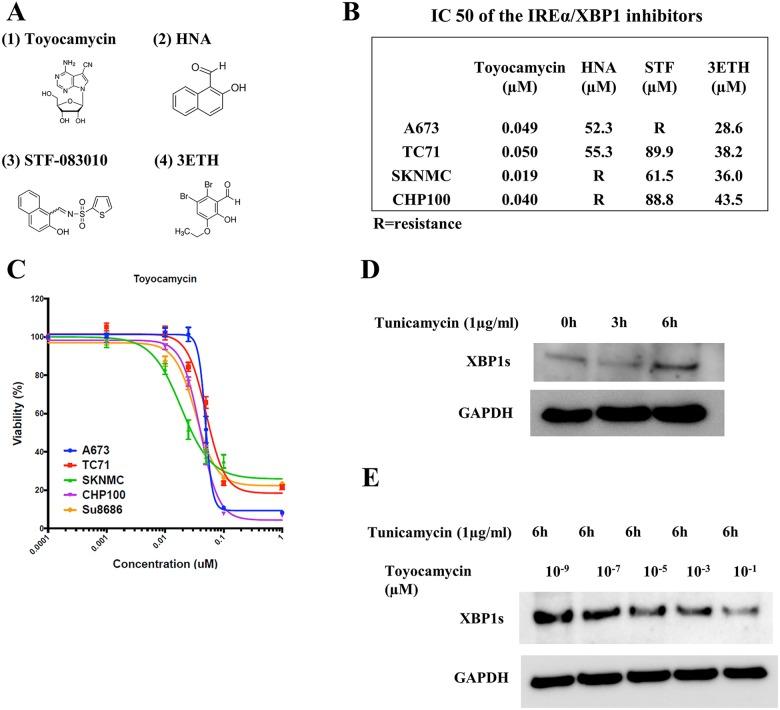
Ewing's sarcoma (ES) is the second-most frequent pediatric bone tumor. Chromosomal translocation t(11;22)(q24:q12) results in the formation of EWS/FLI1 gene fusion, which is detected in approximately 90% of tumors of the Ewing family. Several transcriptome studies have provided lists of genes associated with EWS/FLI1 expression. However, the protein expression profiles associated with EWS/FLI1 have yet to be elucidated. In this study, to identify the regulated proteins associated with EWS/FLI1 and therapeutic targets in ES, we conducted proteomic studies using EWS/FLI1 knockdown in four Ewing's sarcoma cell lines and human mesenchymal stem cells (hMSCs) expressing EWS/FLI1. Isobaric tags for relative and absolute quantitation (i-TRAQ) analyses identified more than 2,000 proteins regulated by the EWS/FLI1 fusion. In addition, the network analyses identified several critical pathways, including XBP1, which was ranked the highest. XBP1 is a protein well known to play an important role in the unfolded protein response (UPR) to endoplasmic reticulum (ER) stress through the IRE1α-XBP1 pathway. We confirmed the high mRNA expression of XBP1 (spliced XBP1 and unspliced XBPl) in surgical samples and cell lines in ES. The silencing of XBP1 significantly suppressed the cell viabilities in ES cell lines. In the inhibitor assays using IRE1α-XBP1 inhibitors, including toyocamycin, we confirmed that these agents significantly suppressed the cell viabilities, leading to apoptosis in ES cells both and . Our findings suggested that IRE1α-XBP1 inhibitors might be useful for developing novel therapeutic strategies in ES.
尤因肉瘤(ES)是第二常见的儿童骨肿瘤。染色体易位t(11;22)(q24:q12)导致EWS/FLI1基因融合的形成,在约90%的尤因家族肿瘤中可检测到该融合。多项转录组研究提供了与EWS/FLI1表达相关的基因列表。然而,与EWS/FLI1相关的蛋白质表达谱尚未阐明。在本研究中,为了鉴定与EWS/FLI1相关的调控蛋白以及ES中的治疗靶点,我们在四种尤因肉瘤细胞系和表达EWS/FLI1的人间充质干细胞(hMSC)中使用EWS/FLI1敲低进行了蛋白质组学研究。相对和绝对定量等压标签(i-TRAQ)分析鉴定出超过2000种受EWS/FLI1融合调控的蛋白质。此外,网络分析确定了几个关键途径,其中XBP1排名最高。XBP1是一种众所周知的蛋白质,通过IRE1α-XBP1途径在内质网(ER)应激的未折叠蛋白反应(UPR)中发挥重要作用。我们证实了ES手术样本和细胞系中XBP1(剪接的XBP1和未剪接的XBPl)的高mRNA表达。XBP1的沉默显著抑制了ES细胞系中的细胞活力。在使用包括丰加霉素在内的IRE1α-XBP1抑制剂的抑制剂试验中,我们证实这些药物显著抑制了细胞活力,导致ES细胞凋亡。我们的研究结果表明,IRE1α-XBP1抑制剂可能有助于开发ES的新型治疗策略。



 Zotero 插件