Sakai Mizuki, Masaki Kaito, Aiba Shota, Tone Masaaki, Takashima Seiji
Department of Applied Biology, Faculty of Textile Science and Technology, Shinshu University, Ueda 386-8567, Japan.
Department of Textile Science and Technology, Interdisciplinary Graduate School of Science and Technology, Shinshu University, Ueda 386-8567, Japan.
J Reprod Dev. 2018 Jun 22;64(3):267-275. doi: 10.1262/jrd.2018-015. Epub 2018 Apr 16.
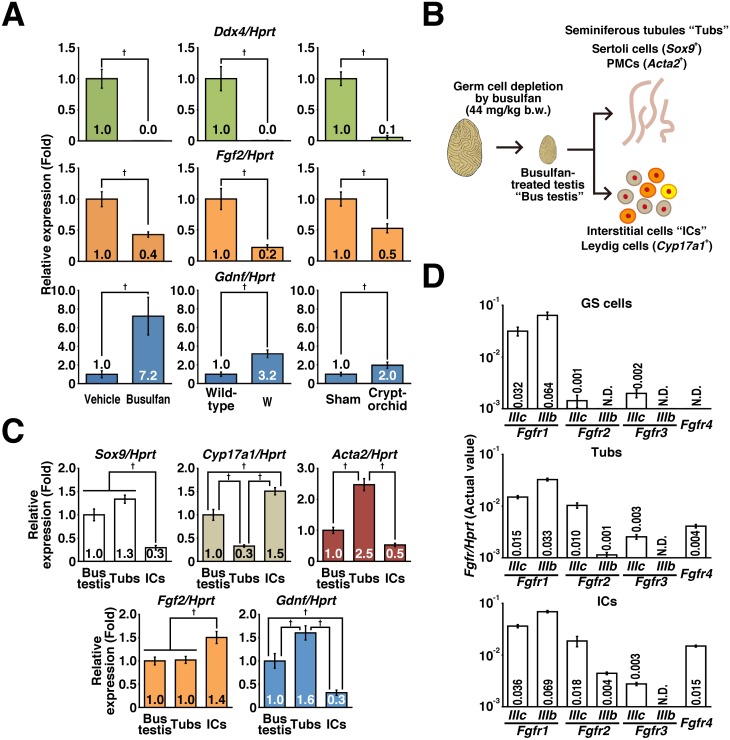
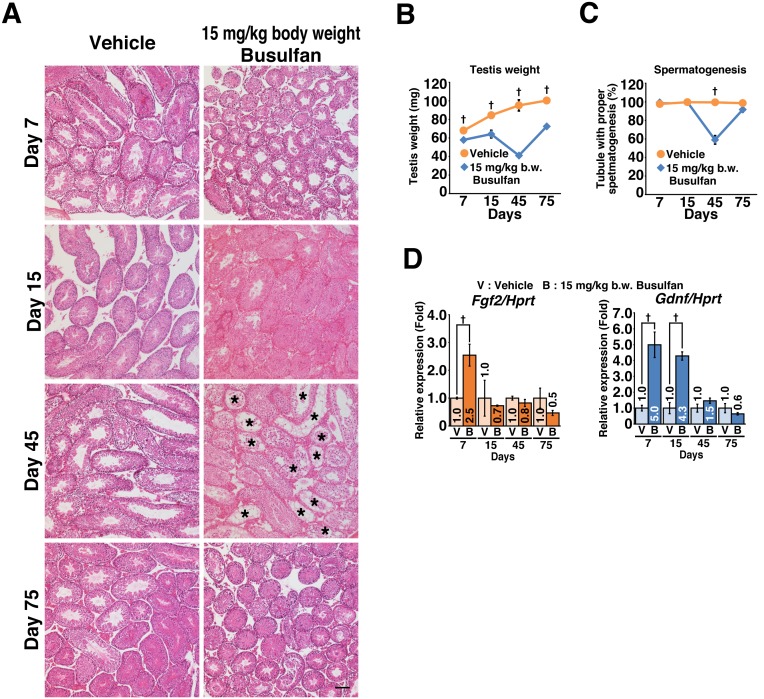
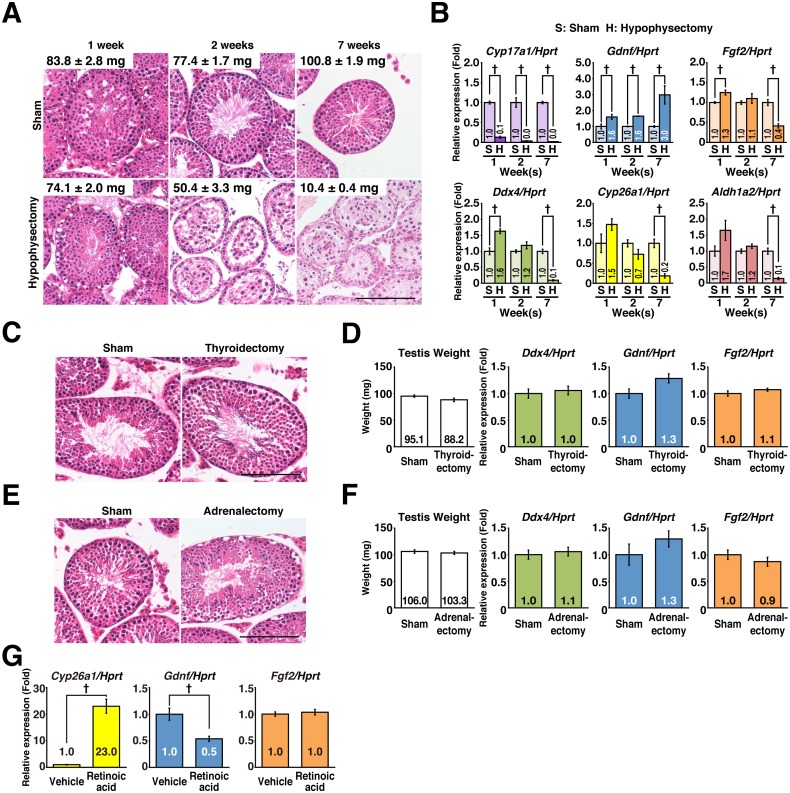
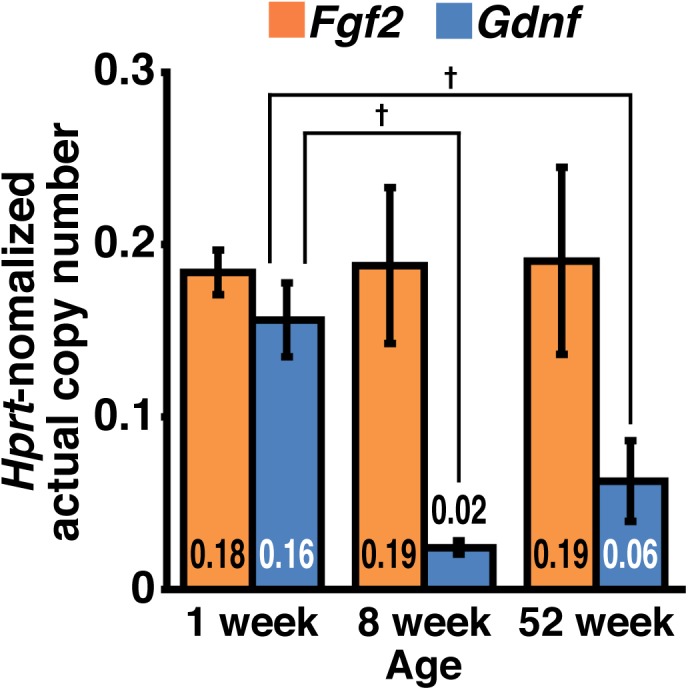
Glial cell line-derived neurotrophic factor (GDNF) and fibroblast growth factor 2 (FGF2) are bona fide self-renewal factors for spermatogonial stem cells (SSCs). Although GDNF is indispensable for the maintenance of SSCs, the role of FGF2 in the testis remains to be elucidated. To clarify this, the expression dynamics and regulatory mechanisms of Fgf2 and Gdnf in the mouse testes were analyzed. It is well known that Sertoli cells express Gdnf, and its receptor is expressed in a subset of undifferentiated spermatogonia, including SSCs. However, we found that Fgf2 was mainly expressed in the germ cells and its receptors were expressed not only in the cultured spermatogonial cell line, but also in testicular somatic cells. Aging, hypophysectomy, retinoic acid treatment, and testicular injury induced distinct Fgf2 and Gdnf expression dynamics, suggesting a difference in the expression mechanism of Fgf2 and Gdnf in the testis. Such differences might cause a dynamic fluctuation of Gdnf/Fgf2 ratio depending on the intrinsic/extrinsic cues. Considering that FGF2-cultured spermatogonia exhibit more differentiated phenotype than those cultured with GDNF, FGF2 might play a role distinct from that of GDNF in the testis, despite the fact that both factors are self-renewal factor for SSC in vitro.
胶质细胞系源性神经营养因子(GDNF)和成纤维细胞生长因子2(FGF2)是精原干细胞(SSC)真正的自我更新因子。尽管GDNF对于SSC的维持不可或缺,但FGF2在睾丸中的作用仍有待阐明。为了阐明这一点,我们分析了小鼠睾丸中Fgf2和Gdnf的表达动态及调控机制。众所周知,支持细胞表达Gdnf,其受体在包括SSC在内的一部分未分化精原细胞中表达。然而,我们发现Fgf2主要在生殖细胞中表达,其受体不仅在培养的精原细胞系中表达,也在睾丸体细胞中表达。衰老、垂体切除、视黄酸处理和睾丸损伤诱导了Fgf2和Gdnf不同的表达动态,这表明睾丸中Fgf2和Gdnf的表达机制存在差异。这种差异可能会导致Gdnf/Fgf2比值根据内在/外在信号发生动态波动。鉴于与用GDNF培养的精原细胞相比,用FGF2培养的精原细胞表现出更分化的表型,尽管这两种因子在体外都是SSC的自我更新因子,但FGF2在睾丸中的作用可能与GDNF不同。